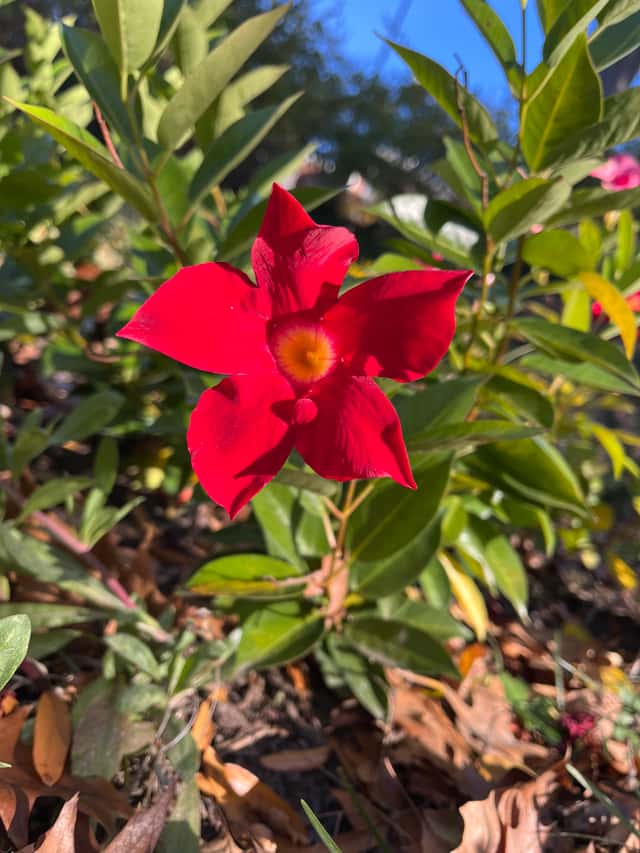
Apocynaceae
Mandevilla Care Guide
Mandevilla
Grow in full sun to bright, filtered light with well-draining soil and regular watering, keeping the soil evenly moist but never soggy. Tolerates heat well but is frost-sensitive.
Every 5 days
Bright indirect
7° - 32°C
50% - 70%
Categories
What is Mandevilla?
Mandevilla (Mandevilla) is a medium-care plant from the Apocynaceae family. Mandevilla is a genus of tropical flowering vines in the Apocynaceae family, native to Central and South America. Species such as Mandevilla sanderi are widely grown for their glossy evergreen foliage and abundant trumpet-shaped flowers that bloom from late spring through fall on trellises, fences,...
Mandevilla grows up to 6.0m, spread of 300cm, watering every 5 days, 7°C – 32°C, 50–70% humidity. It is suitable for indoor environments and not safe for pets.
Without precautions, ingestion can cause irritation in pets. Keep out of reach of cats and dogs. Without adequate drainage, root rot can develop within 10 days.
How to Care for Mandevilla?
TLDR: Mandevilla needs Bright indirect, watering every 5 days, and temperatures between 7-32°C with 50-70% humidity.
How Often Should You Water Mandevilla?
Water when the top 2-3 cm (1 inch) of soil feels dry; avoid waterlogging to prevent root rot.
How Much Light Does Mandevilla Need?
Prefers full sun to strong indirect light; at least 6-8 hours of direct sunlight encourages the best flowering.
What Is the Best Soil for Mandevilla?
Use sandy, well-draining soil enriched with organic matter, with a pH between 6.6 and 7.8.
What Pot Should You Use for Mandevilla?
Terracotta or plastic pot with drainage holes, medium to large size to support the vine's growth.
Care Schedule
Fertilize
Every 30 days
Repot
Every 365 days
What Is Mandevilla and Where Does It Come From?
Mandevilla is a genus of tropical flowering vines in the Apocynaceae family, native to Central and South America. Species such as Mandevilla sanderi are widely grown for their glossy evergreen foliage and abundant trumpet-shaped flowers that bloom from late spring through fall on trellises, fences, and in hanging baskets.
How to Propagate Mandevilla?
Semi-hardwood stem cutting
Use clean, sharp tools and avoid overwatering to prevent the cutting from rotting.
- 1 Cut a 10-15 cm semi-hardwood stem section with at least 2 nodes
- 2 Remove lower leaves and dip the cut end in rooting hormone
- 3 Plant in a light, moist potting mix (peat and sand blend)
- 4 Keep warm with indirect light and high humidity until roots form
Materials needed:
How Big Does Mandevilla Grow?
TLDR: Mandevilla can reach up to 6.0m tall with Fast growth rate.
Max height
6.0m
Spread
3.0m
Growth rate
Fast
Foliage
Evergreen
Warning: Toxic Plant
This plant can be toxic if ingested. Keep out of reach of:
Plant Uses
Ornamental
Great for decoration
Is your plant showing symptoms?
Click on the symptom to discover possible causes:
What Diseases Commonly Affect Mandevilla?
TLDR: Mandevilla is susceptible to 11 known diseases. Monitor regularly for early detection.
Root Rot
Root rot is a serious fungal disease that affects the root system of plants, causing them to decay and die. It is primarily caused by overwatering, poor drainage, or soil-borne fungi such as Pythium, Phytophthora, Rhizoctonia, and Fusarium. The disease thrives in waterlogged conditions where roots are deprived of oxygen, making them susceptible to fungal infection.
Powdery Mildew
Powdery mildew is a common fungal disease caused by various fungi species including Erysiphe, Podosphaera, Oïdium, and Leveillula. It affects over 10,000 plant species worldwide. The disease thrives in warm, dry climates with high humidity and appears as a distinctive white powdery coating on plant surfaces.
Anthracnose
Anthracnose is a fungal disease caused by fungi in the genus Colletotrichum that affects many plants, including vegetables, fruits, and trees. The disease thrives in cool, wet conditions, causing dark, sunken lesions on leaves, stems, flowers, and fruits.
Leaf Spot
Leaf spot is a common fungal disease caused by various pathogens including Alternaria, Ascochyta, Colletotrichum, Septoria, and Venturia. It primarily affects leaves, causing discolored spots that can lead to premature leaf drop if left untreated.
Meaning & Symbolism
Symbolizes lasting passion, tropical beauty, and warm hospitality, commonly grown on porches and entryways.
Fun Facts
The genus is named after Henry Mandeville, a 19th-century British diplomat who introduced the plant to Europe.
The trumpet-shaped flowers can last several weeks on well-cared-for plants.
It is a vigorous vine capable of growing more than 2 meters in a single season.
Frequently asked questions
Is Mandevilla toxic to cats and dogs?
How often should I water my Mandevilla?
How much sunlight does Mandevilla need?
How do I protect Mandevilla in winter?
Compare with similar plants
| Attribute | Difficulty | Light | Watering | Pet Safe |
|---|---|---|---|---|
| Dark Fieldcap | Medium | Low light | 2d | ⚠️ |
| Azalea | Medium | Partial shade | 3d | ⚠️ |
| Bougainvillea | Medium | Direct sun | 7d | ⚠️ |
| Wild Lettuce | Medium | Direct sun | 7d | ⚠️ |



