Bignoniaceae
Pink Trumpet Vine — Complete Growing Guide
Podranea ricasoliana
This hardy climber thrives in full sun with well-draining soil and moderate watering. Cut back hard in late winter to encourage vigorous flowering. Established plants are drought-tolerant and largely pest-free.
Every 7 days
Direct sun
-4° - 38°C
30% - 50%
Categories
What is Pink Trumpet Vine?
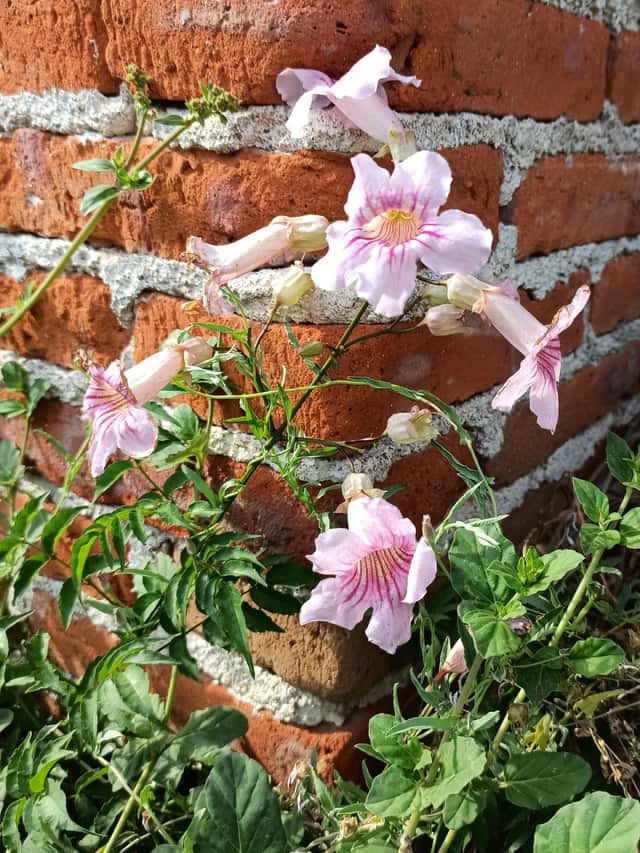
Pink Trumpet Vine (Podranea ricasoliana) is a easy-care plant from the Bignoniaceae family. Podranea ricasoliana, commonly known as Pink Trumpet Vine or Port St. Johns Creeper, is a vigorous woody climber in the family Bignoniaceae, native to South Africa. It produces spectacular lilac-pink, trumpet-shaped flowers with violet veining that bloom profusely from summer through fall. A fast gr...
Pink Trumpet Vine grows up to 5.0m, spread of 300cm, watering every 7 days, -4°C – 38°C, 30–50% humidity. It is not suitable for indoor environments and safe for pets.
Unlike many tropical plants, Pink Trumpet Vine tolerates watering mistakes. Best for beginners. Unlike many popular species, Pink Trumpet Vine is safe to keep around pets.
How to Care for Pink Trumpet Vine?
TLDR: Pink Trumpet Vine needs Direct sun, watering every 7 days, and temperatures between -4-38°C with 30-50% humidity.
How Often Should You Water Pink Trumpet Vine?
Water when the top inch of soil is dry — roughly once a week during the growing season. Taper off in autumn and keep nearly dry in winter to allow dormancy. Avoid waterlogging at all times.
How Much Light Does Pink Trumpet Vine Need?
Requires full sun (at least 6 hours daily) for best flowering. Tolerates partial afternoon shade in very hot climates, though flower production may decrease.
What Is the Best Soil for Pink Trumpet Vine?
Plant in well-draining, moderately fertile soil with a pH of 6.0–7.0. Amend with compost in spring. Avoid heavy clay soils that retain excess moisture.
What Pot Should You Use for Pink Trumpet Vine?
Large terracotta or glazed ceramic pot with drainage holes outdoors, or planted directly in garden bed with a sturdy trellis or pergola.
Care Schedule
Fertilize
Every 30 days
What Is Pink Trumpet Vine and Where Does It Come From?
Podranea ricasoliana, commonly known as Pink Trumpet Vine or Port St. Johns Creeper, is a vigorous woody climber in the family Bignoniaceae, native to South Africa. It produces spectacular lilac-pink, trumpet-shaped flowers with violet veining that bloom profusely from summer through fall. A fast grower capable of reaching 5 metres (16 ft), it is prized for covering pergolas, walls, and fences with a lush tropical floral display.
How Big Does Pink Trumpet Vine Grow?
TLDR: Pink Trumpet Vine can reach up to 5.0m tall with Fast growth rate.
Max height
5.0m
Spread
3.0m
Growth rate
Fast
Foliage
Evergreen
Plant Uses
Ornamental
Great for decoration
Is your plant showing symptoms?
Click on the symptom to discover possible causes:
What Diseases Commonly Affect Pink Trumpet Vine?
TLDR: Pink Trumpet Vine is susceptible to 6 known diseases. Monitor regularly for early detection.
Aphids
Aphids are small, soft-bodied, pear-shaped insects (1/16 to 1/8 inch long) that feed by sucking nutrient-rich sap from plants. They reproduce rapidly and can quickly weaken plants, causing distorted growth and transmitting plant viruses. Aphids come in various colors including green, black, red, yellow, brown, and gray. They secrete honeydew, a sticky substance that attracts ants and encourages sooty mold growth.
Spider Mites
Spider mites are tiny arachnids (less than 1/20 inch long) related to spiders and ticks that feed on plant sap. They thrive in hot, dry conditions and can cause significant damage to ornamental and vegetable plants. During severe infestations, crop losses can reach 14% or higher as these pests disrupt vital plant processes including photosynthesis, carbon dioxide absorption, and transpiration.
Powdery Mildew
Powdery mildew is a common fungal disease caused by various fungi species including Erysiphe, Podosphaera, Oïdium, and Leveillula. It affects over 10,000 plant species worldwide. The disease thrives in warm, dry climates with high humidity and appears as a distinctive white powdery coating on plant surfaces.
Root Rot
Root rot is a serious fungal disease that affects the root system of plants, causing them to decay and die. It is primarily caused by overwatering, poor drainage, or soil-borne fungi such as Pythium, Phytophthora, Rhizoctonia, and Fusarium. The disease thrives in waterlogged conditions where roots are deprived of oxygen, making them susceptible to fungal infection.
Fun Facts
The species epithet "ricasoliana" honours Baron Bettino Ricasoli, 19th-century Prime Minister of Italy and Governor of Tuscany.
Despite its tropical appearance, Pink Trumpet Vine can survive light frosts down to -4 °C (25 °F), making it surprisingly cold-hardy.
Unlike most climbing plants, it has no tendrils or aerial roots — stems must be manually tied to supports.
In its native South Africa, it is used for revegetating degraded slopes and mine dumps thanks to its fast growth and stabilising root system.
Frequently asked questions
When should I prune Pink Trumpet Vine?
Is Pink Trumpet Vine toxic to pets?
How often should I water it?
Can it grow in a container?
Compare with similar plants
| Attribute | Difficulty | Light | Watering | Pet Safe |
|---|---|---|---|---|
| Field Maple | Easy | Bright indirect | 14d | ✓ |
| Silver Birch | Easy | Direct sun | 14d | ✓ |
| Cushion Bush | Easy | Direct sun | 14d | ✓ |
| Peruvian peppertree | Easy | Direct sun | 14d | ⚠️ |