Lamiaceae
Bugleweed (Ajuga reptans): Care Guide
Ajuga
Easy to grow: thrives in partial shade to full sun in cooler climates, prefers rich, well-drained soil, and needs only moderate watering. Drought-tolerant once established and very low-maintenance.
Every 7 days
Partial shade
-35° - 35°C
40% - 70%
Categories
What is Bugleweed?
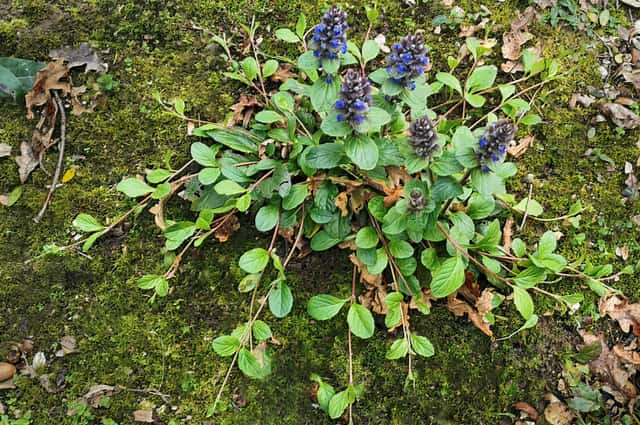
Bugleweed (Ajuga) is a easy-care plant from the Lamiaceae family. Bugleweed (Ajuga reptans) is a low-growing, mat-forming perennial groundcover native to Europe. It spreads via creeping stolons, forming dense carpets of foliage that range from deep green to bronze-purple, topped with spikes of blue to purple flowers in spring and summer.
Bugleweed grows up to 30cm, spread of 45cm, watering every 7 days, -35°C – 35°C, 40–70% humidity. It is not suitable for indoor environments and safe for pets.
Unlike many tropical plants, Bugleweed tolerates watering mistakes. Best for beginners. Unlike many popular species, Bugleweed is safe to keep around pets.
How to Care for Bugleweed?
TLDR: Bugleweed needs Partial shade, watering every 7 days, and temperatures between -35-35°C with 40-70% humidity.
How Often Should You Water Bugleweed?
Keep soil lightly moist during spring and summer, watering about once a week; reduce watering in winter. Avoid waterlogging, which encourages crown rot.
How Much Light Does Bugleweed Need?
Grows in anything from full sun to full shade, but foliage color is most vibrant with at least 3-4 hours of direct sun per day.
What Is the Best Soil for Bugleweed?
Prefers rich, well-drained soil with a slightly acidic pH (4.5-6.5). Avoid waterlogged conditions, which can cause crown rot.
What Pot Should You Use for Bugleweed?
A wide, shallow container or a bed with underground edging, since the plant spreads quickly via runners.
Care Schedule
Fertilize
Every 365 days
What Is Bugleweed and Where Does It Come From?
Bugleweed (Ajuga reptans) is a low-growing, mat-forming perennial groundcover native to Europe. It spreads via creeping stolons, forming dense carpets of foliage that range from deep green to bronze-purple, topped with spikes of blue to purple flowers in spring and summer.
How to Propagate Bugleweed?
Clump division
Early spring or fall, when the weather is mild, is the best time. Divisions establish quickly since they already have roots.
- 1 Dig up an established clump and separate the rooted rosettes attached to the runners
- 2 Replant the divisions immediately in prepared soil, spacing them 12-15 cm apart
- 3 Water thoroughly right after planting to help them establish
Materials needed:
Seed sowing
Seed propagation is slower and less common than division, since variegated cultivars don't always come true from seed.
- 1 Sow in trays with light potting mix in late winter or early spring
- 2 Keep the mix moist and in indirect light until germination
- 3 Transplant seedlings to their final spot once they have 2-3 true leaves
Materials needed:
How Big Does Bugleweed Grow?
TLDR: Bugleweed can reach up to 30cm tall with Fast growth rate.
Max height
30cm
Spread
45cm
Growth rate
Fast
Foliage
Semi-evergreen
Plant Uses
Ground Cover
Soil coverage
Ornamental
Great for decoration
Medicinal
Medicinal properties
Medicinal Uses
- Traditional use for wound and bruise care
- Historically used as an astringent in herbal infusions
Is your plant showing symptoms?
Click on the symptom to discover possible causes:
What Diseases Commonly Affect Bugleweed?
TLDR: Bugleweed is susceptible to 8 known diseases. Monitor regularly for early detection.
Crown Rot
Crown rot is a serious fungal disease that attacks the crown (base) of the plant where the stem meets the soil. It is caused by various fungal pathogens including Phytophthora, Fusarium, and Rhizoctonia. The disease thrives in waterlogged conditions and can quickly spread to kill the entire plant if not addressed promptly.
Root-Knot Nematodes
Root-knot nematodes (Meloidogyne species) are microscopic roundworms that parasitize plant roots, causing characteristic galls or knots. These soil-borne pests are among the most economically damaging plant pathogens worldwide, affecting a wide range of ornamental and edible plants. The nematodes inject enzymes into root cells, causing abnormal swelling and disrupting water and nutrient uptake.
Powdery Mildew
Powdery mildew is a common fungal disease caused by various fungi species including Erysiphe, Podosphaera, Oïdium, and Leveillula. It affects over 10,000 plant species worldwide. The disease thrives in warm, dry climates with high humidity and appears as a distinctive white powdery coating on plant surfaces.
Aphids
Aphids are small, soft-bodied, pear-shaped insects (1/16 to 1/8 inch long) that feed by sucking nutrient-rich sap from plants. They reproduce rapidly and can quickly weaken plants, causing distorted growth and transmitting plant viruses. Aphids come in various colors including green, black, red, yellow, brown, and gray. They secrete honeydew, a sticky substance that attracts ants and encourages sooty mold growth.
Meaning & Symbolism
Bugleweed's tenacious spread and long history in folk medicine link it to resilience, protection, and quiet persistence.
Fun Facts
The genus name "Ajuga" comes from Latin and may relate to the absence of a "yoke" (calyx lobe), a trait typical of the mint family.
Its spiky flower clusters attract bees and other pollinators in early spring.
Some cultivars feature metallic-purple or variegated foliage, popular in ornamental garden design.
It is considered deer-resistant, making it popular in gardens where deer browsing is a problem.
Frequently asked questions
Does bugleweed need full sun?
How often should I water bugleweed?
Is bugleweed toxic to dogs and cats?
How do I control bugleweed's spreading growth?
What's the best way to propagate bugleweed?
Compare with similar plants
| Attribute | Difficulty | Light | Watering | Pet Safe |
|---|---|---|---|---|
| Field Maple | Easy | Bright indirect | 14d | ✓ |
| Silver Birch | Easy | Direct sun | 14d | ✓ |
| Common Blanketflower | Easy | Direct sun | 10d | ✓ |
| Cushion Bush | Easy | Direct sun | 14d | ✓ |
Choose & Compare
Sources & References
- Ajuga, How to Grow and care for Ajugas and Bugleweed plants - Garden Helper
- Ajuga reptans | North Carolina Extension Gardener Plant Toolbox
- Growing and Caring for Bugleweed (Ajuga reptans) - The Leaf Journal
- How to grow and care for Ajuga reptans - BBC Gardeners World Magazine
- Ajuga Pests | Plant Addicts
- Ajuga reptans (Bugleweed) - Gardenia.net





