Asparagaceae
Hosta fortunei - Fortune's Hosta Care Guide
Hosta fortunei
Easy-care shade perennial: keep soil consistently moist but well-drained, provide dappled or partial shade, and protect from slugs and snails, its main pest threat.
Every 4 days
Low light
10° - 27°C
40% - 70%
Categories
What is Fortune's Hosta?
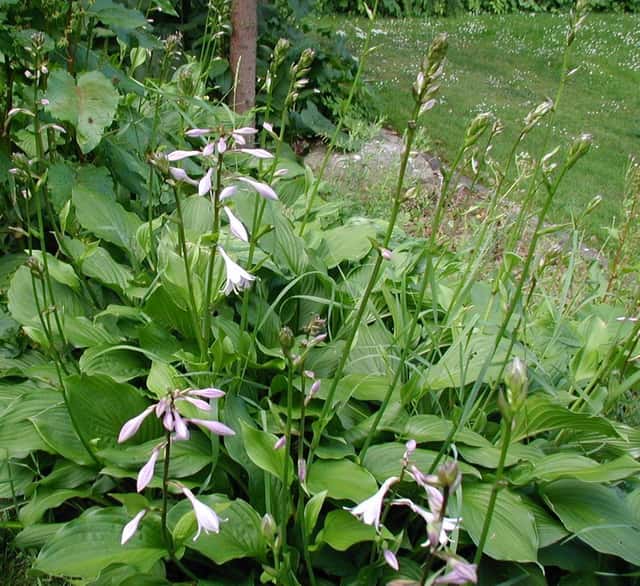
Fortune's Hosta (Hosta fortunei) is a easy-care plant from the Asparagaceae family. Hosta fortunei, commonly known as Fortune's hosta or plantain lily, is a clump-forming herbaceous perennial prized for its broad, heart-shaped blue-green to green leaves, often edged or streaked with cream or gold depending on the cultivar. Believed to have originated from cultivated plants in Japan...
Fortune's Hosta grows up to 60cm, spread of 90cm, watering every 4 days, 10°C – 27°C, 40–70% humidity. It is not suitable for indoor environments and not safe for pets.
Unlike many tropical plants, Fortune's Hosta tolerates watering mistakes. Best for beginners. Without precautions, ingestion can cause irritation in pets. Keep out of reach of cats and dogs.
How to Care for Fortune's Hosta?
TLDR: Fortune's Hosta needs Low light, watering every 4 days, and temperatures between 10-27°C with 40-70% humidity.
How Often Should You Water Fortune's Hosta?
Water deeply whenever the top few centimeters of soil feel dry, aiming for about 2.5 cm of water per week; avoid letting the soil dry out completely or stay waterlogged.
How Much Light Does Fortune's Hosta Need?
Provide dappled or partial shade with protection from hot afternoon sun; morning sun is tolerated, especially by golden-leaved cultivars, but deep shade can reduce leaf variegation.
What Is the Best Soil for Fortune's Hosta?
Plant in rich, humus-heavy soil that drains well but retains moisture; amend heavy clay with compost and mulch to conserve moisture and suppress weeds.
What Pot Should You Use for Fortune's Hosta?
Use a wide, deep container (at least 30-40 cm) with generous drainage holes; unglazed terracotta or a sturdy plastic pot works well to keep roots cool and moist without waterlogging.
Care Schedule
Fertilize
Every 60 days
What Is Fortune's Hosta and Where Does It Come From?
Hosta fortunei, commonly known as Fortune's hosta or plantain lily, is a clump-forming herbaceous perennial prized for its broad, heart-shaped blue-green to green leaves, often edged or streaked with cream or gold depending on the cultivar. Believed to have originated from cultivated plants in Japan, it thrives in shaded and woodland garden settings, sending up tall spikes of pale lavender, bell-shaped flowers in summer. Its lush, textured foliage makes it a staple of shade gardens and mixed borders.
How to Propagate Fortune's Hosta?
Clump Division
Divide every 3-5 years to rejuvenate large clumps and multiply your plants; avoid dividing during hot, dry weather to reduce transplant stress.
- 1 In early spring before new growth emerges (or in fall), dig up the entire clump with a garden fork.
- 2 Rinse off excess soil so you can see the crown and root mass clearly.
- 3 Use a sharp, clean knife or spade to split the clump into sections, each with at least one growth eye and a healthy portion of roots.
- 4 Replant divisions immediately at the same depth they were growing, spacing them 45-60 cm apart.
- 5 Water thoroughly after replanting and keep soil consistently moist until new growth appears.
Materials needed:
Seed Propagation
Seed-grown hostas often do not come true to the parent cultivar, especially variegated forms, so division is preferred for named varieties.
- 1 Collect ripe seed pods in fall once they turn brown and split.
- 2 Sow seeds in a seed-starting tray with moist, well-draining potting mix.
- 3 Keep in a cool, bright spot and maintain even moisture until germination.
- 4 Transplant seedlings outdoors once they have several true leaves and danger of frost has passed.
Materials needed:
How Big Does Fortune's Hosta Grow?
TLDR: Fortune's Hosta can reach up to 60cm tall with Medium growth rate.
Max height
60cm
Spread
90cm
Growth rate
Medium
Foliage
Deciduous
Warning: Toxic Plant
This plant can be toxic if ingested. Keep out of reach of:
Plant Uses
Ornamental
Great for decoration
Ground Cover
Soil coverage
Edible
Can be consumed
Culinary Uses
- Young spring shoots ("urui") are boiled or sauteed as a vegetable in Japanese cuisine, similar in preparation to asparagus.
Is your plant showing symptoms?
Click on the symptom to discover possible causes:
What Diseases Commonly Affect Fortune's Hosta?
TLDR: Fortune's Hosta is susceptible to 7 known diseases. Monitor regularly for early detection.
Anthracnose
Anthracnose is a fungal disease caused by fungi in the genus Colletotrichum that affects many plants, including vegetables, fruits, and trees. The disease thrives in cool, wet conditions, causing dark, sunken lesions on leaves, stems, flowers, and fruits.
Crown Rot
Crown rot is a serious fungal disease that attacks the crown (base) of the plant where the stem meets the soil. It is caused by various fungal pathogens including Phytophthora, Fusarium, and Rhizoctonia. The disease thrives in waterlogged conditions and can quickly spread to kill the entire plant if not addressed promptly.
Root Rot
Root rot is a serious fungal disease that affects the root system of plants, causing them to decay and die. It is primarily caused by overwatering, poor drainage, or soil-borne fungi such as Pythium, Phytophthora, Rhizoctonia, and Fusarium. The disease thrives in waterlogged conditions where roots are deprived of oxygen, making them susceptible to fungal infection.
Slugs and Snails
Slugs and snails are mollusks that feed on plant tissue, causing irregular holes in leaves and damage to young seedlings. They are most active at night and in moist conditions, leaving characteristic silvery slime trails. These pests can quickly devastate gardens, especially during wet seasons.
Meaning & Symbolism
Broad, layered hosta leaves are often associated with abundance, devotion, and quiet shade in garden tradition, reflecting the calm, shaded corners where the plant thrives.
Fun Facts
Hosta fortunei is a hybrid species first described from cultivated Japanese plants, and its exact wild origin remains uncertain.
Young hosta shoots are eaten as a spring vegetable in parts of Japan, where they are called "urui".
Hosta leaves range from tiny 5 cm cultivars to giants over 60 cm across, all descending from a handful of wild species.
Frequently asked questions
Is Hosta fortunei toxic to cats and dogs?
How much sun does Hosta fortunei need?
How often should I water Hosta fortunei?
What pests commonly damage Hosta fortunei?
Compare with similar plants
| Attribute | Difficulty | Light | Watering | Pet Safe |
|---|---|---|---|---|
| Field Maple | Easy | Bright indirect | 14d | ✓ |
| Silver Birch | Easy | Direct sun | 14d | ✓ |
| Cushion Bush | Easy | Direct sun | 14d | ✓ |
| Peruvian peppertree | Easy | Direct sun | 14d | ⚠️ |





