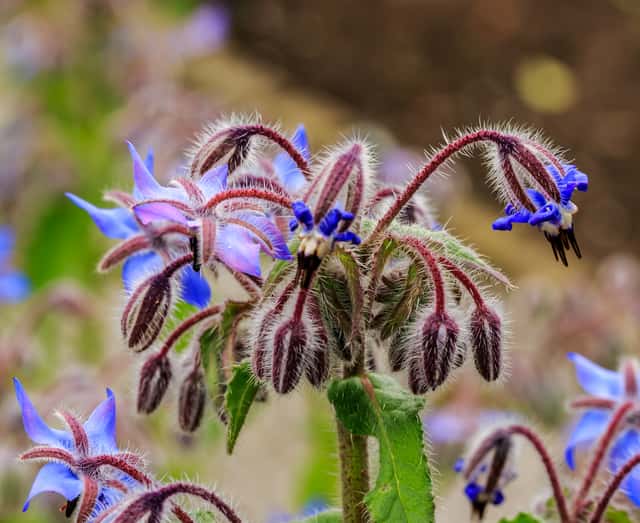
Boraginaceae
Borage: Aromatic Plant
Borago officinalis
Grow borage in full sun to part shade in fertile, well-drained soil. Water regularly while seedlings establish; once mature, allow the topsoil to dry between waterings. It needs little to no feeding and self-seeds freely season after season.
Every 7 days
Bright indirect
4° - 29°C
40% - 70%
Categories
What is Borage?
Borage (Borago officinalis) is a easy-care plant from the Boraginaceae family. Borage is a fast-growing, hardy annual herb in the Boraginaceae family, prized for its coarse, hairy leaves and vivid star-shaped blue flowers. Native to the Mediterranean region, it has been grown for centuries as a culinary, medicinal, and ornamental plant, and is one of the best bee and pollinato...
Borage grows up to 90cm, spread of 40cm, watering every 7 days, 4°C – 29°C, 40–70% humidity. It is not suitable for indoor environments and not safe for pets.
Unlike many tropical plants, Borage tolerates watering mistakes. Best for beginners. Without precautions, ingestion can cause irritation in pets. Keep out of reach of cats and dogs.
How to Care for Borage?
TLDR: Borage needs Bright indirect, watering every 7 days, and temperatures between 4-29°C with 40-70% humidity.
How Often Should You Water Borage?
Keep the soil evenly moist for young plants; established borage tolerates brief dry spells between waterings, but avoid letting it sit in soggy soil.
How Much Light Does Borage Need?
Full sun produces the most flowers, though borage tolerates partial shade in hot climates.
What Is the Best Soil for Borage?
Well-drained, fertile soil across a wide pH range (4.8-8.3); avoid waterlogged spots.
What Pot Should You Use for Borage?
Use a deep pot (at least 10-12 inches) to accommodate its taproot; unglazed terracotta with good drainage works well, since borage resents transplanting.
What Is Borage and Where Does It Come From?
Borage is a fast-growing, hardy annual herb in the Boraginaceae family, prized for its coarse, hairy leaves and vivid star-shaped blue flowers. Native to the Mediterranean region, it has been grown for centuries as a culinary, medicinal, and ornamental plant, and is one of the best bee and pollinator plants for the vegetable garden.
How to Propagate Borage?
Direct seed sowing
- Sow seeds in their final growing spot, since the taproot resents transplanting
- Sow in spring once frost risk has passed
- 1 Prepare the soil
Loosen the soil and work in organic compost at the planting site.
- 2 Sow
Plant seeds about 1 cm deep, spaced 30-45 cm apart.
- 3 Water
Keep the soil evenly moist until germination, which takes 5-15 days.
- 4 Thin seedlings
Remove weaker seedlings to give the strongest plants room to grow.
Materials needed:
How Big Does Borage Grow?
TLDR: Borage can reach up to 90cm tall with Medium growth rate.
Max height
90cm
Spread
40cm
Growth rate
Medium
Foliage
Deciduous
Warning: Toxic Plant
This plant can be toxic if ingested. Keep out of reach of:
Plant Uses
Edible
Can be consumed
Medicinal
Medicinal properties
Aromatic
Pleasant fragrance
Ornamental
Great for decoration
Medicinal Uses
- Traditional infusion for fevers and coughs (leaves)
- Traditional use as a mild diuretic
- Soothing topical use for skin (traditional)
Culinary Uses
- Fresh leaves in salads for a cucumber-like flavor
- Edible flowers as a garnish for drinks and desserts
- Flowers frozen in ice cubes for summer cocktails
Is your plant showing symptoms?
Click on the symptom to discover possible causes:
What Diseases Commonly Affect Borage?
TLDR: Borage is susceptible to 5 known diseases. Monitor regularly for early detection.
Aphids
Aphids are small, soft-bodied, pear-shaped insects (1/16 to 1/8 inch long) that feed by sucking nutrient-rich sap from plants. They reproduce rapidly and can quickly weaken plants, causing distorted growth and transmitting plant viruses. Aphids come in various colors including green, black, red, yellow, brown, and gray. They secrete honeydew, a sticky substance that attracts ants and encourages sooty mold growth.
Slugs and Snails
Slugs and snails are mollusks that feed on plant tissue, causing irregular holes in leaves and damage to young seedlings. They are most active at night and in moist conditions, leaving characteristic silvery slime trails. These pests can quickly devastate gardens, especially during wet seasons.
Leafminers
Leafminers are the larvae of various insects including flies, moths, sawflies, and beetles that tunnel between leaf surfaces, creating distinctive serpentine trails or blotchy patches. While primarily cosmetic, severe infestations can weaken plants by reducing photosynthesis capacity and making them susceptible to secondary infections.
Powdery Mildew
Powdery mildew is a common fungal disease caused by various fungi species including Erysiphe, Podosphaera, Oïdium, and Leveillula. It affects over 10,000 plant species worldwide. The disease thrives in warm, dry climates with high humidity and appears as a distinctive white powdery coating on plant surfaces.
Meaning & Symbolism
Borage has long symbolized courage — Roman soldiers reportedly drank borage-steeped wine before battle, and the old Latin motto "Ego Borago gaudia semper ago" ("I, Borage, bring courage/joy") carried into English herbal lore.
Compare with similar plants
| Attribute | Difficulty | Light | Watering | Pet Safe |
|---|---|---|---|---|
| Field Maple | Easy | Bright indirect | 14d | ✓ |
| Silver Birch | Easy | Direct sun | 14d | ✓ |
| Cushion Bush | Easy | Direct sun | 14d | ✓ |
| Peruvian peppertree | Easy | Direct sun | 14d | ⚠️ |





