Scrophulariaceae
Common Mullein: Full Sun Plant
Verbascum thapsus
Common mullein is a hardy and low-maintenance biennial plant. It thrives best in full sun and well-drained, preferably sandy soil conditions. Watering is rarely necessary – the plant is highly drought-tolerant and actually thrives best in poor soil without fertilization. Transplanting and nutrient-rich soil can weaken the stems. The plant is unsuitable for indoor cultivation.
Every 10 days
Direct sun
-34° - 35°C
30% - 60%
Categories
What is Common Mullein?
Common Mullein (Verbascum thapsus) is a easy-care plant from the Scrophulariaceae family. Common mullein (Verbascum thapsus) is a biennial herbaceous plant in the Scrophulariaceae family, native to Europe, North Africa, and Asia. In its first year, the plant forms a flat rosette of large, velvety, gray-green leaves covered in dense, white hairs. In the second year, a sturdy, erect flower...
Common Mullein grows up to 2.0m, spread of 75cm, watering every 10 days, -34°C – 35°C, 30–60% humidity. It is not suitable for indoor environments and safe for pets.
Unlike many tropical plants, Common Mullein tolerates watering mistakes. Best for beginners. Unlike many popular species, Common Mullein is safe to keep around pets.
How to Care for Common Mullein?
TLDR: Common Mullein needs Direct sun, watering every 10 days, and temperatures between -34-35°C with 30-60% humidity.
How Often Should You Water Common Mullein?
Water sparingly and only during prolonged dry spells. Allow the soil to dry out completely between waterings. Common mullein is extremely drought-tolerant and can withstand dry conditions for weeks at a time. Avoid letting water sit at the roots, as this can lead to rot.
How Much Light Does Common Mullein Need?
The plant requires full sun – a minimum of 6 hours of direct sunlight daily. It does not thrive in shade and should be placed in the sunniest spot in the garden. Requires outdoor placement and is not suitable as a houseplant.
What Is the Best Soil for Common Mullein?
Prefers poor, well-draining soil – sand, gravel, or chalky soil is ideal. Avoid nutrient-rich, heavy, or damp soil, as it results in weak stems and increases the risk of rot. pH tolerance: 5.5 to 8.0. Improved drainage with gravel or sand is beneficial in heavy soils.
What Pot Should You Use for Common Mullein?
Generally unsuitable for pot cultivation due to its large size (up to 2 m) and need for full sun. However, it can be grown in very large containers (at least 50 L) with a sandy, well-draining substrate and placed outdoors on a sunny terrace.
Care Schedule
Fertilize
Every 60 days
What Is Common Mullein and Where Does It Come From?
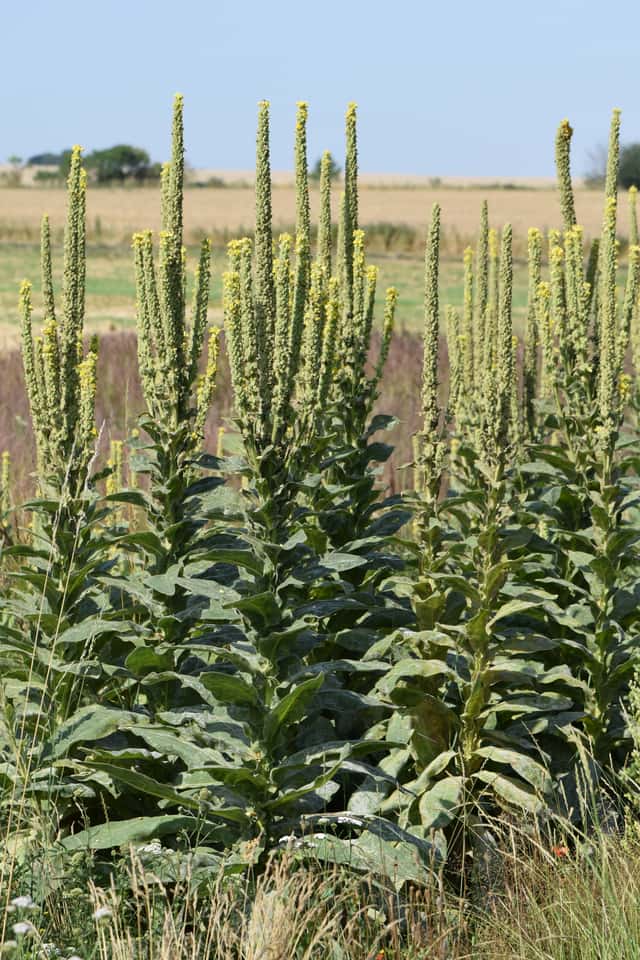
Common mullein (Verbascum thapsus) is a biennial herbaceous plant in the Scrophulariaceae family, native to Europe, North Africa, and Asia. In its first year, the plant forms a flat rosette of large, velvety, gray-green leaves covered in dense, white hairs. In the second year, a sturdy, erect flower stalk emerges, reaching heights of 2 meters or more, crowned by a dense spike of bright yellow flowers. The plant is famous for its medicinal properties and has historically been used to treat respiratory ailments, inflammation, and wounds. It thrives in full sun on dry, well-drained soils and is very hardy, resistant to drought and frost down to -34°C (-30°F).
How Big Does Common Mullein Grow?
TLDR: Common Mullein can reach up to 2.0m tall with Fast growth rate.
Max height
2.0m
Spread
75cm
Growth rate
Fast
Foliage
Deciduous
Plant Uses
Medicinal
Medicinal properties
Ornamental
Great for decoration
Medicinal Uses
- Expectorant and demulcent for coughs, bronchitis, and respiratory infections – approved by the German Commission E
- Flower tea infusion relieves sore throats and dry coughs
- Flower oil (infused in olive oil) for treating ear infections and hemorrhoids
- Leaf poultices for wound treatment, bruises, rheumatic pain, and swollen joints
- Traditionally used for diarrhea, colic, asthma, and tuberculosis
- Applied topically for warts, boils, and frostbite
Culinary Uses
- Flowers can be added to tea for color and a mild honey-like flavor
- Younger leaves have historically been used as an additive to tobacco substitutes and herbal smokes – not for consumption
Is your plant showing symptoms?
Click on the symptom to discover possible causes:
What Diseases Commonly Affect Common Mullein?
TLDR: Common Mullein is susceptible to 7 known diseases. Monitor regularly for early detection.
Powdery Mildew
Powdery mildew is a common fungal disease caused by various fungi species including Erysiphe, Podosphaera, Oïdium, and Leveillula. It affects over 10,000 plant species worldwide. The disease thrives in warm, dry climates with high humidity and appears as a distinctive white powdery coating on plant surfaces.
Spider Mites
Spider mites are tiny arachnids (less than 1/20 inch long) related to spiders and ticks that feed on plant sap. They thrive in hot, dry conditions and can cause significant damage to ornamental and vegetable plants. During severe infestations, crop losses can reach 14% or higher as these pests disrupt vital plant processes including photosynthesis, carbon dioxide absorption, and transpiration.
Slugs and Snails
Slugs and snails are mollusks that feed on plant tissue, causing irregular holes in leaves and damage to young seedlings. They are most active at night and in moist conditions, leaving characteristic silvery slime trails. These pests can quickly devastate gardens, especially during wet seasons.
Mosaic Virus
Mosaic virus is a group of plant viruses that cause mottled, patchy patterns on leaves and can affect a wide variety of plants. The virus creates characteristic yellow, white, and green mosaic patterns, often accompanied by stunted growth and deformed plant parts. This highly contagious disease spreads rapidly through insect vectors and contaminated tools.
Meaning & Symbolism
Common mullein symbolizes protection, health, and luck. In folklore tradition, the plant was carried as an amulet against evil spirits and is used in rituals as a symbol of courage and strength. Native American peoples considered the plant sacred and used it for ritual purposes.
Compare with similar plants
| Attribute | Difficulty | Light | Watering | Pet Safe |
|---|---|---|---|---|
| Field Maple | Easy | Bright indirect | 14d | ✓ |
| Silver Birch | Easy | Direct sun | 14d | ✓ |
| Cushion Bush | Easy | Direct sun | 14d | ✓ |
| Peruvian peppertree | Easy | Direct sun | 14d | ⚠️ |