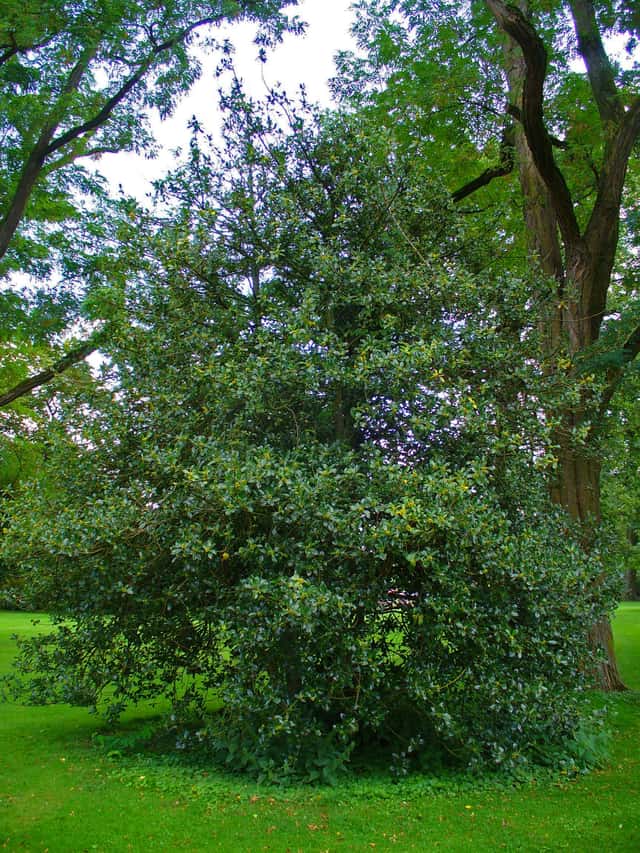
Aquifoliaceae
English Holly: Complete Care Guide
Ilex aquifolium
Give English Holly full sun to partial shade, keep soil evenly moist but well drained, and feed with an acid-loving fertilizer once a year in spring. It is slow-growing, tolerates hard pruning, and needs little routine care once established.
Every 7 days
Bright indirect
16° - 24°C
30% - 50%
Categories
What is English Holly?
English Holly (Ilex aquifolium) is a medium-care plant from the Aquifoliaceae family. English Holly is a slow-growing evergreen shrub or small tree prized for its glossy, spiny dark-green leaves and bright red winter berries. Native to western and southern Europe, it forms a dense pyramidal habit and is a classic feature of winter gardens and holiday decoration, though its berries ar...
English Holly grows up to 15.0m, spread of 700cm, watering every 7 days, 16°C – 24°C, 30–50% humidity. It is not suitable for indoor environments and not safe for pets.
Without precautions, ingestion can cause irritation in pets. Keep out of reach of cats and dogs.
How to Care for English Holly?
TLDR: English Holly needs Bright indirect, watering every 7 days, and temperatures between 16-24°C with 30-50% humidity.
How Often Should You Water English Holly?
Water deeply and regularly while young; once established it tolerates short dry spells but dislikes waterlogged soil, so let the topsoil dry slightly between waterings and never let it sit in standing water.
How Much Light Does English Holly Need?
Thrives in six or more hours of full sun a day but also grows well in partial shade; in hot climates give afternoon shade to prevent leaf scorch.
What Is the Best Soil for English Holly?
Plant in well-draining, humus-rich soil with an acidic to neutral pH; amend heavy or alkaline soil with peat moss or compost to improve drainage and lower pH.
What Pot Should You Use for English Holly?
Large pot or ground planting with excellent drainage; if containerized, use a wide, heavy pot to anchor its eventual size
Care Schedule
Fertilize
Every 365 days
What Is English Holly and Where Does It Come From?
English Holly is a slow-growing evergreen shrub or small tree prized for its glossy, spiny dark-green leaves and bright red winter berries. Native to western and southern Europe, it forms a dense pyramidal habit and is a classic feature of winter gardens and holiday decoration, though its berries are toxic if eaten.
How to Propagate English Holly?
Semi-hardwood stem cutting
Keep the medium consistently moist, provide bright indirect light, and be patient; rooting can take up to two months.
- 1 Take a 6-8 inch cutting of new growth in late winter or early spring
- 2 Strip leaves from the lower half and remove a thin layer of bark from the bottom 2 inches
- 3 Dip the cut end in rooting hormone powder
- 4 Insert into a 50-50 mix of moist peat moss and perlite
- 5 Cover with a plastic bag or humidity dome and keep at 60F or warmer until roots form
Materials needed:
How Big Does English Holly Grow?
TLDR: English Holly can reach up to 15.0m tall with Slow growth rate.
Max height
15.0m
Spread
7.0m
Growth rate
Slow
Foliage
Evergreen
Warning: Toxic Plant
This plant can be toxic if ingested. Keep out of reach of:
Plant Uses
Ornamental
Great for decoration
Is your plant showing symptoms?
Click on the symptom to discover possible causes:
What Diseases Commonly Affect English Holly?
TLDR: English Holly is susceptible to 7 known diseases. Monitor regularly for early detection.
Phytophthora Root Rot
The Phytophthora genus consists of soil-borne oomycetes (water molds) that act as plant pathogens, primarily affecting trees and woody plants. It typically spreads through the root system, leading to systemic decline and eventual plant collapse.
Leafminers
Leafminers are the larvae of various insects including flies, moths, sawflies, and beetles that tunnel between leaf surfaces, creating distinctive serpentine trails or blotchy patches. While primarily cosmetic, severe infestations can weaken plants by reducing photosynthesis capacity and making them susceptible to secondary infections.
Scale Insects
Scale insects are small sap-sucking pests that appear as brown, shell-like bumps on plant stems and leaves. There are over 25 species, divided into armored (hard) and unarmored (soft) scales. They feed by piercing plant tissue and extracting sap, which weakens the plant and can lead to yellowing, stunted growth, and even death if left untreated. They also excrete honeydew, which attracts ants and promotes sooty mold growth.
Powdery Mildew
Powdery mildew is a common fungal disease caused by various fungi species including Erysiphe, Podosphaera, Oïdium, and Leveillula. It affects over 10,000 plant species worldwide. The disease thrives in warm, dry climates with high humidity and appears as a distinctive white powdery coating on plant surfaces.
Meaning & Symbolism
In pre-Christian Europe holly symbolized the enduring winter sun and protection against evil spirits; Christian tradition later linked its thorny leaves to Christ's crown of thorns and its red berries to his blood, cementing holly as an enduring emblem of Christmas.
Compare with similar plants
| Attribute | Difficulty | Light | Watering | Pet Safe |
|---|---|---|---|---|
| Dark Fieldcap | Medium | Low light | 2d | ⚠️ |
| Azalea | Medium | Partial shade | 3d | ⚠️ |
| Bougainvillea | Medium | Direct sun | 7d | ⚠️ |
| Wild Lettuce | Medium | Direct sun | 7d | ⚠️ |
Choose & Compare
Sources & References
- Ilex aquifolium - NC State Extension Gardener Plant Toolbox
- How to Grow and Care for English Holly - Gardener's Path
- Toxic and Non-toxic Plants: English Holly - ASPCA
- Holly leaf blight: Symptoms, Causes & Control - RHS
- Holly leaf miner: Identification & Control - RHS
- Holly Diseases & Insect Pests - Clemson HGIC



