Ericaceae
Mountain Laurel (Kalmia latifolia): Complete Care Guide
Kalmia latifolia
Plant mountain laurel in acidic, well-draining soil enriched with organic matter, in partial shade to filtered sun. Keep roots consistently moist but never waterlogged, and mulch generously to protect its shallow root system from heat and drought.
Every 7 days
Partial shade
-34° - 32°C
% - %
Categories
What is Mountain Laurel?
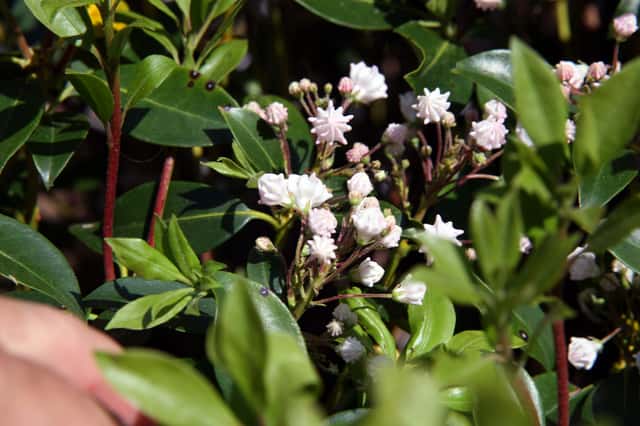
Mountain Laurel (Kalmia latifolia) is a medium-care plant from the Ericaceae family. Mountain laurel is a dense, rounded evergreen shrub native to the eastern United States, prized for its striking clusters of cup-shaped flowers that bloom in late spring. Its glossy, leathery leaves provide year-round structure, while the saucer-shaped pink, white, or purple-marked blooms attract po...
Mountain Laurel grows up to 4.5m, spread of 240cm, watering every 7 days, -34°C – 32°C. It is not suitable for indoor environments and not safe for pets.
Without precautions, ingestion can cause irritation in pets. Keep out of reach of cats and dogs.
How to Care for Mountain Laurel?
TLDR: Mountain Laurel needs Partial shade, watering every 7 days, and temperatures between -34-32°C with 40-70% humidity.
How Often Should You Water Mountain Laurel?
Water deeply once a week during the growing season, more often in hot or dry spells, and let the top few centimeters of soil dry slightly between waterings to avoid root rot.
How Much Light Does Mountain Laurel Need?
Give it morning sun and afternoon shade for the best flowering; it tolerates full shade but blooms less, and full sun only in cooler climates.
What Is the Best Soil for Mountain Laurel?
Use acidic (pH 4.5 to 6.0), humus-rich, well-drained soil, the same mix that suits azaleas and rhododendrons. Avoid alkaline or waterlogged sites.
What Pot Should You Use for Mountain Laurel?
Best planted directly in the ground; if potted, use a wide container with excellent drainage and an acidic, ericaceous potting mix.
Care Schedule
Fertilize
Every 365 days
What Is Mountain Laurel and Where Does It Come From?
Mountain laurel is a dense, rounded evergreen shrub native to the eastern United States, prized for its striking clusters of cup-shaped flowers that bloom in late spring. Its glossy, leathery leaves provide year-round structure, while the saucer-shaped pink, white, or purple-marked blooms attract pollinators. Despite its beauty, every part of the plant is highly toxic, so it is best admired at a safe distance from pets and children.
How to Propagate Mountain Laurel?
Semi-hardwood stem cuttings
Mountain laurel is notoriously slow and difficult to root from cuttings, so patience and consistent humidity are essential.
- 1 Take a 10-15 cm semi-hardwood cutting from a healthy stem in mid to late summer
- 2 Wound the base slightly and dip it in rooting hormone
- 3 Insert into a moist, acidic, well-draining rooting medium
- 4 Keep under high humidity with bottom heat until roots form
Materials needed:
Ground layering
Layering is more reliable than cuttings for home gardeners since the branch stays attached to the parent plant while rooting.
- 1 Select a low, flexible branch and wound the underside where it touches the soil
- 2 Pin the wounded section to the ground and cover with acidic soil
- 3 Keep the area consistently moist
- 4 Once well rooted, sever from the parent plant and transplant
Materials needed:
How Big Does Mountain Laurel Grow?
TLDR: Mountain Laurel can reach up to 4.5m tall with Slow growth rate.
Max height
4.5m
Spread
2.4m
Growth rate
Slow
Foliage
Evergreen
Warning: Toxic Plant
This plant can be toxic if ingested. Keep out of reach of:
Plant Uses
Ornamental
Great for decoration
Is your plant showing symptoms?
Click on the symptom to discover possible causes:
What Diseases Commonly Affect Mountain Laurel?
TLDR: Mountain Laurel is susceptible to 6 known diseases. Monitor regularly for early detection.
Root Rot
Root rot is a serious fungal disease that affects the root system of plants, causing them to decay and die. It is primarily caused by overwatering, poor drainage, or soil-borne fungi such as Pythium, Phytophthora, Rhizoctonia, and Fusarium. The disease thrives in waterlogged conditions where roots are deprived of oxygen, making them susceptible to fungal infection.
Leaf Spot
Leaf spot is a common fungal disease caused by various pathogens including Alternaria, Ascochyta, Colletotrichum, Septoria, and Venturia. It primarily affects leaves, causing discolored spots that can lead to premature leaf drop if left untreated.
Powdery Mildew
Powdery mildew is a common fungal disease caused by various fungi species including Erysiphe, Podosphaera, Oïdium, and Leveillula. It affects over 10,000 plant species worldwide. The disease thrives in warm, dry climates with high humidity and appears as a distinctive white powdery coating on plant surfaces.
Scale Insects
Scale insects are small sap-sucking pests that appear as brown, shell-like bumps on plant stems and leaves. There are over 25 species, divided into armored (hard) and unarmored (soft) scales. They feed by piercing plant tissue and extracting sap, which weakens the plant and can lead to yellowing, stunted growth, and even death if left untreated. They also excrete honeydew, which attracts ants and promotes sooty mold growth.
Meaning & Symbolism
As the state flower of Connecticut and Pennsylvania, mountain laurel represents ambition, endurance, and the rugged beauty of the Appalachian wilderness.
Fun Facts
Mountain laurel is the state flower of both Connecticut and Pennsylvania.
Its flower buds are pleated like tiny origami before they pop open into star-shaped blooms.
The wood was historically used to carve spoons, earning it the nickname spoonwood.
Bees can produce toxic honey after feeding heavily on mountain laurel nectar.
Frequently asked questions
Is mountain laurel toxic to pets?
How much sun does mountain laurel need?
Why is my mountain laurel not blooming?
What soil does mountain laurel prefer?
Compare with similar plants
| Attribute | Difficulty | Light | Watering | Pet Safe |
|---|---|---|---|---|
| Dark Fieldcap | Medium | Low light | 2d | ⚠️ |
| Azalea | Medium | Partial shade | 3d | ⚠️ |
| Bougainvillea | Medium | Direct sun | 7d | ⚠️ |
| Wild Lettuce | Medium | Direct sun | 7d | ⚠️ |
Choose & Compare
Sources & References
- Kalmia latifolia - NC State Extension Gardener Plant Toolbox
- Mountain Laurel (Kalmia latifolia): Benefits, Challenges, and Uses - Gardenia.net
- Kalmia latifolia - Lady Bird Johnson Wildflower Center
- Leaf Diseases of Mountain-Laurel - University of Illinois IPM
- Problems of Mountain Laurel - Yardener.com



