Bromeliaceae
Blushing Bromeliad: Complete Care Guide
Nidularium fulgens
Thrives in bright indirect light with high humidity (60-80%). Water weekly by filling the central cup with distilled or rainwater. Flush the cup every 2-3 weeks. Prefers peaty, well-draining soil. Temperature 13-27°C. Slow grower; fertilize monthly in spring and summer.
Every 7 days
Partial shade
13° - 27°C
60% - 80%
Categories
What is Blushing Bromeliad?
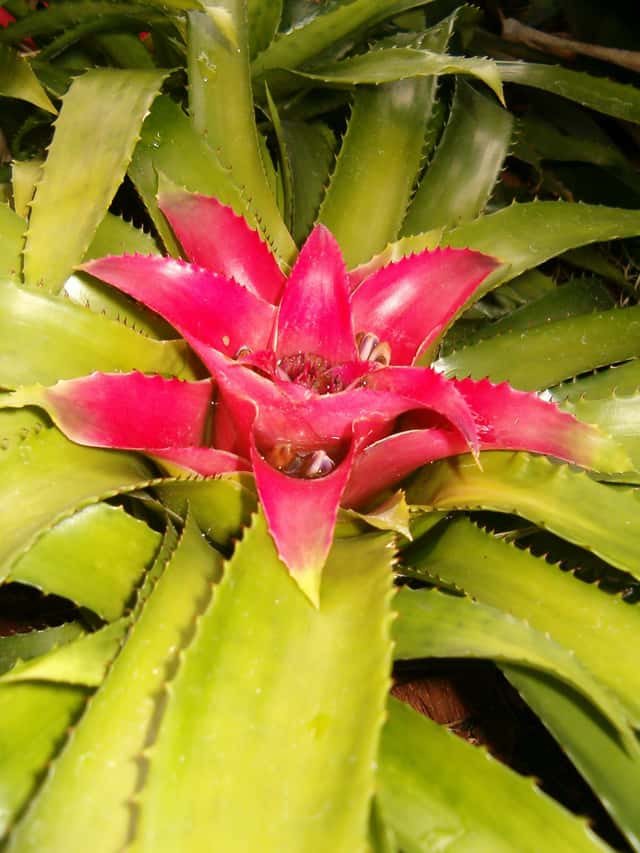
Blushing Bromeliad (Nidularium fulgens) is a medium-care plant from the Bromeliaceae family. Nidularium fulgens, known as the Blushing Bromeliad, is a stunning bromeliad native to the understory of Brazil's Atlantic Forest. It forms a flat rosette of green, spotted leaves, and when it blooms, the central cup flushes brilliant red, framing clusters of small violet flowers within.
Blushing Bromeliad grows up to 50cm, spread of 60cm, watering every 7 days, 13°C – 27°C, 60–80% humidity. It is suitable for indoor environments and safe for pets.
Unlike many popular species, Blushing Bromeliad is safe to keep around pets. Without adequate drainage, root rot can develop within 14 days.
How to Care for Blushing Bromeliad?
TLDR: Blushing Bromeliad needs Partial shade, watering every 7 days, and temperatures between 13-27°C with 60-80% humidity.
How Often Should You Water Blushing Bromeliad?
Water every 7 days by filling the central rosette cup with clean, soft water. Empty and refill the cup every 2-3 weeks to prevent stagnation. Keep the potting medium slightly moist but never waterlogged.
How Much Light Does Blushing Bromeliad Need?
Place in bright, indirect light near a filtered window. Avoid direct strong sunlight, which bleaches the vibrant red bracts and scorches the leaves. Insufficient light may prevent flowering.
What Is the Best Soil for Blushing Bromeliad?
Use a light, well-draining mix of peat, perlite, and coconut coir. Slightly acidic pH of 5.5-6.5. Ensure the pot has adequate drainage holes to prevent root rot.
What Pot Should You Use for Blushing Bromeliad?
Terracotta or ceramic pots with drainage holes. Small pots are preferred, as the plant likes slightly snug roots.
Care Schedule
Fertilize
Every 21 days
Misting
Every 3 days
Repot
Every 365 days
What Is Blushing Bromeliad and Where Does It Come From?
Nidularium fulgens, known as the Blushing Bromeliad, is a stunning bromeliad native to the understory of Brazil's Atlantic Forest. It forms a flat rosette of green, spotted leaves, and when it blooms, the central cup flushes brilliant red, framing clusters of small violet flowers within.
How to Propagate Blushing Bromeliad?
Pup Division
Do not remove pups too early — wait until they are at least 10-15 cm. Always use clean tools to prevent infection.
- 1 Wait until the pup reaches about one-third the size of the mother plant
- 2 Use a sterilized knife to separate the pup at the base
- 3 Allow the cut end to dry for a few hours
- 4 Plant in moist, well-draining bromeliad mix
- 5 Keep in a humid spot with indirect light until rooted
Materials needed:
How Big Does Blushing Bromeliad Grow?
TLDR: Blushing Bromeliad can reach up to 50cm tall with Slow growth rate.
Max height
50cm
Spread
60cm
Growth rate
Slow
Foliage
Evergreen
Plant Uses
Ornamental
Great for decoration
Is your plant showing symptoms?
Click on the symptom to discover possible causes:
What Diseases Commonly Affect Blushing Bromeliad?
TLDR: Blushing Bromeliad is susceptible to 12 known diseases. Monitor regularly for early detection.
Root Rot
Root rot is a serious fungal disease that affects the root system of plants, causing them to decay and die. It is primarily caused by overwatering, poor drainage, or soil-borne fungi such as Pythium, Phytophthora, Rhizoctonia, and Fusarium. The disease thrives in waterlogged conditions where roots are deprived of oxygen, making them susceptible to fungal infection.
Overwatering
Overwatering occurs when plants receive too much water, depriving roots of oxygen and causing root rot. This environmental stress is one of the most common causes of houseplant death, as waterlogged soil prevents roots from breathing and functioning properly.
Low Humidity Stress
Low humidity stress occurs when indoor air becomes too dry, causing plants to lose moisture faster than they can absorb it through their roots. This is especially common during winter heating periods, near radiators and heating vents, or in air-conditioned spaces. Tropical plants are particularly susceptible to low humidity damage.
Mealybugs
Mealybugs are small, soft-bodied insects covered with a white, waxy, cottony material. They are common pests of houseplants and outdoor plants in mild climates. These sap-sucking insects feed on plant tissue, causing damage, stunted growth, and can lead to plant death if left untreated. They produce sticky honeydew which attracts sooty mold.
Meaning & Symbolism
Symbol of tropical exuberance and the rich biodiversity of Brazil's Atlantic Forest understory.
Fun Facts
Nidularium fulgens is native to Brazil's Atlantic Forest, one of the world's most threatened biomes with less than 12% of its original cover remaining.
The brilliant red center is not actually a flower — it is made up of colored bracts that attract pollinators. The true flowers are the small violet blooms inside.
The mother plant blooms only once in its lifetime, then produces pups before dying, ensuring the continuation of the species.
In the wild, Nidularium fulgens can grow both on the forest floor and as an epiphyte on tree branches.
Frequently asked questions
How often should I water a Blushing Bromeliad?
Is the Blushing Bromeliad toxic to pets?
Why is my Blushing Bromeliad not flowering?
How do I propagate a Blushing Bromeliad?
What light does a Blushing Bromeliad need?
Compare with similar plants
| Attribute | Difficulty | Light | Watering | Pet Safe |
|---|---|---|---|---|
| Dark Fieldcap | Medium | Low light | 2d | ⚠️ |
| Azalea | Medium | Partial shade | 3d | ⚠️ |
| Bougainvillea | Medium | Direct sun | 7d | ⚠️ |
| Wild Lettuce | Medium | Direct sun | 7d | ⚠️ |



