Bromeliaceae
Blushing Bromeliad: Pet-Safe Plant
Neoregelia
Give bright, indirect light with a little morning or filtered direct sun to bring out leaf color, keep the central cup topped up with water, and pot in a coarse, fast-draining bark or orchid-style mix. Feed lightly and infrequently; these plants tolerate neglect far better than overwatering at the roots.
Every 10 days
Partial shade
15° - 27°C
60% - 70%
Categories
What is Blushing Bromeliad?
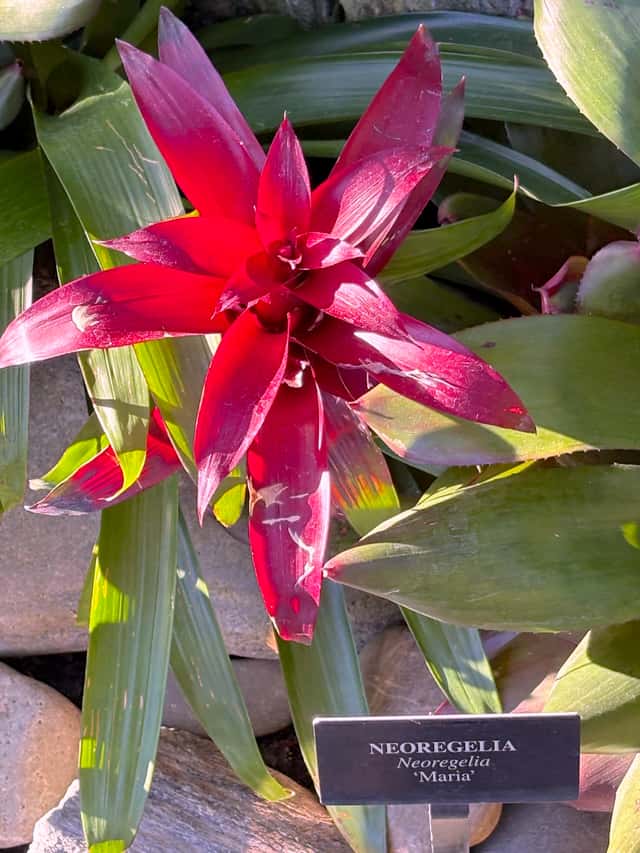
Blushing Bromeliad (Neoregelia) is a easy-care plant from the Bromeliaceae family. Neoregelia is a large genus of tropical bromeliads native to the rainforests of Brazil, grown almost entirely for their bold, colorful rosettes rather than their flowers. Broad, strap-shaped leaves form a tight cup ("tank") at the center, and as the plant nears bloom the innermost leaves "blush" red...
Blushing Bromeliad grows up to 90cm, spread of 90cm, watering every 10 days, 15°C – 27°C, 60–70% humidity. It is suitable for indoor environments and safe for pets.
Unlike many tropical plants, Blushing Bromeliad tolerates watering mistakes. Best for beginners. Unlike many popular species, Blushing Bromeliad is safe to keep around pets. Without adequate drainage, root rot can develop within 20 days.
How to Care for Blushing Bromeliad?
TLDR: Blushing Bromeliad needs Partial shade, watering every 10 days, and temperatures between 15-27°C with 60-70% humidity.
How Often Should You Water Blushing Bromeliad?
Keep the central "tank" filled with water at all times, using rainwater or filtered water if possible since Neoregelia is sensitive to chlorine and mineral buildup. Flush and refresh the cup roughly every 1-2 weeks to prevent stagnation, and let the potting mix dry slightly between waterings at the roots.
How Much Light Does Blushing Bromeliad Need?
Bright, indirect light with a few hours of gentle direct sun produces the richest leaf color; deep shade causes plain green, leggy growth while harsh midday sun can scorch the leaves.
What Is the Best Soil for Blushing Bromeliad?
Use a very free-draining, chunky medium such as orchid bark, coarse perlite, or a bromeliad mix; heavy, water-retentive potting soil invites root rot.
What Pot Should You Use for Blushing Bromeliad?
Wide, shallow terracotta or plastic pot with drainage holes; the broad rosette needs a stable, low container rather than a tall one.
Care Schedule
Fertilize
Every 60 days
Misting
Every 7 days
Rotate
Every 7 days
Repot
Every 365 days
What Is Blushing Bromeliad and Where Does It Come From?
Neoregelia is a large genus of tropical bromeliads native to the rainforests of Brazil, grown almost entirely for their bold, colorful rosettes rather than their flowers. Broad, strap-shaped leaves form a tight cup ("tank") at the center, and as the plant nears bloom the innermost leaves "blush" red, pink or purple, giving the genus its common name. Small tubular white or blue flowers appear low in the cup and are easy to miss. Most Neoregelia are epiphytic or semi-epiphytic in the wild but adapt readily to pots, making them popular, low-maintenance houseplants and patio accents in warm climates.
How to Propagate Blushing Bromeliad?
Offset division (pups)
- Wait until the pup is one-third to one-half the size of the parent before separating it
- The mother rosette dies naturally after flowering, so removing pups lets you keep the planting going
- Let cut surfaces callus for a day before potting
- 1 Wait for pup growth
Allow the pup growing at the base of the parent to reach about one-third to one-half the parent's size.
- 2 Detach the pup
Cut the pup away from the parent stem with a clean, sharp knife, keeping any roots it has already formed.
- 3 Pot the pup
Plant the pup in a small pot of coarse, well-draining bromeliad mix and keep its cup filled with water.
- 4 Establish
Keep in bright indirect light and stable warmth until new roots anchor the pup firmly.
Materials needed:
How Big Does Blushing Bromeliad Grow?
TLDR: Blushing Bromeliad can reach up to 90cm tall with Medium growth rate.
Max height
90cm
Spread
90cm
Growth rate
Medium
Foliage
Evergreen
Plant Uses
Ornamental
Great for decoration
Is your plant showing symptoms?
Click on the symptom to discover possible causes:
What Diseases Commonly Affect Blushing Bromeliad?
TLDR: Blushing Bromeliad is susceptible to 6 known diseases. Monitor regularly for early detection.
Mealybugs
Mealybugs are small, soft-bodied insects covered with a white, waxy, cottony material. They are common pests of houseplants and outdoor plants in mild climates. These sap-sucking insects feed on plant tissue, causing damage, stunted growth, and can lead to plant death if left untreated. They produce sticky honeydew which attracts sooty mold.
Spider Mites
Spider mites are tiny arachnids (less than 1/20 inch long) related to spiders and ticks that feed on plant sap. They thrive in hot, dry conditions and can cause significant damage to ornamental and vegetable plants. During severe infestations, crop losses can reach 14% or higher as these pests disrupt vital plant processes including photosynthesis, carbon dioxide absorption, and transpiration.
Scale Insects
Scale insects are small sap-sucking pests that appear as brown, shell-like bumps on plant stems and leaves. There are over 25 species, divided into armored (hard) and unarmored (soft) scales. They feed by piercing plant tissue and extracting sap, which weakens the plant and can lead to yellowing, stunted growth, and even death if left untreated. They also excrete honeydew, which attracts ants and promotes sooty mold growth.
Leaf Spot
Leaf spot is a common fungal disease caused by various pathogens including Alternaria, Ascochyta, Colletotrichum, Septoria, and Venturia. It primarily affects leaves, causing discolored spots that can lead to premature leaf drop if left untreated.
Meaning & Symbolism
Grown for its dramatic color rather than its blooms, Neoregelia is often seen as a symbol of hidden beauty revealed in time, since the rosette "blushes" brightest only when the plant is finally ready to flower.
Compare with similar plants
| Attribute | Difficulty | Light | Watering | Pet Safe |
|---|---|---|---|---|
| Field Maple | Easy | Bright indirect | 14d | ✓ |
| Silver Birch | Easy | Direct sun | 14d | ✓ |
| Cushion Bush | Easy | Direct sun | 14d | ✓ |
| Peruvian peppertree | Easy | Direct sun | 14d | ⚠️ |





