Rhamnaceae
Buckthorn (Frangula)
Frangula
A tough and adaptable genus thriving in full sun to partial shade and moist, well-drained soils. Water regularly, especially during dry spells. Tolerates a wide pH range. Prune occasionally to manage vigor and shape.
Every 10 days
Bright indirect
-40° - 35°C
40% - 70%
Categories
What is Buckthorn?
Buckthorn (Frangula) is a medium-care plant from the Rhamnaceae family. Frangula is a genus of approximately 56 species of deciduous or evergreen shrubs and small trees in the family Rhamnaceae, commonly known as buckthorns. They have a near-cosmopolitan distribution across Europe, the Americas, and large parts of Asia. Frangula species are characterized by alternate si...
Buckthorn grows up to 12.0m, spread of 365cm, watering every 10 days, -40°C – 35°C, 40–70% humidity. It is not suitable for indoor environments and safe for pets.
Unlike many popular species, Buckthorn is safe to keep around pets.
How to Care for Buckthorn?
TLDR: Buckthorn needs Bright indirect, watering every 10 days, and temperatures between -40-35°C with 40-70% humidity.
How Often Should You Water Buckthorn?
Water regularly to keep soil consistently moist but not waterlogged. During establishment, water every 7–10 days. Once mature, most species tolerate moderate drought but perform best with consistent moisture.
How Much Light Does Buckthorn Need?
Prefers full sun to partial shade (4–6 hours of direct sunlight daily). Tolerates moderate shade but may become leggy with reduced flowering and fruiting.
What Is the Best Soil for Buckthorn?
Adapts to clay, loam, or sandy soils. Prefers slightly acidic to neutral conditions (pH 5.0–7.5) but tolerates alkaline soils. Ensure good drainage to prevent root rot.
What Pot Should You Use for Buckthorn?
Large outdoor container or garden bed with good drainage
Care Schedule
Fertilize
Every 90 days
What Is Buckthorn and Where Does It Come From?
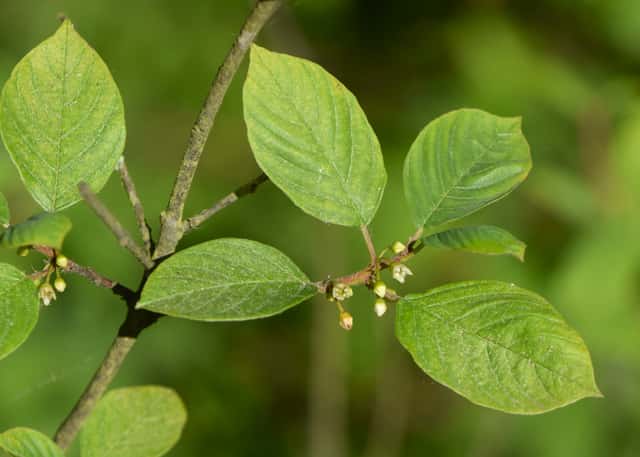
Frangula is a genus of approximately 56 species of deciduous or evergreen shrubs and small trees in the family Rhamnaceae, commonly known as buckthorns. They have a near-cosmopolitan distribution across Europe, the Americas, and large parts of Asia. Frangula species are characterized by alternate simple leaves, spineless branches, buds without scales, small five-petaled flowers, and two- to four-seeded berry-like fruits dispersed by birds. The bark and berries have a long history of medicinal use as natural laxatives. Several species, notably Frangula alnus, are considered invasive in parts of North America.
How Big Does Buckthorn Grow?
TLDR: Buckthorn can reach up to 12.0m tall with Slow growth rate.
Max height
12.0m
Spread
3.6m
Growth rate
Slow
Foliage
Deciduous
Warning: Toxic Plant
This plant can be toxic if ingested. Keep out of reach of:
Plant Uses
Ornamental
Great for decoration
Medicinal
Medicinal properties
Medicinal Uses
- Bark extract used as natural laxative (emodin, anthraquinones)
- Traditionally used to treat constipation in European herbal medicine
Is your plant showing symptoms?
Click on the symptom to discover possible causes:
What Diseases Commonly Affect Buckthorn?
TLDR: Buckthorn is susceptible to 7 known diseases. Monitor regularly for early detection.
Canker
Canker is a disease caused by various fungi and bacteria that create necrotic, sunken areas on bark of branches, stems, and trunks. Pathogens enter through wounds and natural openings, especially when plants are stressed. Canker can gradually weaken or kill branches by disrupting water and nutrient flow.
Leaf Spot
Leaf spot is a common fungal disease caused by various pathogens including Alternaria, Ascochyta, Colletotrichum, Septoria, and Venturia. It primarily affects leaves, causing discolored spots that can lead to premature leaf drop if left untreated.
Rust
Rust is a common fungal disease caused by fungi in the order Pucciniales that affects a wide variety of plants. The disease gets its name from the characteristic orange, yellow, or reddish-brown pustules that appear on leaves, resembling metal rust. This obligate fungal parasite requires living plants to survive and can cause significant economic losses in agricultural crops.
Aphids
Aphids are small, soft-bodied, pear-shaped insects (1/16 to 1/8 inch long) that feed by sucking nutrient-rich sap from plants. They reproduce rapidly and can quickly weaken plants, causing distorted growth and transmitting plant viruses. Aphids come in various colors including green, black, red, yellow, brown, and gray. They secrete honeydew, a sticky substance that attracts ants and encourages sooty mold growth.
Meaning & Symbolism
Frangula is associated with resilience, purification, and natural remedies in folk traditions across Europe and North America.
Fun Facts
The wood of Frangula alnus (alder buckthorn) was historically prized for making charcoal used in gunpowder production from the 15th to 19th centuries.
Frangula berries are toxic to humans in quantity, yet they are an important food source for many bird species.
Frangula alnus serves as an alternate host for oat crown rust (Puccinia coronata), an economically significant fungal disease.
Some Frangula species are listed as invasive in the northeastern and midwestern United States, where birds spread their seeds rapidly.
Compare with similar plants
| Attribute | Difficulty | Light | Watering | Pet Safe |
|---|---|---|---|---|
| Dark Fieldcap | Medium | Low light | 2d | ⚠️ |
| Azalea | Medium | Partial shade | 3d | ⚠️ |
| Bougainvillea | Medium | Direct sun | 7d | ⚠️ |
| Wild Lettuce | Medium | Direct sun | 7d | ⚠️ |



