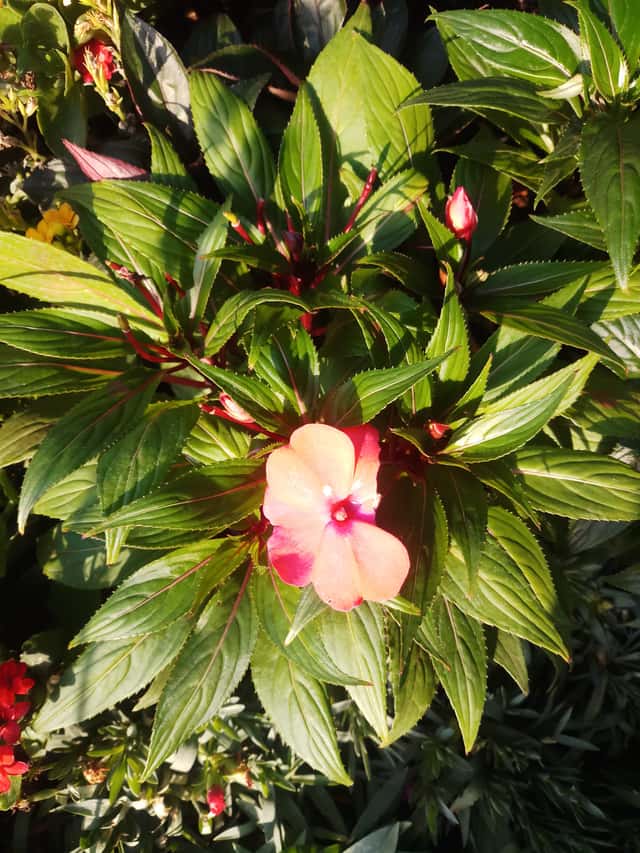
Balsaminaceae
Busy Lizzie Care Guide
Impatiens walleriana
Thrives in partial to full shade with consistently moist, well-drained soil. Water regularly, keeping soil evenly moist but never waterlogged. Feed every two weeks during the growing season. Pinch back stems to encourage bushier growth. Very susceptible to downy mildew; ensure good air circulation.
Every 3 days
Partial shade
13° - 29°C
50% - 80%
Categories
What is Busy Lizzie?
Busy Lizzie (Impatiens walleriana) is a easy-care plant from the Balsaminaceae family. Impatiens walleriana, commonly known as Busy Lizzie, is a beloved shade-loving annual native to East Africa. Prized for its prolific, colorful blooms that brighten shaded garden beds and containers from spring through fall. Available in a wide palette of colors including white, pink, red, orange, pu...
Busy Lizzie grows up to 60cm, spread of 45cm, watering every 3 days, 13°C – 29°C, 50–80% humidity. It is suitable for indoor environments and safe for pets.
Unlike many tropical plants, Busy Lizzie tolerates watering mistakes. Best for beginners. Unlike many popular species, Busy Lizzie is safe to keep around pets. Without adequate drainage, root rot can develop within 7 days.
How to Care for Busy Lizzie?
TLDR: Busy Lizzie needs Partial shade, watering every 3 days, and temperatures between 13-29°C with 50-80% humidity.
How Often Should You Water Busy Lizzie?
Water every 2-3 days, keeping soil consistently moist but not soggy. In hot weather, daily watering may be needed. Always water at the base of the plant to keep foliage dry and prevent fungal diseases.
How Much Light Does Busy Lizzie Need?
Prefers partial to full shade. Can tolerate morning sun but avoid intense afternoon sunlight which can scorch leaves. Ideal for brightening shady spots in the garden where other flowering plants struggle.
What Is the Best Soil for Busy Lizzie?
Plant in rich, well-draining soil amended with organic matter. Prefers slightly acidic to neutral pH (5.5-6.5). Add compost or peat moss to improve drainage and fertility.
What Pot Should You Use for Busy Lizzie?
Plastic or glazed ceramic pots with drainage holes work best, as they retain moisture better than terracotta. Choose pots at least 15-20 cm wide for a full display.
Care Schedule
Fertilize
Every 14 days
Repot
Every 365 days
What Is Busy Lizzie and Where Does It Come From?
Impatiens walleriana, commonly known as Busy Lizzie, is a beloved shade-loving annual native to East Africa. Prized for its prolific, colorful blooms that brighten shaded garden beds and containers from spring through fall. Available in a wide palette of colors including white, pink, red, orange, purple, and coral, making it one of the most popular bedding plants worldwide.
How to Propagate Busy Lizzie?
Stem cutting
Impatiens root very easily in water. Change the water every few days to keep it fresh.
- 1 Cut a 4-6 inch stem just below a leaf node
- 2 Remove the lower leaves, keeping 2-3 at the top
- 3 Place the cutting in water or moist potting mix
- 4 Keep in bright indirect light and maintain moisture
- 5 Roots will develop in 2-3 weeks
Materials needed:
Seed propagation
Seeds need light to germinate - do not bury them. Keep consistently warm and moist.
- 1 Sow seeds on the surface of moist seed-starting mix
- 2 Do not cover seeds as they need light to germinate
- 3 Cover tray with plastic wrap to maintain humidity
- 4 Keep at 21-24°C (70-75°F)
- 5 Transplant seedlings when they have 2-3 true leaves
Materials needed:
How Big Does Busy Lizzie Grow?
TLDR: Busy Lizzie can reach up to 60cm tall with Fast growth rate.
Max height
60cm
Spread
45cm
Growth rate
Fast
Foliage
Evergreen
Plant Uses
Ornamental
Great for decoration
Culinary Uses
- Edible flowers can be used as garnish in salads
Is your plant showing symptoms?
Click on the symptom to discover possible causes:
What Diseases Commonly Affect Busy Lizzie?
TLDR: Busy Lizzie is susceptible to 13 known diseases. Monitor regularly for early detection.
Downy Mildew
Downy mildew is a fungal-like disease caused by oomycetes (water molds) that thrives in cool, wet conditions. It affects a wide range of plants, causing yellowing leaves with fuzzy white-gray growth underneath, leading to defoliation and reduced yields if left untreated.
Powdery Mildew
Powdery mildew is a common fungal disease caused by various fungi species including Erysiphe, Podosphaera, Oïdium, and Leveillula. It affects over 10,000 plant species worldwide. The disease thrives in warm, dry climates with high humidity and appears as a distinctive white powdery coating on plant surfaces.
Gray Mold (Botrytis Blight)
Gray mold, caused by the fungus Botrytis cinerea, is one of the most common fungal diseases in plants. It affects over 200 plant species, including ornamentals, vegetables, fruits, and houseplants. The disease thrives in cool, humid conditions with poor air circulation, causing grayish spots and soft rot on infected tissues.
Verticillium Wilt
Verticillium wilt is a soil-borne fungal disease caused primarily by the fungi Verticillium dahliae and V. albo-atrum. These pathogens infect plant roots and grow within the vascular tissues, blocking water and nutrient transport, resulting in wilting and eventual plant death. The disease affects over 350 plant species including vegetables, fruits, ornamental flowers, and trees. The fungi can survive in soil for more than 10 years as resistant structures called microsclerotia.
Meaning & Symbolism
Symbolizes motherly love, patience, and devotion
Fun Facts
The name Impatiens comes from Latin meaning "impatient", referring to how the seed pods burst open when touched
Busy Lizzie is the most popular bedding plant in the UK
A single plant can produce hundreds of flowers throughout the growing season
The seed pods can launch seeds up to several meters away when ripe
Frequently asked questions
How often should I water Busy Lizzie?
Can Busy Lizzie grow in full sun?
Is Busy Lizzie toxic to pets?
Why are my impatiens losing their leaves?
Compare with similar plants
| Attribute | Difficulty | Light | Watering | Pet Safe |
|---|---|---|---|---|
| Field Maple | Easy | Bright indirect | 14d | ✓ |
| Silver Birch | Easy | Direct sun | 14d | ✓ |
| Common Blanketflower | Easy | Direct sun | 10d | ✓ |
| Cushion Bush | Easy | Direct sun | 14d | ✓ |





