Cactaceae
True Christmas Cactus: Complete Care Guide for Schlumbergera × buckleyi
Schlumbergera × buckleyi
Easy to grow indoors. Needs bright indirect light, moderate watering every 1-2 weeks, high humidity (55-70%), and cooler nights in autumn to trigger winter blooming. Fertilize monthly in spring and summer. Repot every 2 years.
Every 14 days
Partial shade
10° - 26°C
55% - 70%
Categories
What is Christmas Cactus?
Christmas Cactus (Schlumbergera × buckleyi) is a easy-care plant from the Cactaceae family. Schlumbergera × buckleyi, the true Christmas Cactus, is a hybrid epiphytic cactus that originates from the crossing of S. truncata and S. russelliana, native to the cloud forests of Brazil. Unlike the more common Thanksgiving Cactus (S. truncata), it bears smooth, rounded stem segments and blooms re...
Christmas Cactus grows up to 30cm, spread of 60cm, watering every 14 days, 10°C – 26°C, 55–70% humidity. It is suitable for indoor environments and safe for pets.
Unlike many tropical plants, Christmas Cactus tolerates watering mistakes. Best for beginners. Unlike many popular species, Christmas Cactus is safe to keep around pets. Without adequate drainage, root rot can develop within 28 days.
How to Care for Christmas Cactus?
TLDR: Christmas Cactus needs Partial shade, watering every 14 days, and temperatures between 10-26°C with 55-70% humidity.
How Often Should You Water Christmas Cactus?
Water every 10-14 days during the growing season, allowing the top 2-3 cm of soil to dry between waterings. Reduce watering in autumn to trigger bud set, then resume regular watering once buds appear. Never let the plant sit in standing water.
How Much Light Does Christmas Cactus Need?
Place in bright, indirect light — a north or east-facing window works well. Avoid direct sun, which can scorch the flattened stems. In autumn, ensure the plant gets 13+ hours of darkness each night for 4-6 weeks to initiate flower bud formation.
What Is the Best Soil for Christmas Cactus?
Use a well-draining cactus or succulent mix amended with extra perlite. A slightly acidic pH of 5.5-6.2 is ideal. Avoid heavy, moisture-retaining mixes that promote root rot.
What Pot Should You Use for Christmas Cactus?
Terracotta or unglazed ceramic pots are ideal as they allow moisture to evaporate through the walls, reducing root rot risk. Hanging baskets also suit the naturally trailing stems beautifully.
Care Schedule
Fertilize
Every 28 days
Misting
Every 7 days
Repot
Every 730 days
What Is Christmas Cactus and Where Does It Come From?
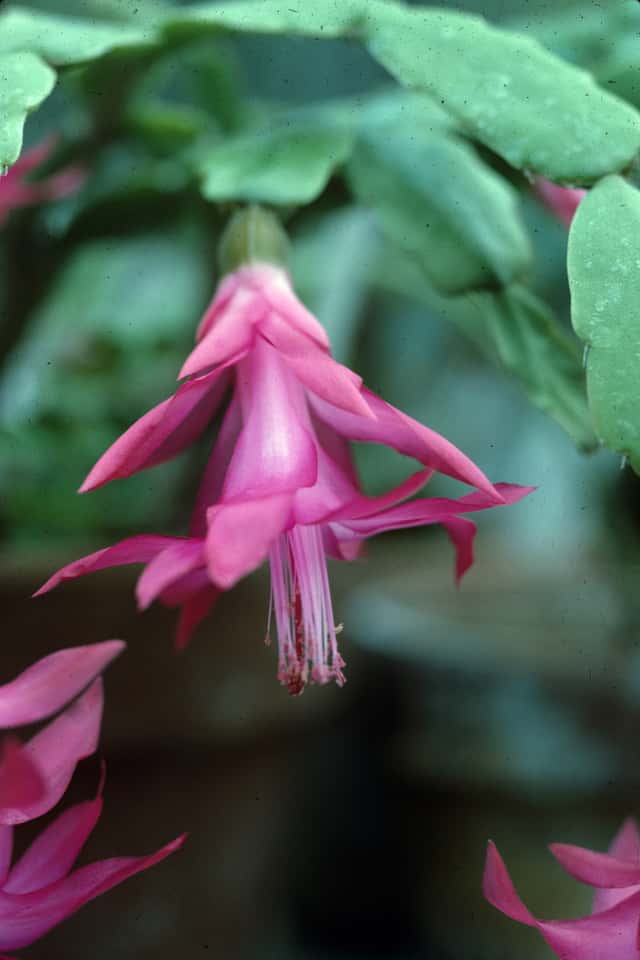
Schlumbergera × buckleyi, the true Christmas Cactus, is a hybrid epiphytic cactus that originates from the crossing of S. truncata and S. russelliana, native to the cloud forests of Brazil. Unlike the more common Thanksgiving Cactus (S. truncata), it bears smooth, rounded stem segments and blooms reliably in late December, making it one of the most beloved winter-flowering houseplants in the world. Its tubular, drooping flowers range from pink and red to white and purple, and the plant can live for decades with proper care.
How to Propagate Christmas Cactus?
Stem Cutting
Take cuttings in spring or early summer for the best success. Avoid rooting during the autumn bud-set period.
- 1 Select a healthy stem section with 2-3 segments
- 2 Allow the cut end to callous for 24-48 hours
- 3 Plant 1 cm deep in a moist, well-draining cactus mix
- 4 Place in bright indirect light and keep soil lightly moist
- 5 Roots develop in 2-4 weeks
Materials needed:
How Big Does Christmas Cactus Grow?
TLDR: Christmas Cactus can reach up to 30cm tall with Slow growth rate.
Max height
30cm
Spread
60cm
Growth rate
Slow
Foliage
Evergreen
Plant Uses
Ornamental
Great for decoration
Is your plant showing symptoms?
Click on the symptom to discover possible causes:
What Diseases Commonly Affect Christmas Cactus?
TLDR: Christmas Cactus is susceptible to 10 known diseases. Monitor regularly for early detection.
Root Rot
Root rot is a serious fungal disease that affects the root system of plants, causing them to decay and die. It is primarily caused by overwatering, poor drainage, or soil-borne fungi such as Pythium, Phytophthora, Rhizoctonia, and Fusarium. The disease thrives in waterlogged conditions where roots are deprived of oxygen, making them susceptible to fungal infection.
Overwatering
Overwatering occurs when plants receive too much water, depriving roots of oxygen and causing root rot. This environmental stress is one of the most common causes of houseplant death, as waterlogged soil prevents roots from breathing and functioning properly.
Spider Mites
Spider mites are tiny arachnids (less than 1/20 inch long) related to spiders and ticks that feed on plant sap. They thrive in hot, dry conditions and can cause significant damage to ornamental and vegetable plants. During severe infestations, crop losses can reach 14% or higher as these pests disrupt vital plant processes including photosynthesis, carbon dioxide absorption, and transpiration.
Mealybugs
Mealybugs are small, soft-bodied insects covered with a white, waxy, cottony material. They are common pests of houseplants and outdoor plants in mild climates. These sap-sucking insects feed on plant tissue, causing damage, stunted growth, and can lead to plant death if left untreated. They produce sticky honeydew which attracts sooty mold.
Meaning & Symbolism
A symbol of hope and perseverance, the Christmas Cactus represents the beauty of life blooming even in winter's darkest days. It is often passed down through generations as a treasured family heirloom.
Fun Facts
The Christmas Cactus can live for over 100 years — many specimens are cherished family heirlooms passed down through generations.
Unlike most cacti, Schlumbergera × buckleyi is an epiphyte that grows on tree branches in Brazilian cloud forests, not in desert soil.
Its flowers are pollinated by hummingbirds in the wild, attracted by their vivid tubular blooms.
It won the Royal Horticultural Society Award of Garden Merit for its outstanding garden performance.
Frequently asked questions
How often should I water my Christmas Cactus?
Why is my Christmas Cactus not blooming?
Is the Christmas Cactus toxic to cats and dogs?
What is the difference between a Christmas Cactus and a Thanksgiving Cactus?
How do I make my Christmas Cactus bloom again?
Compare with similar plants
| Attribute | Difficulty | Light | Watering | Pet Safe |
|---|---|---|---|---|
| Field Maple | Easy | Bright indirect | 14d | ✓ |
| Silver Birch | Easy | Direct sun | 14d | ✓ |
| Cushion Bush | Easy | Direct sun | 14d | ✓ |
| Peruvian peppertree | Easy | Direct sun | 14d | ⚠️ |