Araceae
White-veined Caladium (Caladium lindenii): Complete Care Guide
Caladium lindenii
Keep soil consistently moist but well-drained. Provide bright indirect light, high humidity (above 50%), and temperatures between 65–85°F (18–29°C). Fertilize monthly during spring and summer. Allow dormancy in winter by reducing watering.
Every 8 days
Partial shade
18° - 29°C
50% - 70%
Categories
What is White-veined Caladium?
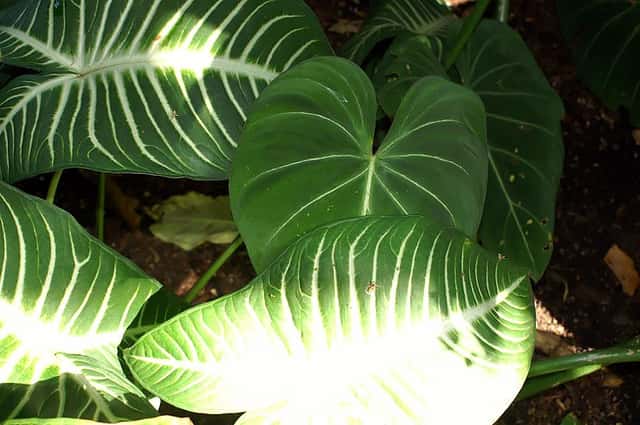
White-veined Caladium (Caladium lindenii) is a medium-care plant from the Araceae family. Caladium lindenii, commonly known as White-veined Caladium or Linden's Caladium, is a spectacular tropical foliage plant native to Colombia and Venezuela. A member of the Araceae family, it is celebrated for its dramatic heart-shaped leaves adorned with striking white veins against a deep green back...
White-veined Caladium grows up to 90cm, spread of 90cm, watering every 8 days, 18°C – 29°C, 50–70% humidity. It is suitable for indoor environments and not safe for pets.
Without precautions, ingestion can cause irritation in pets. Keep out of reach of cats and dogs. Without adequate drainage, root rot can develop within 16 days.
How to Care for White-veined Caladium?
TLDR: White-veined Caladium needs Partial shade, watering every 8 days, and temperatures between 18-29°C with 50-70% humidity.
How Often Should You Water White-veined Caladium?
Water every 7–9 days when the top 1–2 inches of soil feel dry. Avoid waterlogging, which leads to root rot. Use room-temperature filtered or rainwater for best results.
How Much Light Does White-veined Caladium Need?
Place in bright indirect light near an east- or north-facing window. Avoid direct sun, which can scorch the delicate leaves. Insufficient light will cause the plant to become leggy and lose its vivid vein pattern.
What Is the Best Soil for White-veined Caladium?
Use a well-draining mix of equal parts potting soil, perlite, and orchid bark. Ideal pH is 5.5–6.5. Never allow the soil to dry out completely for extended periods.
What Pot Should You Use for White-veined Caladium?
Choose ceramic or terracotta pots with generous drainage holes. Select a pot only slightly larger than the root ball to prevent overwatering issues.
Care Schedule
Fertilize
Every 21 days
Misting
Every 3 days
Repot
Every 365 days
What Is White-veined Caladium and Where Does It Come From?
Caladium lindenii, commonly known as White-veined Caladium or Linden's Caladium, is a spectacular tropical foliage plant native to Colombia and Venezuela. A member of the Araceae family, it is celebrated for its dramatic heart-shaped leaves adorned with striking white veins against a deep green background. This deciduous species goes dormant in winter and reemerges in spring with lush, ornamental foliage, making it a prized specimen for indoor plant enthusiasts.
How to Propagate White-veined Caladium?
Rhizome Division
Divide when the plant emerges from dormancy in spring. Use sterilized tools to prevent disease.
- 1 Remove the plant from its pot at the start of spring
- 2 Gently separate rhizomes, ensuring each division has roots
- 3 Plant each division in moist, well-draining soil
- 4 Keep in a warm, humid location until new growth appears
Materials needed:
Tuber Division
Ensure each tuber section has at least one visible bud. Do not bury too deeply.
- 1 Remove tubers from the pot at the end of winter
- 2 Divide each tuber into sections with at least one eye (bud)
- 3 Allow cut surfaces to dry for 24 hours before planting
- 4 Plant shallowly in moist, well-draining soil
Materials needed:
How Big Does White-veined Caladium Grow?
TLDR: White-veined Caladium can reach up to 90cm tall with Slow growth rate.
Max height
90cm
Spread
90cm
Growth rate
Slow
Foliage
Deciduous
Warning: Toxic Plant
This plant can be toxic if ingested. Keep out of reach of:
Plant Uses
Ornamental
Great for decoration
Is your plant showing symptoms?
Click on the symptom to discover possible causes:
What Diseases Commonly Affect White-veined Caladium?
TLDR: White-veined Caladium is susceptible to 10 known diseases. Monitor regularly for early detection.
Root Rot
Root rot is a serious fungal disease that affects the root system of plants, causing them to decay and die. It is primarily caused by overwatering, poor drainage, or soil-borne fungi such as Pythium, Phytophthora, Rhizoctonia, and Fusarium. The disease thrives in waterlogged conditions where roots are deprived of oxygen, making them susceptible to fungal infection.
Leaf Spot
Leaf spot is a common fungal disease caused by various pathogens including Alternaria, Ascochyta, Colletotrichum, Septoria, and Venturia. It primarily affects leaves, causing discolored spots that can lead to premature leaf drop if left untreated.
Pythium Root Rot
Pythium root rot is a serious fungal disease caused by various Pythium species including P. aphanidermatum, P. ultimum, and P. irregulare. These water molds are present in practically all cultivated soils and attack plant roots under wet conditions, causing rapid wet rot that can extend into the stem. The disease is favored by poor drainage, overwatering, and specific temperatures depending on the species.
Overwatering
Overwatering occurs when plants receive too much water, depriving roots of oxygen and causing root rot. This environmental stress is one of the most common causes of houseplant death, as waterlogged soil prevents roots from breathing and functioning properly.
Meaning & Symbolism
The dramatically veined leaves of the White-veined Caladium symbolize rare beauty, elegance, and exotic distinction — a statement plant that embodies tropical sophistication.
Fun Facts
Despite being called a Caladium, this species is botanically closer to the Xanthosoma genus and is also known as Phyllotaenium lindenii and Xanthosoma lindenii.
Its dramatic heart-shaped leaves can reach up to 18 inches (45 cm) in length under ideal conditions.
In its native Colombia and Venezuela, it grows beneath forest canopies in shaded, humid environments.
During winter dormancy, the plant stores energy in underground tubers, bursting back to life with vigorous growth in spring.
Frequently asked questions
How often should I water my White-veined Caladium?
Is Caladium lindenii toxic to pets?
Why are my Caladium lindenii leaves drooping?
Does White-veined Caladium go dormant?
What humidity level does Caladium lindenii need?
Compare with similar plants
| Attribute | Difficulty | Light | Watering | Pet Safe |
|---|---|---|---|---|
| Dark Fieldcap | Medium | Low light | 2d | ⚠️ |
| Azalea | Medium | Partial shade | 3d | ⚠️ |
| Bougainvillea | Medium | Direct sun | 7d | ⚠️ |
| Wild Lettuce | Medium | Direct sun | 7d | ⚠️ |



