Araceae
Fancy-leaf Caladium – Bold Tropical Foliage for Indoors & Out
Caladium x hortulanum
Keep soil evenly moist during the growing season. Provide bright indirect light and high humidity (60–80%). Goes dormant in fall — reduce watering as leaves die back and resume in spring.
Every 3 days
Partial shade
18° - 32°C
60% - 80%
Categories
What is Fancy-leaf Caladium?
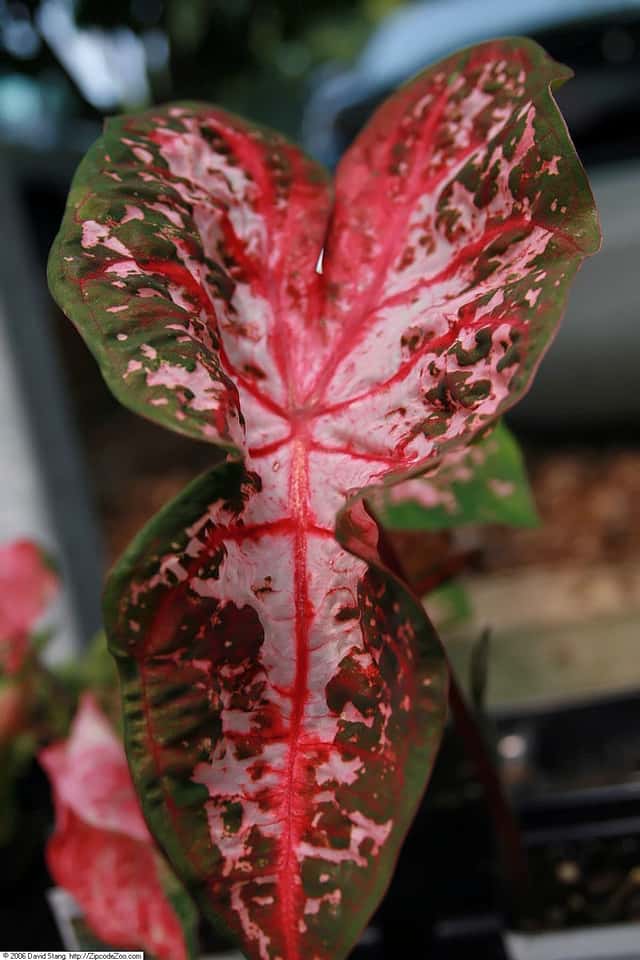
Fancy-leaf Caladium (Caladium x hortulanum) is a medium-care plant from the Araceae family. Fancy-leaf Caladium (Caladium x hortulanum) is a tropical foliage plant prized for its stunning, paper-thin leaves in combinations of red, pink, white, and green. Native to tropical South and Central America, it is widely grown as an ornamental houseplant and shade garden specimen.
Fancy-leaf Caladium grows up to 90cm, spread of 60cm, watering every 3 days, 18°C – 32°C, 60–80% humidity. It is suitable for indoor environments and not safe for pets.
Without precautions, ingestion can cause irritation in pets. Keep out of reach of cats and dogs. Without adequate drainage, root rot can develop within 7 days.
How to Care for Fancy-leaf Caladium?
TLDR: Fancy-leaf Caladium needs Partial shade, watering every 3 days, and temperatures between 18-32°C with 60-80% humidity.
How Often Should You Water Fancy-leaf Caladium?
Water every 2–3 days during active growth, keeping soil consistently moist but never waterlogged. Reduce watering in fall when leaves begin to die back.
How Much Light Does Fancy-leaf Caladium Need?
Place in bright indirect light. Avoid direct sun, which fades the vibrant leaf colors. Outdoors, dappled shade under trees is ideal.
What Is the Best Soil for Fancy-leaf Caladium?
Use rich, well-draining organic mix with pH 5.5–6.5. A blend of peat or coco coir, perlite, and compost works well.
Care Schedule
Fertilize
Every 14 days
Misting
Every 2 days
Rotate
Every 7 days
Repot
Every 365 days
What Is Fancy-leaf Caladium and Where Does It Come From?
Fancy-leaf Caladium (Caladium x hortulanum) is a tropical foliage plant prized for its stunning, paper-thin leaves in combinations of red, pink, white, and green. Native to tropical South and Central America, it is widely grown as an ornamental houseplant and shade garden specimen.
How Big Does Fancy-leaf Caladium Grow?
TLDR: Fancy-leaf Caladium can reach up to 90cm tall with Medium growth rate.
Max height
90cm
Spread
60cm
Growth rate
Medium
Foliage
Deciduous
Warning: Toxic Plant
This plant can be toxic if ingested. Keep out of reach of:
Plant Uses
Ornamental
Great for decoration
Is your plant showing symptoms?
Click on the symptom to discover possible causes:
What Diseases Commonly Affect Fancy-leaf Caladium?
TLDR: Fancy-leaf Caladium is susceptible to 10 known diseases. Monitor regularly for early detection.
Root Rot
Root rot is a serious fungal disease that affects the root system of plants, causing them to decay and die. It is primarily caused by overwatering, poor drainage, or soil-borne fungi such as Pythium, Phytophthora, Rhizoctonia, and Fusarium. The disease thrives in waterlogged conditions where roots are deprived of oxygen, making them susceptible to fungal infection.
Overwatering
Overwatering occurs when plants receive too much water, depriving roots of oxygen and causing root rot. This environmental stress is one of the most common causes of houseplant death, as waterlogged soil prevents roots from breathing and functioning properly.
Spider Mites
Spider mites are tiny arachnids (less than 1/20 inch long) related to spiders and ticks that feed on plant sap. They thrive in hot, dry conditions and can cause significant damage to ornamental and vegetable plants. During severe infestations, crop losses can reach 14% or higher as these pests disrupt vital plant processes including photosynthesis, carbon dioxide absorption, and transpiration.
Aphids
Aphids are small, soft-bodied, pear-shaped insects (1/16 to 1/8 inch long) that feed by sucking nutrient-rich sap from plants. They reproduce rapidly and can quickly weaken plants, causing distorted growth and transmitting plant viruses. Aphids come in various colors including green, black, red, yellow, brown, and gray. They secrete honeydew, a sticky substance that attracts ants and encourages sooty mold growth.
Fun Facts
Caladiums naturally go fully dormant in winter — losing all their leaves is completely normal and not a sign of death!
There are over 1,000 named Caladium cultivars, ranging from dwarf strap-leaf types to large elephant-ear forms.
The spectacular leaf colors come from pigments in specialized cells, not from chlorophyll — that's why they thrive in lower light.
Frequently asked questions
Why is my Caladium losing its leaves?
Why are my Caladium leaves turning pale or faded?
Is Caladium toxic to pets?
Compare with similar plants
| Attribute | Difficulty | Light | Watering | Pet Safe |
|---|---|---|---|---|
| Dark Fieldcap | Medium | Low light | 2d | ⚠️ |
| Azalea | Medium | Partial shade | 3d | ⚠️ |
| Bougainvillea | Medium | Direct sun | 7d | ⚠️ |
| Wild Lettuce | Medium | Direct sun | 7d | ⚠️ |



