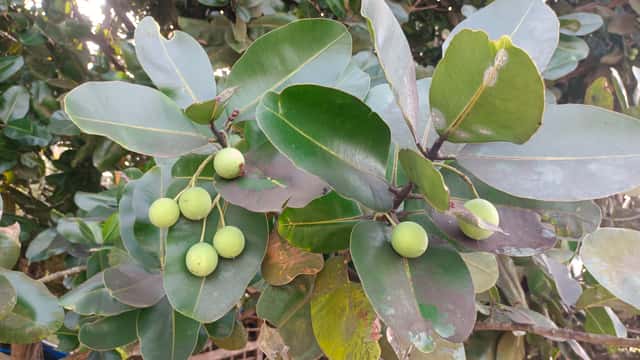
Calophyllaceae
Calophyllum Genus Care Guide
Calophyllum
Full-sun tropical tree genus suited for outdoor cultivation in USDA zones 10–12. Water weekly, allow soil to dry slightly between waterings. Very low maintenance once established.
Every 7 days
Direct sun
10° - 42°C
60% - 90%
Categories
What is Beautyleaf / Alexandrian Laurel (genus)?
Beautyleaf / Alexandrian Laurel (genus) (Calophyllum) is a easy-care plant from the Calophyllaceae family. Calophyllum is a large genus of tropical trees in the family Calophyllaceae, known for their dense foliage, fragrant flowers, and timber value. Many species are used in coastal restoration and agroforestry systems.
Beautyleaf / Alexandrian Laurel (genus) grows up to 30.0m, spread of 1500cm, watering every 7 days, 10°C – 42°C, 60–90% humidity. It is not suitable for indoor environments and safe for pets.
Unlike many tropical plants, Beautyleaf / Alexandrian Laurel (genus) tolerates watering mistakes. Best for beginners. Unlike many popular species, Beautyleaf / Alexandrian Laurel (genus) is safe to keep around pets.
How to Care for Beautyleaf / Alexandrian Laurel (genus)?
TLDR: Beautyleaf / Alexandrian Laurel (genus) needs Direct sun, watering every 7 days, and temperatures between 10-42°C with 60-90% humidity.
How Often Should You Water Beautyleaf / Alexandrian Laurel (genus)?
Water every 7 days. Allow the top 2–3 cm of soil to dry between waterings. Established trees are moderately drought-tolerant.
How Much Light Does Beautyleaf / Alexandrian Laurel (genus) Need?
Requires full direct sunlight (6–8 hours/day). Not suited for indoor or shaded environments.
What Is the Best Soil for Beautyleaf / Alexandrian Laurel (genus)?
Prefers well-draining soils with pH 5.5–7.5. Tolerates sandy and loamy soils. Avoid waterlogged conditions.
What Pot Should You Use for Beautyleaf / Alexandrian Laurel (genus)?
Best grown in-ground for tropical outdoor landscapes. Use large containers only as temporary nursery stock.
Care Schedule
Fertilize
Every 180 days
What Is Beautyleaf / Alexandrian Laurel (genus) and Where Does It Come From?
Calophyllum is a large genus of tropical trees in the family Calophyllaceae, known for their dense foliage, fragrant flowers, and timber value. Many species are used in coastal restoration and agroforestry systems.
How to Propagate Beautyleaf / Alexandrian Laurel (genus)?
Seed Propagation
Germination can be slow and irregular. Keep the substrate consistently moist but never waterlogged.
- 1 Collect mature fruits and remove the pulp
- 2 Sow seeds in moist, well-draining propagation mix
- 3 Keep in a warm location above 22°C
- 4 Transplant seedlings when they reach 20–30 cm
Materials needed:
Stem Cutting
Rooting success rate is low. Use high-concentration rooting hormone and bottom heat if available.
- 1 Take a semi-hardwood cutting 20–25 cm long
- 2 Remove leaves from the lower half
- 3 Apply rooting hormone to the cut end
- 4 Insert into moist substrate and cover with plastic to retain humidity
Materials needed:
How Big Does Beautyleaf / Alexandrian Laurel (genus) Grow?
TLDR: Beautyleaf / Alexandrian Laurel (genus) can reach up to 30.0m tall with Medium growth rate.
Max height
30.0m
Spread
15.0m
Growth rate
Medium
Foliage
Evergreen
Warning: Toxic Plant
This plant can be toxic if ingested. Keep out of reach of:
Plant Uses
Ornamental
Great for decoration
Medicinal
Medicinal properties
Medicinal Uses
- Tamanu oil (from C. inophyllum seeds) is widely used in Pacific Island traditional medicine and cosmetics for wound healing and skin conditions
- The seed oil contains calophyllolide and other compounds with documented anti-inflammatory and antimicrobial properties
Culinary Uses
- Fruits of some species are edible but should be consumed with caution due to potentially toxic compounds in certain species
Is your plant showing symptoms?
Click on the symptom to discover possible causes:
What Diseases Commonly Affect Beautyleaf / Alexandrian Laurel (genus)?
TLDR: Beautyleaf / Alexandrian Laurel (genus) is susceptible to 5 known diseases. Monitor regularly for early detection.
Root Rot
Root rot is a serious fungal disease that affects the root system of plants, causing them to decay and die. It is primarily caused by overwatering, poor drainage, or soil-borne fungi such as Pythium, Phytophthora, Rhizoctonia, and Fusarium. The disease thrives in waterlogged conditions where roots are deprived of oxygen, making them susceptible to fungal infection.
Leaf Spot
Leaf spot is a common fungal disease caused by various pathogens including Alternaria, Ascochyta, Colletotrichum, Septoria, and Venturia. It primarily affects leaves, causing discolored spots that can lead to premature leaf drop if left untreated.
Scale Insects
Scale insects are small sap-sucking pests that appear as brown, shell-like bumps on plant stems and leaves. There are over 25 species, divided into armored (hard) and unarmored (soft) scales. They feed by piercing plant tissue and extracting sap, which weakens the plant and can lead to yellowing, stunted growth, and even death if left untreated. They also excrete honeydew, which attracts ants and promotes sooty mold growth.
Mealybugs
Mealybugs are small, soft-bodied insects covered with a white, waxy, cottony material. They are common pests of houseplants and outdoor plants in mild climates. These sap-sucking insects feed on plant tissue, causing damage, stunted growth, and can lead to plant death if left untreated. They produce sticky honeydew which attracts sooty mold.
Meaning & Symbolism
A symbol of protection and longevity in Pacific Island and Southeast Asian cultures.
Fun Facts
Calophyllum inophyllum (tamanu) produces oil used in traditional Pacific medicine.
The genus name means "beautiful leaf" in Greek (kalos + phyllon).
Some species can live over 100 years in tropical climates.
Frequently asked questions
Is Calophyllum safe for pets?
Can I grow Calophyllum indoors?
Compare with similar plants
| Attribute | Difficulty | Light | Watering | Pet Safe |
|---|---|---|---|---|
| Field Maple | Easy | Bright indirect | 14d | ✓ |
| Silver Birch | Easy | Direct sun | 14d | ✓ |
| Cushion Bush | Easy | Direct sun | 14d | ✓ |
| Peruvian peppertree | Easy | Direct sun | 14d | ⚠️ |





