Campanulaceae
Serbian Bellflower - Complete Care Guide
Campanula poscharskyana
Serbian Bellflower is an easy-care perennial that thrives with minimal attention. Water regularly during the growing season but allow the top soil layer to dry between waterings. Provide full sun to partial shade. Feed monthly with a balanced fertilizer in spring and summer. Trim back after the main bloom flush to encourage reblooming. Divide every 3-4 years to maintain vigour.
Every 7 days
Bright indirect
-20° - 25°C
40% - 70%
Categories
What is Serbian Bellflower?
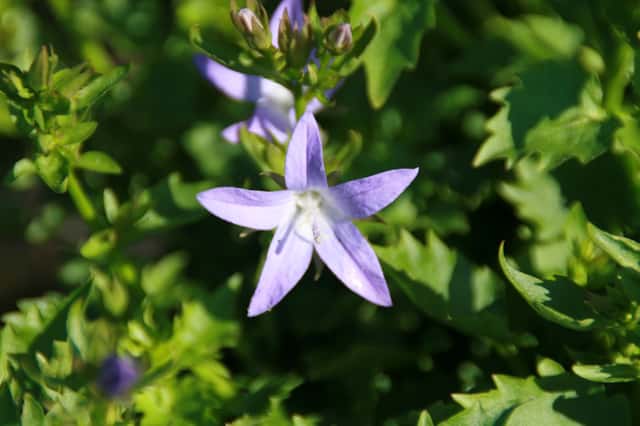
Serbian Bellflower (Campanula poscharskyana) is a easy-care plant from the Campanulaceae family. Campanula poscharskyana, commonly known as the Serbian Bellflower, is a low-growing, spreading perennial native to the Dinaric Alps of Serbia and the western Balkans. It produces masses of star-shaped, lavender-blue to violet flowers from late spring through fall, making it one of the most prolific...
Serbian Bellflower grows up to 15cm, spread of 45cm, watering every 7 days, -20°C – 25°C, 40–70% humidity. It is suitable for indoor environments and safe for pets.
Unlike many tropical plants, Serbian Bellflower tolerates watering mistakes. Best for beginners. Unlike many popular species, Serbian Bellflower is safe to keep around pets. Without adequate drainage, root rot can develop within 14 days.
How to Care for Serbian Bellflower?
TLDR: Serbian Bellflower needs Bright indirect, watering every 7 days, and temperatures between -20-25°C with 40-70% humidity.
How Often Should You Water Serbian Bellflower?
Water every 7 days during the growing season, checking that the top 5 cm of soil is dry before watering again. Reduce watering significantly in autumn and winter. Serbian Bellflower is moderately drought-tolerant once established but performs best with consistent moisture during active growth.
How Much Light Does Serbian Bellflower Need?
Serbian Bellflower thrives in full sun to partial shade. In hotter climates, protect from intense afternoon sun to prevent leaf scorch. Indoors, place within 30 cm of a bright window. Outdoors, morning sun with afternoon shade is ideal in zones above 7.
What Is the Best Soil for Serbian Bellflower?
Use well-draining soil or a loam/sandy mix enriched with organic matter. Avoid heavy clay soils that retain moisture. A slightly acidic to neutral pH of 6.0-7.5 is ideal. In containers, use a quality potting mix with added perlite.
What Pot Should You Use for Serbian Bellflower?
Terra cotta or unglazed clay pots are ideal as they allow excess moisture to evaporate, preventing root rot. Hanging baskets are excellent for showcasing the trailing habit. Use pots with multiple drainage holes.
Care Schedule
Fertilize
Every 30 days
Repot
Every 730 days
What Is Serbian Bellflower and Where Does It Come From?
Campanula poscharskyana, commonly known as the Serbian Bellflower, is a low-growing, spreading perennial native to the Dinaric Alps of Serbia and the western Balkans. It produces masses of star-shaped, lavender-blue to violet flowers from late spring through fall, making it one of the most prolific and reliable flowering ground covers for gardens. It thrives in rocky crevices, walls, and slopes, spreading readily via adventitious roots. Its deer resistance, drought tolerance once established, and adaptability to various light conditions make it a favourite in rock gardens, borders, and hanging baskets.
How to Propagate Serbian Bellflower?
Division
Divide every 3-4 years to prevent overcrowding and revitalise the plant.
- 1 Dig up a clump in early spring before new growth begins
- 2 Separate root mass into sections each with several shoots and healthy roots
- 3 Replant divisions at the same depth in well-draining soil
- 4 Water thoroughly and keep moist until established
Materials needed:
Stem Cutting
Use fresh spring growth for best rooting success. Avoid using flowering stems.
- 1 Take 8-10 cm stem cuttings from healthy non-flowering shoots in spring
- 2 Remove lower leaves leaving 2-3 leaves at the tip
- 3 Dip cut end in rooting hormone powder
- 4 Insert into moist propagation mix
- 5 Cover with plastic bag to retain humidity until roots form
Materials needed:
Seed Propagation
Seeds are very fine, mix with sand for more even sowing. Germination takes 14-21 days.
- 1 Sow seeds indoors 10 weeks before last frost
- 2 Sprinkle seeds on surface of moist seed-starting mix without covering them
- 3 Keep at 15-18C and maintain consistent moisture
- 4 Transplant seedlings outdoors after last frost when they have 3-4 true leaves
Materials needed:
How Big Does Serbian Bellflower Grow?
TLDR: Serbian Bellflower can reach up to 15cm tall with Medium growth rate.
Max height
15cm
Spread
45cm
Growth rate
Medium
Foliage
Semi-evergreen
Plant Uses
Ornamental
Great for decoration
Ground Cover
Soil coverage
Is your plant showing symptoms?
Click on the symptom to discover possible causes:
What Diseases Commonly Affect Serbian Bellflower?
TLDR: Serbian Bellflower is susceptible to 6 known diseases. Monitor regularly for early detection.
Powdery Mildew
Powdery mildew is a common fungal disease caused by various fungi species including Erysiphe, Podosphaera, Oïdium, and Leveillula. It affects over 10,000 plant species worldwide. The disease thrives in warm, dry climates with high humidity and appears as a distinctive white powdery coating on plant surfaces.
Slugs and Snails
Slugs and snails are mollusks that feed on plant tissue, causing irregular holes in leaves and damage to young seedlings. They are most active at night and in moist conditions, leaving characteristic silvery slime trails. These pests can quickly devastate gardens, especially during wet seasons.
Aphids
Aphids are small, soft-bodied, pear-shaped insects (1/16 to 1/8 inch long) that feed by sucking nutrient-rich sap from plants. They reproduce rapidly and can quickly weaken plants, causing distorted growth and transmitting plant viruses. Aphids come in various colors including green, black, red, yellow, brown, and gray. They secrete honeydew, a sticky substance that attracts ants and encourages sooty mold growth.
Spider Mites
Spider mites are tiny arachnids (less than 1/20 inch long) related to spiders and ticks that feed on plant sap. They thrive in hot, dry conditions and can cause significant damage to ornamental and vegetable plants. During severe infestations, crop losses can reach 14% or higher as these pests disrupt vital plant processes including photosynthesis, carbon dioxide absorption, and transpiration.
Meaning & Symbolism
In folklore, the Serbian Bellflower symbolizes gratitude, humility, and everlasting affection. In Balkan tradition, cascading bellflowers adorning stone walls are seen as signs of a home full of grace and enduring love.
Fun Facts
Serbian Bellflower can bloom for over 6 months in mild climates, one of the longest flowering periods of any hardy perennial.
It spreads by growing adventitious roots along its trailing stems, effectively rooting itself as it creeps across the ground.
Native to the rocky limestone cliffs of the Dinaric Alps, it thrives in conditions that would challenge most plants.
The species name poscharskyana honours Gustav Adolf Poscharsky, a 19th-century German horticulturist.
Frequently asked questions
How often should I water Serbian Bellflower?
Is Serbian Bellflower toxic to pets?
Why are my Serbian Bellflower leaves turning yellow?
When does Serbian Bellflower bloom?
How do I propagate Serbian Bellflower?
Compare with similar plants
| Attribute | Difficulty | Light | Watering | Pet Safe |
|---|---|---|---|---|
| Field Maple | Easy | Bright indirect | 14d | ✓ |
| Silver Birch | Easy | Direct sun | 14d | ✓ |
| Cushion Bush | Easy | Direct sun | 14d | ✓ |
| Peruvian peppertree | Easy | Direct sun | 14d | ⚠️ |