Cannabaceae
How to Grow and Care for Hemp (Cannabis sativa)
Cannabis sativa
Cannabis sativa thrives in full sun with 6+ hours of direct light daily. Water every 2-3 days when the top inch of soil feels dry, adjusting for the growth stage. Use well-draining loamy soil with a pH of 5.8–7.0. Feed with balanced NPK fertilizer during vegetative growth, switching to phosphorus-heavy formula during flowering. Maintain temperatures of 18–30°C and humidity between 40–70%.
Every 3 days
Direct sun
15° - 30°C
40% - 70%
Categories
What is Hemp?
Hemp (Cannabis sativa) is a medium-care plant from the Cannabaceae family. Cannabis sativa is a fast-growing annual plant in the family Cannabaceae, native to Central and South Asia. It is one of humanity's oldest cultivated plants, grown for thousands of years for fiber, food, oil, and medicine. The plant features palmate leaves with serrated leaflets, hollow stems, and p...
Hemp grows up to 2.5m, spread of 80cm, watering every 3 days, 15°C – 30°C, 40–70% humidity. It is suitable for indoor environments and not safe for pets.
Without precautions, ingestion can cause irritation in pets. Keep out of reach of cats and dogs. Without adequate drainage, root rot can develop within 7 days.
How to Care for Hemp?
TLDR: Hemp needs Direct sun, watering every 3 days, and temperatures between 15-30°C with 40-70% humidity.
How Often Should You Water Hemp?
Water deeply every 2-3 days when the top 2-3 cm of soil feels dry. During flowering, reduce frequency slightly to prevent bud rot. Never let the plant sit in waterlogged soil.
How Much Light Does Hemp Need?
Requires full sun — at least 6 hours of direct sunlight per day outdoors. Indoors, provide 18 hours of light during vegetative stage and 12 hours during flowering.
What Is the Best Soil for Hemp?
Use well-draining loamy soil rich in organic matter. Amend with perlite for better drainage. Avoid compacted or heavy clay soils that retain too much moisture.
What Pot Should You Use for Hemp?
Fabric grow bags or large terracotta/plastic pots (minimum 15–20L for outdoor plants) for optimal root development and drainage.
Care Schedule
Fertilize
Every 14 days
What Is Hemp and Where Does It Come From?
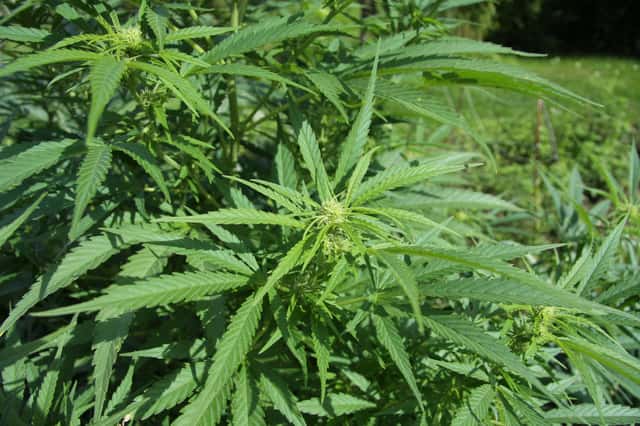
Cannabis sativa is a fast-growing annual plant in the family Cannabaceae, native to Central and South Asia. It is one of humanity's oldest cultivated plants, grown for thousands of years for fiber, food, oil, and medicine. The plant features palmate leaves with serrated leaflets, hollow stems, and produces small greenish-yellow flowers. It is dioecious, meaning male and female flowers occur on separate plants. Cannabis sativa grows vigorously in warm, sunny conditions and can reach up to 2.5 meters in height within a single growing season.
How Big Does Hemp Grow?
TLDR: Hemp can reach up to 2.5m tall with Fast growth rate.
Max height
2.5m
Spread
80cm
Growth rate
Fast
Foliage
Deciduous
Warning: Toxic Plant
This plant can be toxic if ingested. Keep out of reach of:
Plant Uses
Medicinal
Medicinal properties
Edible
Can be consumed
Aromatic
Pleasant fragrance
Medicinal Uses
- Pain relief
- Anti-inflammatory
- Anti-nausea
- Sleep aid
- Anxiety reduction
- Glaucoma management
- Multiple sclerosis symptom relief
Culinary Uses
- Hemp seeds (raw or roasted)
- Hemp seed oil (salad dressing, cooking)
- Hemp milk
- Hemp flour in baked goods
- Leaves in teas and salads
Is your plant showing symptoms?
Click on the symptom to discover possible causes:
What Diseases Commonly Affect Hemp?
TLDR: Hemp is susceptible to 21 known diseases. Monitor regularly for early detection.
Spider Mites
Spider mites are tiny arachnids (less than 1/20 inch long) related to spiders and ticks that feed on plant sap. They thrive in hot, dry conditions and can cause significant damage to ornamental and vegetable plants. During severe infestations, crop losses can reach 14% or higher as these pests disrupt vital plant processes including photosynthesis, carbon dioxide absorption, and transpiration.
Powdery Mildew
Powdery mildew is a common fungal disease caused by various fungi species including Erysiphe, Podosphaera, Oïdium, and Leveillula. It affects over 10,000 plant species worldwide. The disease thrives in warm, dry climates with high humidity and appears as a distinctive white powdery coating on plant surfaces.
Botrytis
Gray Mold (Botrytis Blight)
Gray mold, caused by the fungus Botrytis cinerea, is a widespread necrotrophic pathogen affecting over 1,400 plant species. It thrives in cool, humid conditions and attacks weakened or aging plant tissues, causing soft rot and characteristic gray fuzzy growth.
Meaning & Symbolism
Associated with freedom, peace, and spiritual exploration. Historically used as a symbol of healing and relief across many cultures worldwide.
Fun Facts
Cannabis sativa is one of the oldest known cultivated plants, with evidence of hemp fiber use dating back over 10,000 years in ancient China and Taiwan.
Hemp fiber was used to make the first draft of the United States Declaration of Independence.
Cannabis sativa can grow up to 5 cm per day under ideal conditions, making it one of the fastest-growing plants on Earth.
The plant produces both male and female flowers on separate plants (dioecious), and only female plants produce the resin-rich flowers used medicinally.
Hemp seeds are a complete protein source, containing all 9 essential amino acids.
Frequently asked questions
Is Cannabis sativa the same as hemp?
Is Cannabis sativa toxic to pets?
How tall does Cannabis sativa grow?
What soil pH does Cannabis sativa prefer?
Compare with similar plants
| Attribute | Difficulty | Light | Watering | Pet Safe |
|---|---|---|---|---|
| Dark Fieldcap | Medium | Low light | 2d | ⚠️ |
| Azalea | Medium | Partial shade | 3d | ⚠️ |
| Bougainvillea | Medium | Direct sun | 7d | ⚠️ |
| Wild Lettuce | Medium | Direct sun | 7d | ⚠️ |



