Caprifoliaceae
Tatarian Honeysuckle (Lonicera tatarica)
Lonicera tatarica
Easy to grow and extremely tolerant of poor soils, pollution, and drought once established. Give it full sun for the heaviest bloom, water regularly the first year, and prune after flowering to keep its size in check. Because of its invasive tendencies in parts of North America, check local guidance before planting and consider native alternatives where required.
Every 7 days
Bright indirect
-34° - 35°C
30% - 70%
Categories
What is Tatarian Honeysuckle?
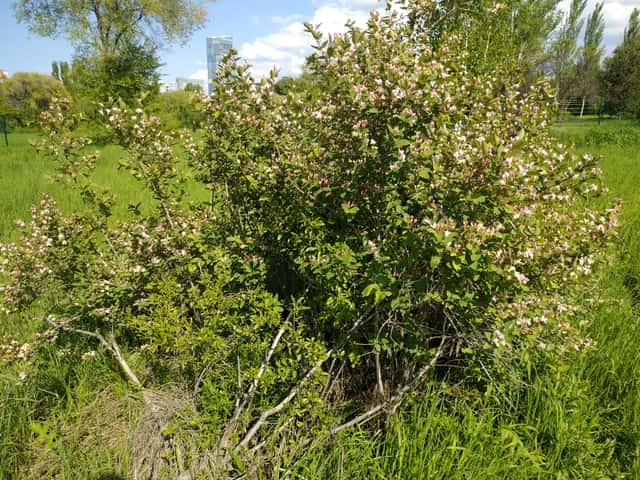
Tatarian Honeysuckle (Lonicera tatarica) is a easy-care plant from the Caprifoliaceae family. Tatarian honeysuckle (Lonicera tatarica) is a fast-growing deciduous shrub in the Caprifoliaceae family, native to Central Asia and southern Siberia. It typically reaches 2-3 m tall and wide, with oval blue-green leaves and fragrant, tubular pink-to-white flowers that bloom in late spring, followed...
Tatarian Honeysuckle grows up to 3.0m, spread of 300cm, watering every 7 days, -34°C – 35°C, 30–70% humidity. It is not suitable for indoor environments and not safe for pets.
Unlike many tropical plants, Tatarian Honeysuckle tolerates watering mistakes. Best for beginners. Without precautions, ingestion can cause irritation in pets. Keep out of reach of cats and dogs.
How to Care for Tatarian Honeysuckle?
TLDR: Tatarian Honeysuckle needs Bright indirect, watering every 7 days, and temperatures between -34-35°C with 30-70% humidity.
How Often Should You Water Tatarian Honeysuckle?
Water deeply about once a week during the first growing season to help roots establish. Once mature, this shrub is quite drought-tolerant and only needs supplemental watering during prolonged dry spells.
How Much Light Does Tatarian Honeysuckle Need?
Thrives in full sun, which produces the densest flowering and best berry set; it also tolerates partial shade but will bloom less.
What Is the Best Soil for Tatarian Honeysuckle?
Not fussy about soil — it adapts to sandy, clay, or loamy soils as long as drainage is reasonable. A loamy soil enriched with organic matter and a near-neutral pH of 6.0-7.0 gives the best growth.
What Pot Should You Use for Tatarian Honeysuckle?
Best planted directly in the landscape as a hedge or specimen shrub; if grown temporarily in a container, use a large pot with generous drainage holes.
Care Schedule
Fertilize
Every 365 days
What Is Tatarian Honeysuckle and Where Does It Come From?
Tatarian honeysuckle (Lonicera tatarica) is a fast-growing deciduous shrub in the Caprifoliaceae family, native to Central Asia and southern Siberia. It typically reaches 2-3 m tall and wide, with oval blue-green leaves and fragrant, tubular pink-to-white flowers that bloom in late spring, followed by round red-to-orange berries in summer. Long valued as an ornamental hedge and screening plant for its dense growth and early flowering, it has since escaped cultivation across much of the northeastern and midwestern United States and eastern Canada, where it is classified as invasive: it leafs out earlier and drops leaves later than native shrubs, shading out spring wildflowers and outcompeting native understory vegetation. Its berries, while attractive to birds that spread the seeds widely, are mildly toxic to humans and pets if eaten in quantity.
How to Propagate Tatarian Honeysuckle?
Softwood stem cuttings
Keep cuttings out of direct sun and mist regularly to prevent wilting until roots establish.
- 1 Take 10-15 cm softwood cuttings from healthy new growth in early summer
- 2 Strip the lower leaves and dip the cut end in rooting hormone
- 3 Insert into a moist mix of perlite and peat, then keep humid under a plastic cover
- 4 Roots typically form within 3-4 weeks; pot up once a strong root system develops
Materials needed:
Seed propagation
Germination rates are variable, so sow extra seed to compensate for low viability.
- 1 Clean the pulp from ripe berries and rinse the seeds
- 2 Cold-stratify seeds in moist sand in the refrigerator for about 90 days
- 3 Sow stratified seeds in a well-draining seed-starting mix in early spring
- 4 Keep consistently moist until germination, which can be slow and uneven
Materials needed:
How Big Does Tatarian Honeysuckle Grow?
TLDR: Tatarian Honeysuckle can reach up to 3.0m tall with Fast growth rate.
Max height
3.0m
Spread
3.0m
Growth rate
Fast
Foliage
Deciduous
Warning: Toxic Plant
This plant can be toxic if ingested. Keep out of reach of:
Plant Uses
Ornamental
Great for decoration
Is your plant showing symptoms?
Click on the symptom to discover possible causes:
What Diseases Commonly Affect Tatarian Honeysuckle?
TLDR: Tatarian Honeysuckle is susceptible to 5 known diseases. Monitor regularly for early detection.
Powdery Mildew
Powdery mildew is a common fungal disease caused by various fungi species including Erysiphe, Podosphaera, Oïdium, and Leveillula. It affects over 10,000 plant species worldwide. The disease thrives in warm, dry climates with high humidity and appears as a distinctive white powdery coating on plant surfaces.
Leaf Spot
Leaf spot is a common fungal disease caused by various pathogens including Alternaria, Ascochyta, Colletotrichum, Septoria, and Venturia. It primarily affects leaves, causing discolored spots that can lead to premature leaf drop if left untreated.
Aphids
Aphids are small, soft-bodied, pear-shaped insects (1/16 to 1/8 inch long) that feed by sucking nutrient-rich sap from plants. They reproduce rapidly and can quickly weaken plants, causing distorted growth and transmitting plant viruses. Aphids come in various colors including green, black, red, yellow, brown, and gray. They secrete honeydew, a sticky substance that attracts ants and encourages sooty mold growth.
Spider Mites
Spider mites are tiny arachnids (less than 1/20 inch long) related to spiders and ticks that feed on plant sap. They thrive in hot, dry conditions and can cause significant damage to ornamental and vegetable plants. During severe infestations, crop losses can reach 14% or higher as these pests disrupt vital plant processes including photosynthesis, carbon dioxide absorption, and transpiration.
Meaning & Symbolism
Symbolizes devoted love and enduring bonds — in folklore, honeysuckle's twining, intertwined branches represent two people bound together for life.
Fun Facts
The genus Lonicera honors the 16th-century German botanist Adam Lonitzer.
Its fragrant pink-and-white flowers open in late spring and are followed by berries that ripen bright red to orange.
Introduced to North America in the 1700s-1800s as an ornamental and for erosion control, it is now one of the continent's most widespread invasive shrubs.
Frequently asked questions
Is Tatarian honeysuckle invasive?
Are the berries poisonous?
How much sun does Tatarian honeysuckle need?
When should I prune it?
Compare with similar plants
| Attribute | Difficulty | Light | Watering | Pet Safe |
|---|---|---|---|---|
| Field Maple | Easy | Bright indirect | 14d | ✓ |
| Silver Birch | Easy | Direct sun | 14d | ✓ |
| Common Blanketflower | Easy | Direct sun | 10d | ✓ |
| Cushion Bush | Easy | Direct sun | 14d | ✓ |
Choose & Compare
Sources & References
- Lonicera tatarica (Tatarian Honeysuckle) - NC State Extension Gardener Plant Toolbox
- Lonicera tatarica - Wikipedia
- Tatarian Honeysuckle - Minnesota Department of Agriculture (Noxious Weed List)
- Honeysuckle (Lonicera) - CT Agricultural Experiment Station Plant Pest Handbook
- Honeysuckle (Lonicera spp.) - Powdery Mildew - PNW Plant Disease Handbook





