Sapindaceae
Horse Chestnut (Aesculus hippocastanum)
Aesculus hippocastanum
Plant in full sun to partial shade with deep, well-drained, fertile soil. Water deeply and regularly while young; established trees tolerate short dry spells but perform best with consistent moisture. Prune only to remove dead or crossing branches during dormancy, and watch for leaf blotch, leaf miner and bleeding canker.
Every 10 days
Bright indirect
-34° - 35°C
% - %
Categories
What is Horse Chestnut?
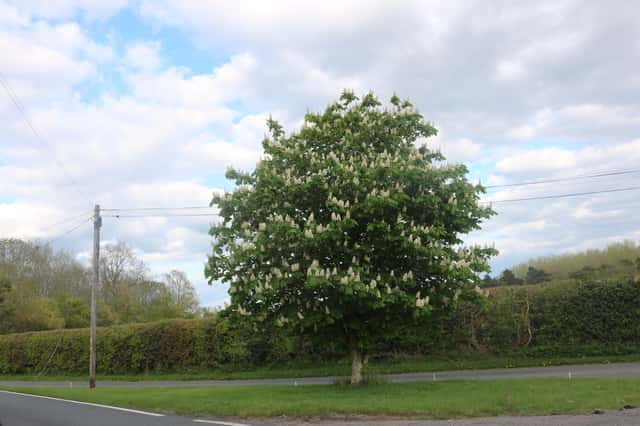
Horse Chestnut (Aesculus hippocastanum) is a medium-care plant from the Sapindaceae family. The horse chestnut (Aesculus hippocastanum) is a large, fast-growing deciduous tree native to the Balkan Peninsula, prized across Europe and North America as a stately shade and ornamental tree. It has a broad, rounded crown, palmately compound leaves with five to seven leaflets, and produces specta...
Horse Chestnut grows up to 25.0m, spread of 1800cm, watering every 10 days, -34°C – 35°C. It is not suitable for indoor environments and not safe for pets.
Without precautions, ingestion can cause irritation in pets. Keep out of reach of cats and dogs.
How to Care for Horse Chestnut?
TLDR: Horse Chestnut needs Bright indirect, watering every 10 days, and temperatures between -34-35°C with 40-70% humidity.
How Often Should You Water Horse Chestnut?
Water young trees deeply once or twice a week during the first two growing seasons. Mature trees are moderately drought-tolerant but appreciate deep watering during prolonged dry spells; avoid waterlogging, which encourages root rot.
How Much Light Does Horse Chestnut Need?
Grows best in full sun, which promotes the heaviest flowering, though it tolerates partial shade.
What Is the Best Soil for Horse Chestnut?
Prefers deep, fertile, well-drained loam with a slightly acidic to neutral pH (6.0-7.0); avoid shallow, compacted, or permanently wet soils.
What Pot Should You Use for Horse Chestnut?
Not typically grown in containers; plant directly in open ground with ample root space. Young saplings can be started in deep, well-draining nursery pots before transplanting.
What Is Horse Chestnut and Where Does It Come From?
The horse chestnut (Aesculus hippocastanum) is a large, fast-growing deciduous tree native to the Balkan Peninsula, prized across Europe and North America as a stately shade and ornamental tree. It has a broad, rounded crown, palmately compound leaves with five to seven leaflets, and produces spectacular upright clusters of white flowers with yellow-to-red throats each spring. In autumn it drops its glossy brown seeds, known as conkers, encased in spiny green husks.
How to Propagate Horse Chestnut?
Seed propagation
Use fresh seeds only, since horse chestnut seeds lose viability quickly if allowed to dry out; plant them the same season they are collected for best results.
- 1 Collect fresh, undamaged conkers as soon as they fall in autumn
- 2 Remove the spiny husk and sow seeds immediately, or store in moist sand and refrigerate for 8-12 weeks to break dormancy (cold stratification)
- 3 Plant seeds about 5 cm deep in well-draining soil or deep nursery pots
- 4 Keep soil consistently moist; seedlings typically emerge the following spring
- 5 Transplant to the final growing site once the sapling reaches 30-60 cm
Materials needed:
How Big Does Horse Chestnut Grow?
TLDR: Horse Chestnut can reach up to 25.0m tall with Medium growth rate.
Max height
25.0m
Spread
18.0m
Growth rate
Medium
Foliage
Deciduous
Warning: Toxic Plant
This plant can be toxic if ingested. Keep out of reach of:
Plant Uses
Ornamental
Great for decoration
Medicinal
Medicinal properties
Medicinal Uses
- Seed extract (aescin) used in commercial preparations for chronic venous insufficiency and leg swelling
Is your plant showing symptoms?
Click on the symptom to discover possible causes:
What Diseases Commonly Affect Horse Chestnut?
TLDR: Horse Chestnut is susceptible to 6 known diseases. Monitor regularly for early detection.
Phyllosticta Leaf Spot
Phyllosticta is a genus of fungi responsible for leaf spot diseases in a wide range of garden and indoor plants. These pathogens thrive in warm, humid conditions, spreading primarily through water splash and prolonged leaf wetness. Symptoms typically include small, circular lesions that transition from tan or light brown to having distinct dark brown or black margins. As the disease progresses, these spots may coalesce, leading to chlorosis (yellowing) and premature abscission (leaf drop). Characteristic pycnidia—tiny, black, pinhead-sized fruiting bodies—often develop within the lesions. Phyllosticta commonly affects ornamentals like hydrangeas, irises, peonies, lilacs, maples, and roses, as well as citrus and various fruit trees.
Bacterial Blight
Pseudomonas is a group of bacteria that causes leaf spots, blights, cankers, and soft rots on many garden and houseplants. It thrives in cool, wet, or humid weather and spreads with splashing water, rain, handling, and contaminated tools. Look for small, water‑soaked spots that turn dark brown or black, often with a yellow halo; on tomatoes, these can appear as tiny dark specks on leaves and fruit. On woody plants such as cherry, plum, and lilac, it can cause sunken cankers, oozing, dieback, or blossoms that fail after a cool, wet spring. Succulents and fleshy tissues may develop soft, slimy rot. Commonly affected plants include tomatoes, peppers, beans, brassicas, roses, lilacs, stone fruits, and various houseplants.
Leafminers
Leafminers are the larvae of various insects including flies, moths, sawflies, and beetles that tunnel between leaf surfaces, creating distinctive serpentine trails or blotchy patches. While primarily cosmetic, severe infestations can weaken plants by reducing photosynthesis capacity and making them susceptible to secondary infections.
Powdery Mildew
Powdery mildew is a common fungal disease caused by various fungi species including Erysiphe, Podosphaera, Oïdium, and Leveillula. It affects over 10,000 plant species worldwide. The disease thrives in warm, dry climates with high humidity and appears as a distinctive white powdery coating on plant surfaces.
Meaning & Symbolism
In European folklore the horse chestnut symbolizes luxury, honesty and strength; its glossy brown seeds, or conkers, are central to a traditional British game of the same name.
Fun Facts
A single mature horse chestnut can produce hundreds of conkers each autumn, historically used in the traditional British game of conkers.
The Latin name hippocastanum comes from the old belief that its seeds could cure horses of respiratory ailments.
Its flower spikes, called candles, can hold over 50 individual blossoms.
Despite the name, horse chestnuts are not related to edible sweet chestnuts (Castanea) and their raw seeds are toxic.
Frequently asked questions
Is the horse chestnut toxic to pets?
How often should I water a horse chestnut tree?
Why do horse chestnut leaves turn brown early in the season?
Can horse chestnut be grown in a pot?
Compare with similar plants
| Attribute | Difficulty | Light | Watering | Pet Safe |
|---|---|---|---|---|
| Dark Fieldcap | Medium | Low light | 2d | ⚠️ |
| Azalea | Medium | Partial shade | 3d | ⚠️ |
| Field Maple | Easy | Bright indirect | 14d | ✓ |
| Bougainvillea | Medium | Direct sun | 7d | ⚠️ |
Choose & Compare
Sources & References
- Aesculus hippocastanum - NC State Extension Gardener Plant Toolbox
- Common Horse-Chestnut (Aesculus hippocastanum) Care Guide - Plantiary
- Other common pest and disease problems of horse chestnut - Forest Research
- Biological Flora of the British Isles: Aesculus hippocastanum
- Castano de Indias - fitoterapia.net




