Amaryllidaceae
Garlic Chives (Allium tuberosum): Complete Growing Guide
Allium tuberosum
Plant in full sun with well-draining, fertile soil. Water every 4 days keeping soil evenly moist. Harvest leaves regularly to encourage fresh growth. Divide clumps every 3 years to maintain vigor. Deadhead spent flowers to prevent excessive self-seeding.
Every 4 days
Direct sun
-20° - 25°C
40% - 70%
Categories
What is Garlic Chives?
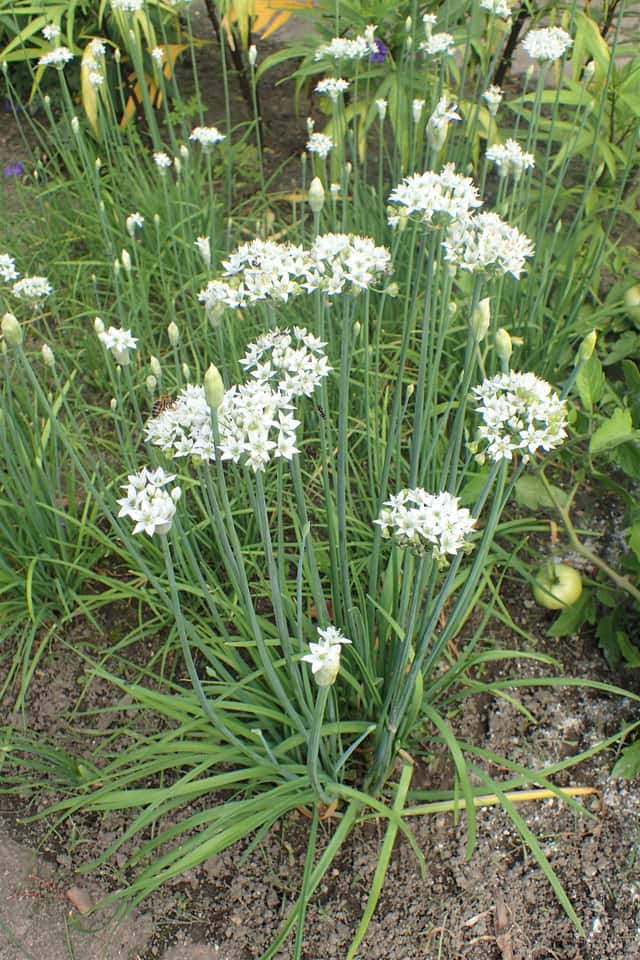
Garlic Chives (Allium tuberosum) is a easy-care plant from the Amaryllidaceae family. Garlic chives (Allium tuberosum) is a bulbous perennial herb native to the Himalayan region and China. It produces flat, green strap-like leaves with a mild garlic flavor and aroma, widely prized in Asian cuisine. In summer, it bears fragrant white star-shaped flowers in umbrella-like clusters that...
Garlic Chives grows up to 50cm, spread of 30cm, watering every 4 days, -20°C – 25°C, 40–70% humidity. It is suitable for indoor environments and not safe for pets.
Unlike many tropical plants, Garlic Chives tolerates watering mistakes. Best for beginners. Without precautions, ingestion can cause irritation in pets. Keep out of reach of cats and dogs. Without adequate drainage, root rot can develop within 8 days.
How to Care for Garlic Chives?
TLDR: Garlic Chives needs Direct sun, watering every 4 days, and temperatures between -20-25°C with 40-70% humidity.
How Often Should You Water Garlic Chives?
Water every 4 days when the top inch of soil feels slightly dry. Avoid waterlogging — soggy soil leads to root rot. Water at the base of the plant in the morning so foliage can dry during the day, reducing fungal disease risk.
How Much Light Does Garlic Chives Need?
Garlic chives thrive in full sun with at least 6 hours of direct sunlight per day. Indoors, place near a south-facing window or supplement with LED grow lights. Partial shade is tolerated but reduces growth and harvest yield.
What Is the Best Soil for Garlic Chives?
Prefers well-draining, loamy to sandy-loam soil rich in organic matter. Ideal pH 6.5–7.5. Amend with compost before planting to improve fertility and drainage. Avoid heavy clay soils that retain excess moisture.
What Pot Should You Use for Garlic Chives?
Terracotta or clay pots are ideal as they allow good drainage and air circulation. Always use pots with drainage holes. For indoor growing, plastic or glazed ceramic pots with a saucer work well — just empty the saucer after watering.
Care Schedule
Fertilize
Every 90 days
Repot
Every 548 days
What Is Garlic Chives and Where Does It Come From?
Garlic chives (Allium tuberosum) is a bulbous perennial herb native to the Himalayan region and China. It produces flat, green strap-like leaves with a mild garlic flavor and aroma, widely prized in Asian cuisine. In summer, it bears fragrant white star-shaped flowers in umbrella-like clusters that attract pollinators. It is easy to grow and extremely versatile in the kitchen.
How to Propagate Garlic Chives?
Clump Division
Divide clumps every 3 years to maintain vigor and flowering. Use clean tools to prevent disease transmission.
- 1 Dig up the clump carefully in early spring
- 2 Separate bulb clusters by hand or with a clean knife
- 3 Replant divisions in fertile, well-draining soil spaced 15 cm apart
- 4 Water thoroughly after transplanting
Materials needed:
Seed Sowing
Use fresh seeds as viability drops quickly. The plant self-seeds readily — remove spent flower heads to control spread.
- 1 Sow seeds shallowly in well-draining seed mix in spring
- 2 Cover with a thin layer of compost
- 3 Keep soil evenly moist until germination
- 4 Transplant seedlings when 5-7 cm tall
Materials needed:
How Big Does Garlic Chives Grow?
TLDR: Garlic Chives can reach up to 50cm tall with Medium growth rate.
Max height
50cm
Spread
30cm
Growth rate
Medium
Foliage
Evergreen
Warning: Toxic Plant
This plant can be toxic if ingested. Keep out of reach of:
Plant Uses
Edible
Can be consumed
Ornamental
Great for decoration
Medicinal
Medicinal properties
Aromatic
Pleasant fragrance
Medicinal Uses
- Used in traditional Chinese medicine to support digestive health
- Attributed with mild antibacterial properties in Asian folk medicine
- Believed to warm the kidneys and invigorate yang energy in TCM
Culinary Uses
- Fresh leaves chopped over salads, soups, dumplings, and stir-fries
- Edible white flowers used as garnish or in salads
- Classic ingredient in Korean cuisine (buchu), Chinese jiaozi dumplings, and Japanese dishes
- Yellow chives (grown in darkness) are a prized delicacy in Chinese cooking
Is your plant showing symptoms?
Click on the symptom to discover possible causes:
What Diseases Commonly Affect Garlic Chives?
TLDR: Garlic Chives is susceptible to 6 known diseases. Monitor regularly for early detection.
Downy Mildew
Downy mildew is a fungal-like disease caused by oomycetes (water molds) that thrives in cool, wet conditions. It affects a wide range of plants, causing yellowing leaves with fuzzy white-gray growth underneath, leading to defoliation and reduced yields if left untreated.
Root Rot
Root rot is a serious fungal disease that affects the root system of plants, causing them to decay and die. It is primarily caused by overwatering, poor drainage, or soil-borne fungi such as Pythium, Phytophthora, Rhizoctonia, and Fusarium. The disease thrives in waterlogged conditions where roots are deprived of oxygen, making them susceptible to fungal infection.
Slugs and Snails
Slugs and snails are mollusks that feed on plant tissue, causing irregular holes in leaves and damage to young seedlings. They are most active at night and in moist conditions, leaving characteristic silvery slime trails. These pests can quickly devastate gardens, especially during wet seasons.
White Mold
White mold (Sclerotinia sclerotiorum) is a devastating fungal disease affecting over 400 plant species worldwide. The fungus produces black, seed-like structures (sclerotia) that can survive in soil for 5 or more years. The disease is favored by cool, moist weather (50-68°F/10-20°C), especially during flowering.
Meaning & Symbolism
In many Asian cultures, garlic chives symbolize good luck, longevity, and prosperity. They are a staple in New Year dishes across East and Southeast Asia, believed to invite fortune and long life.
Fun Facts
Garlic chives have been cultivated in Asia for over 3,000 years, with records in Chinese botanical texts dating to the 5th century BC.
In Korean cuisine they are called "buchu" and are an essential ingredient in special kimchi varieties.
When grown in the dark, the leaves turn pale yellow — these "yellow chives" are a prized Chinese delicacy with a buttery, mild flavor.
The fragrant white flowers attract bees and butterflies, making garlic chives an excellent pollinator-friendly plant.
Frequently asked questions
How often should I water garlic chives?
Are garlic chives toxic to pets?
How do I prevent garlic chives from taking over my garden?
Can I grow garlic chives indoors?
When should I divide garlic chive clumps?
Compare with similar plants
| Attribute | Difficulty | Light | Watering | Pet Safe |
|---|---|---|---|---|
| Field Maple | Easy | Bright indirect | 14d | ✓ |
| Silver Birch | Easy | Direct sun | 14d | ✓ |
| Cushion Bush | Easy | Direct sun | 14d | ✓ |
| Peruvian peppertree | Easy | Direct sun | 14d | ⚠️ |