Rosaceae
Sour Cherry Tree: Complete Guide to Growing Prunus cerasus
Prunus cerasus
Sour cherry thrives in full sun with moderate watering and well-drained, organically rich soil. It is exceptionally cold-hardy (to -20°C / -4°F) and requires a winter chilling period to set fruit. Annual pruning and spring fertilization promote healthy growth and abundant harvests.
Every 10 days
Direct sun
-20° - 35°C
40% - 70%
Categories
What is Sour Cherry?
Sour Cherry (Prunus cerasus) is a medium-care plant from the Rosaceae family. Sour cherry (Prunus cerasus) is a deciduous fruit tree in the Rosaceae family, native to Eastern Europe and Southwest Asia. It produces small, tart red fruits prized for culinary use in pies, jams, liqueurs, and dried snacks. In spring, the tree bursts into clusters of fragrant white blossoms before...
Sour Cherry grows up to 6.0m, spread of 500cm, watering every 10 days, -20°C – 35°C, 40–70% humidity. It is not suitable for indoor environments and not safe for pets.
Without precautions, ingestion can cause irritation in pets. Keep out of reach of cats and dogs.
How to Care for Sour Cherry?
TLDR: Sour Cherry needs Direct sun, watering every 10 days, and temperatures between -20-35°C with 40-70% humidity.
How Often Should You Water Sour Cherry?
Water every 7–14 days during the growing season, allowing the topsoil to dry slightly between waterings. During hot summers, check soil moisture more frequently. Avoid waterlogging to prevent root rot.
How Much Light Does Sour Cherry Need?
Requires full sun — at least 6 to 8 hours of direct sunlight daily. More sun equals better fruit production. Choose a sheltered spot away from strong winds for best results.
What Is the Best Soil for Sour Cherry?
Prefers loamy, well-drained soil rich in organic matter. Ideal pH: 6.0–7.5. Amend annually with compost to maintain fertility and soil structure.
What Pot Should You Use for Sour Cherry?
Wide terracotta or half-barrel wooden planter (minimum 60 cm diameter and depth). Ensure excellent drainage. Ground planting preferred for mature specimens.
Care Schedule
Fertilize
Every 30 days
What Is Sour Cherry and Where Does It Come From?
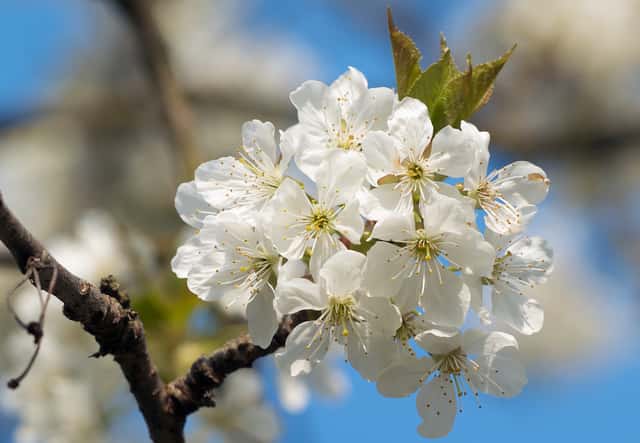
Sour cherry (Prunus cerasus) is a deciduous fruit tree in the Rosaceae family, native to Eastern Europe and Southwest Asia. It produces small, tart red fruits prized for culinary use in pies, jams, liqueurs, and dried snacks. In spring, the tree bursts into clusters of fragrant white blossoms before leafing out, making it an ornamental highlight in any garden.
How to Propagate Sour Cherry?
Cold-stratified Seed
Cold stratification is essential to break seed dormancy. Sowing outdoors in autumn achieves natural stratification.
- 1 Extract seeds from ripe cherries and clean thoroughly
- 2 Cold-stratify for 2–3 months in moist sand at 4°C (39°F)
- 3 Sow 1 cm deep in light, well-drained seed-starting mix
- 4 Keep cool and wait — germination may take up to 18 months
Materials needed:
Semi-hardwood Cutting
Use a propagation tray with a clear lid to maintain high humidity. Avoid direct sun until roots form.
- 1 Take 15–20 cm semi-hardwood cuttings in July/August
- 2 Remove lower leaves, keeping 2–3 leaves at the tip
- 3 Dip the base in rooting hormone powder
- 4 Plant in sandy, moist medium and keep in a shaded, humid environment
Materials needed:
How Big Does Sour Cherry Grow?
TLDR: Sour Cherry can reach up to 6.0m tall with Fast growth rate.
Max height
6.0m
Spread
5.0m
Growth rate
Fast
Foliage
Deciduous
Warning: Toxic Plant
This plant can be toxic if ingested. Keep out of reach of:
Plant Uses
Ornamental
Great for decoration
Edible
Can be consumed
Medicinal
Medicinal properties
Medicinal Uses
- Bark used as astringent and febrifuge; traditional treatment for coughs and fevers
- Fruit rich in antioxidants and anthocyanins with anti-inflammatory properties
- Tart cherry juice studied for sleep improvement and muscle recovery benefits
Culinary Uses
- Pies and tarts
- Jams and preserves
- Liqueurs (Kriek beer, Cherry Heering, Maraschino)
- Dried cherries in baking and trail mix
- Fruit soups and cold beverages
Is your plant showing symptoms?
Click on the symptom to discover possible causes:
What Diseases Commonly Affect Sour Cherry?
TLDR: Sour Cherry is susceptible to 11 known diseases. Monitor regularly for early detection.
Bacterial Canker
Serious bacterial disease affecting stone fruits and tomatoes caused by Pseudomonas syringae or Clavibacter michiganensis. Creates sunken lesions that ooze sap.
Aphids
Aphids are small, soft-bodied, pear-shaped insects (1/16 to 1/8 inch long) that feed by sucking nutrient-rich sap from plants. They reproduce rapidly and can quickly weaken plants, causing distorted growth and transmitting plant viruses. Aphids come in various colors including green, black, red, yellow, brown, and gray. They secrete honeydew, a sticky substance that attracts ants and encourages sooty mold growth.
Powdery Mildew
Powdery mildew is a common fungal disease caused by various fungi species including Erysiphe, Podosphaera, Oïdium, and Leveillula. It affects over 10,000 plant species worldwide. The disease thrives in warm, dry climates with high humidity and appears as a distinctive white powdery coating on plant surfaces.
Root Rot
Root rot is a serious fungal disease that affects the root system of plants, causing them to decay and die. It is primarily caused by overwatering, poor drainage, or soil-borne fungi such as Pythium, Phytophthora, Rhizoctonia, and Fusarium. The disease thrives in waterlogged conditions where roots are deprived of oxygen, making them susceptible to fungal infection.
Meaning & Symbolism
Symbol of fleeting beauty, abundance, and the sweetness of life; associated with spring renewal and fertility across European and Asian cultures.
Fun Facts
Prunus cerasus is the source of the traditional Portuguese ginjinha liqueur, made by macerating sour cherries in brandy
The tree can live over 100 years and withstand temperatures as low as -20°C (-4°F)
Spring blossoms are a critical early nectar source for bees and butterflies
Each sour cherry fruit always contains exactly one seed
Frequently asked questions
How often should I water a sour cherry tree?
Is sour cherry toxic to pets?
How much sun does a sour cherry need?
When does sour cherry bloom?
How do I propagate sour cherry?
Compare with similar plants
| Attribute | Difficulty | Light | Watering | Pet Safe |
|---|---|---|---|---|
| Dark Fieldcap | Medium | Low light | 2d | ⚠️ |
| Azalea | Medium | Partial shade | 3d | ⚠️ |
| Bougainvillea | Medium | Direct sun | 7d | ⚠️ |
| Wild Lettuce | Medium | Direct sun | 7d | ⚠️ |



