Cactaceae
Giant Peruvian Cereus: The Striking Night-Blooming Columnar Cactus
Cereus peruvianus
Grow the Giant Peruvian Cereus in full sun with fast-draining soil. Water only when the soil is completely dry, and avoid overwatering, which quickly leads to root rot. It tolerates heat well and can survive brief light frost, but should be protected from prolonged cold.
Every 21 days
Direct sun
-4° - 40°C
20% - 50%
Categories
What is Giant Peruvian Cereus?
Giant Peruvian Cereus (Cereus peruvianus) is a easy-care plant from the Cactaceae family. The Giant Peruvian Cereus (Cereus peruvianus) is a fast-growing columnar cactus native to South America, closely related to other Cereus species and prized for its dramatic upright form and large, fragrant, night-blooming flowers. It can grow several meters tall, featuring blue-green ribbed stems ar...
Giant Peruvian Cereus grows up to 6.0m, spread of 150cm, watering every 21 days, -4°C – 40°C, 20–50% humidity. It is suitable for indoor environments and safe for pets.
Unlike many tropical plants, Giant Peruvian Cereus tolerates watering mistakes. Best for beginners. Unlike many popular species, Giant Peruvian Cereus is safe to keep around pets. Without adequate drainage, root rot can develop within 42 days.
How to Care for Giant Peruvian Cereus?
TLDR: Giant Peruvian Cereus needs Direct sun, watering every 21 days, and temperatures between -4-40°C with 20-50% humidity.
How Often Should You Water Giant Peruvian Cereus?
Water deeply, then let the soil dry out completely before watering again; reduce frequency further in winter.
How Much Light Does Giant Peruvian Cereus Need?
Prefers full, direct sun for at least 6-8 hours a day.
What Is the Best Soil for Giant Peruvian Cereus?
Use a well-draining cactus/succulent mix, ideally amended with coarse sand or perlite.
What Pot Should You Use for Giant Peruvian Cereus?
Terracotta or ceramic pot with drainage holes to prevent moisture buildup around the roots.
Care Schedule
Repot
Every 730 days
What Is Giant Peruvian Cereus and Where Does It Come From?
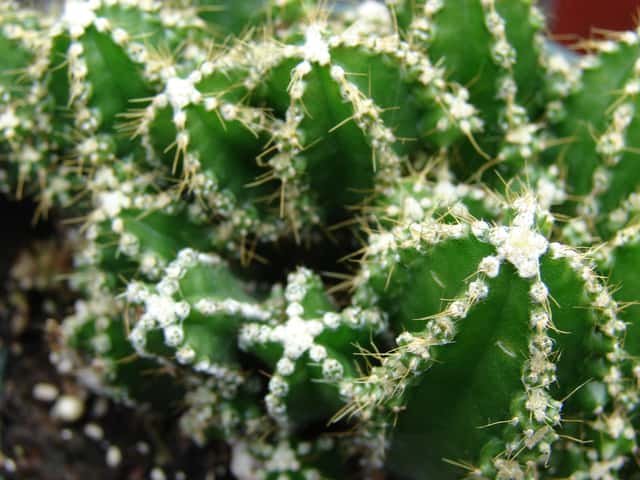
The Giant Peruvian Cereus (Cereus peruvianus) is a fast-growing columnar cactus native to South America, closely related to other Cereus species and prized for its dramatic upright form and large, fragrant, night-blooming flowers. It can grow several meters tall, featuring blue-green ribbed stems armed with sturdy spines. Its cream to white flowers open only at night and wilt by morning. Extremely drought-tolerant, it is commonly grown as an ornamental accent, security hedge, or living fence in warm climates.
How to Propagate Giant Peruvian Cereus?
Stem Cutting
Always use clean tools to prevent contamination, and never water the cutting before it has fully calloused.
- 1 Cut a healthy stem segment using a clean, sharp knife
- 2 Let the cut end callus over in a shaded, well-ventilated spot for 5-7 days
- 3 Plant the calloused cutting cut-side down in well-draining cactus soil
- 4 Water lightly only once the first roots have formed
Materials needed:
How Big Does Giant Peruvian Cereus Grow?
TLDR: Giant Peruvian Cereus can reach up to 6.0m tall with Fast growth rate.
Max height
6.0m
Spread
1.5m
Growth rate
Fast
Foliage
Evergreen
Plant Uses
Ornamental
Great for decoration
Edible
Can be consumed
Culinary Uses
- Edible fruit, eaten fresh or used in preserves
Is your plant showing symptoms?
Click on the symptom to discover possible causes:
What Diseases Commonly Affect Giant Peruvian Cereus?
TLDR: Giant Peruvian Cereus is susceptible to 4 known diseases. Monitor regularly for early detection.
Root Rot
Root rot is a serious fungal disease that affects the root system of plants, causing them to decay and die. It is primarily caused by overwatering, poor drainage, or soil-borne fungi such as Pythium, Phytophthora, Rhizoctonia, and Fusarium. The disease thrives in waterlogged conditions where roots are deprived of oxygen, making them susceptible to fungal infection.
Mealybugs
Mealybugs are small, soft-bodied insects covered with a white, waxy, cottony material. They are common pests of houseplants and outdoor plants in mild climates. These sap-sucking insects feed on plant tissue, causing damage, stunted growth, and can lead to plant death if left untreated. They produce sticky honeydew which attracts sooty mold.
Spider Mites
Spider mites are tiny arachnids (less than 1/20 inch long) related to spiders and ticks that feed on plant sap. They thrive in hot, dry conditions and can cause significant damage to ornamental and vegetable plants. During severe infestations, crop losses can reach 14% or higher as these pests disrupt vital plant processes including photosynthesis, carbon dioxide absorption, and transpiration.
Scale Insects
Scale insects are small sap-sucking pests that appear as brown, shell-like bumps on plant stems and leaves. There are over 25 species, divided into armored (hard) and unarmored (soft) scales. They feed by piercing plant tissue and extracting sap, which weakens the plant and can lead to yellowing, stunted growth, and even death if left untreated. They also excrete honeydew, which attracts ants and promotes sooty mold growth.
Meaning & Symbolism
A symbol of resilience and drought endurance; often planted as a protective living fence.
Fun Facts
Its flowers bloom only at night and wilt by sunrise
It is closely related to other Peruvian Cereus cacti but is a distinct species
The ripe fruit is edible and tastes similar to dragon fruit
Frequently asked questions
How often should I water a Giant Peruvian Cereus?
Is it toxic to pets?
Why do the flowers only open at night?
Can I grow this cactus in a pot?
Compare with similar plants
| Attribute | Difficulty | Light | Watering | Pet Safe |
|---|---|---|---|---|
| Field Maple | Easy | Bright indirect | 14d | ✓ |
| Silver Birch | Easy | Direct sun | 14d | ✓ |
| Cushion Bush | Easy | Direct sun | 14d | ✓ |
| Peruvian peppertree | Easy | Direct sun | 14d | ⚠️ |