Rosaceae
Sweet Cherry Tree (Prunus avium): Complete Growing and Care Guide
Prunus avium
Sweet cherry thrives in full sun with well-drained soil and moderate watering. Annual winter pruning stimulates fruit production and maintains tree shape. Spring fertilization supports flowering and fruiting.
Every 10 days
Direct sun
-20° - 35°C
40% - 70%
Categories
What is Sweet Cherry Tree?
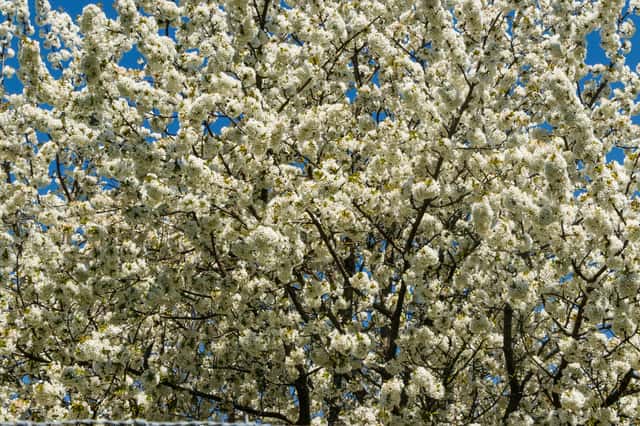
Sweet Cherry Tree (Prunus avium) is a medium-care plant from the Rosaceae family. Prunus avium, commonly known as the sweet cherry tree, is a large deciduous tree in the Rosaceae family, native to Europe and Western Asia. It produces stunning white blossoms in spring and sweet red cherries in summer, cultivated both for its ornamental beauty and its edible fruits.
Sweet Cherry Tree grows up to 9.0m, spread of 900cm, watering every 10 days, -20°C – 35°C, 40–70% humidity. It is not suitable for indoor environments and not safe for pets.
Without precautions, ingestion can cause irritation in pets. Keep out of reach of cats and dogs.
How to Care for Sweet Cherry Tree?
TLDR: Sweet Cherry Tree needs Direct sun, watering every 10 days, and temperatures between -20-35°C with 40-70% humidity.
How Often Should You Water Sweet Cherry Tree?
Water every 10 days on average. Avoid waterlogging as roots are sensitive to excess moisture. Increase frequency during dry spells, especially for young trees.
How Much Light Does Sweet Cherry Tree Need?
Requires full sun with a minimum of 6 hours of direct sunlight per day. Adequate light is essential for abundant flowering and fruit development.
What Is the Best Soil for Sweet Cherry Tree?
Prefers well-drained, slightly acidic to neutral soils (pH 5.5–7.0). Tolerates chalky soils. Avoid compacted or poorly drained soils.
What Pot Should You Use for Sweet Cherry Tree?
Suitable for large gardens and orchards. Not recommended for containers due to its size.
Care Schedule
Fertilize
Every 90 days
What Is Sweet Cherry Tree and Where Does It Come From?
Prunus avium, commonly known as the sweet cherry tree, is a large deciduous tree in the Rosaceae family, native to Europe and Western Asia. It produces stunning white blossoms in spring and sweet red cherries in summer, cultivated both for its ornamental beauty and its edible fruits.
How to Propagate Sweet Cherry Tree?
Grafting
Grafting is the most widely used commercial method as it preserves varietal characteristics and accelerates fruiting.
- 1 Select a healthy, compatible rootstock
- 2 Make a bevel cut on both scion and rootstock
- 3 Join the parts and secure with grafting tape
- 4 Keep in a shaded location until union takes hold
Materials needed:
Seed
Seed-grown trees may not retain parent characteristics and take longer to fruit.
- 1 Collect seeds from ripe fruits and clean off pulp
- 2 Cold stratify for 8-10 weeks in the refrigerator
- 3 Sow in moist, well-draining substrate
- 4 Keep in a cool location until germination
Materials needed:
How Big Does Sweet Cherry Tree Grow?
TLDR: Sweet Cherry Tree can reach up to 9.0m tall with Medium growth rate.
Max height
9.0m
Spread
9.0m
Growth rate
Medium
Foliage
Deciduous
Warning: Toxic Plant
This plant can be toxic if ingested. Keep out of reach of:
Plant Uses
Ornamental
Great for decoration
Edible
Can be consumed
Culinary Uses
- Fresh fruits or processed into jams, liqueurs, ice creams and cakes
- Dried leaves used in teas with astringent properties
Is your plant showing symptoms?
Click on the symptom to discover possible causes:
What Diseases Commonly Affect Sweet Cherry Tree?
TLDR: Sweet Cherry Tree is susceptible to 6 known diseases. Monitor regularly for early detection.
Bacterial Canker
Serious bacterial disease affecting stone fruits and tomatoes caused by Pseudomonas syringae or Clavibacter michiganensis. Creates sunken lesions that ooze sap.
Gray Mold (Botrytis Blight)
Gray mold, caused by the fungus Botrytis cinerea, is a widespread necrotrophic pathogen affecting over 1,400 plant species. It thrives in cool, humid conditions and attacks weakened or aging plant tissues, causing soft rot and characteristic gray fuzzy growth.
Powdery Mildew
Powdery mildew is a common fungal disease caused by various fungi species including Erysiphe, Podosphaera, Oïdium, and Leveillula. It affects over 10,000 plant species worldwide. The disease thrives in warm, dry climates with high humidity and appears as a distinctive white powdery coating on plant surfaces.
Root Rot
Root rot is a serious fungal disease that affects the root system of plants, causing them to decay and die. It is primarily caused by overwatering, poor drainage, or soil-borne fungi such as Pythium, Phytophthora, Rhizoctonia, and Fusarium. The disease thrives in waterlogged conditions where roots are deprived of oxygen, making them susceptible to fungal infection.
Meaning & Symbolism
Symbol of love, renewal, and the fleeting beauty of spring. In Japanese culture, cherry blossoms represent the transience of life.
Fun Facts
Can reach up to 30 meters in height in the wild
Cherry blossoms are primarily pollinated by bees
Cherry wood is highly prized in carpentry and lutherie
A mature sweet cherry tree can produce dozens of kilograms of fruit per season
Frequently asked questions
How often should I water a sweet cherry tree?
Is the sweet cherry tree toxic to pets?
When does the sweet cherry tree bloom?
What is the best soil for sweet cherry?
How often should I prune my sweet cherry tree?
Compare with similar plants
| Attribute | Difficulty | Light | Watering | Pet Safe |
|---|---|---|---|---|
| Dark Fieldcap | Medium | Low light | 2d | ⚠️ |
| Azalea | Medium | Partial shade | 3d | ⚠️ |
| Bougainvillea | Medium | Direct sun | 7d | ⚠️ |
| Wild Lettuce | Medium | Direct sun | 7d | ⚠️ |



