Caprifoliaceae
Japanese Honeysuckle (Lonicera japonica) – Complete Plant Care Guide
Lonicera japonica
Japanese Honeysuckle is a low-maintenance, fast-growing vine that thrives in full sun to partial shade. It is drought-tolerant once established, needing watering every 7–10 days. It adapts to most soil types as long as drainage is good. Prune hard annually to keep it in check and prevent invasive spread.
Every 9 days
Bright indirect
-15° - 35°C
40% - 70%
Categories
What is Japanese Honeysuckle?
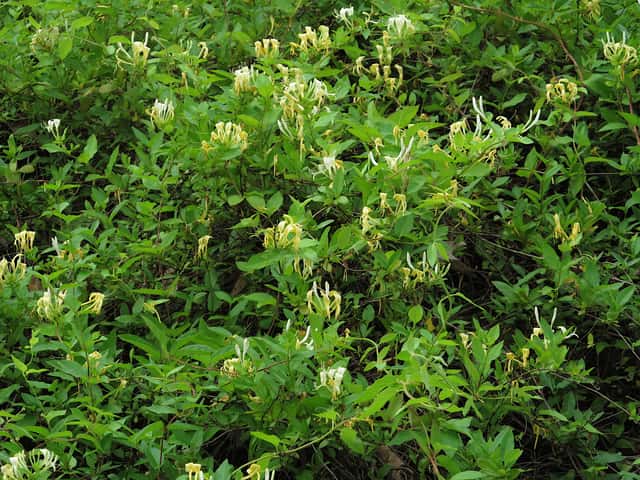
Japanese Honeysuckle (Lonicera japonica) is a easy-care plant from the Caprifoliaceae family. Lonicera japonica, commonly known as Japanese Honeysuckle, is a vigorous, twining, woody vine native to eastern Asia. It produces intensely fragrant tubular flowers that open white and fade to golden yellow, attracting hummingbirds and butterflies. While beloved for its sweet scent and ornamental va...
Japanese Honeysuckle grows up to 9.0m, spread of 150cm, watering every 9 days, -15°C – 35°C, 40–70% humidity. It is not suitable for indoor environments and not safe for pets.
Unlike many tropical plants, Japanese Honeysuckle tolerates watering mistakes. Best for beginners. Without precautions, ingestion can cause irritation in pets. Keep out of reach of cats and dogs.
How to Care for Japanese Honeysuckle?
TLDR: Japanese Honeysuckle needs Bright indirect, watering every 9 days, and temperatures between -15-35°C with 40-70% humidity.
How Often Should You Water Japanese Honeysuckle?
Water deeply every 7–10 days, allowing the top inch of soil to dry between waterings. Once established, this vine is quite drought-tolerant. Avoid waterlogging as it can cause root rot.
How Much Light Does Japanese Honeysuckle Need?
Grows best in full sun (6+ hours) but tolerates partial shade. Full sun encourages more prolific blooming. Avoid deep shade, which reduces flowering and vigor.
What Is the Best Soil for Japanese Honeysuckle?
Prefers well-draining soil but tolerates clay, loam, and sandy soils. Amend heavy clay with compost or perlite to improve drainage. A pH between 5.5 and 8.0 is acceptable.
What Pot Should You Use for Japanese Honeysuckle?
Outdoors on a fence, trellis, pergola, or arbor. If container-grown, use a large pot (at least 40 cm) with drainage holes and a sturdy support structure.
Care Schedule
Fertilize
Every 60 days
What Is Japanese Honeysuckle and Where Does It Come From?
Lonicera japonica, commonly known as Japanese Honeysuckle, is a vigorous, twining, woody vine native to eastern Asia. It produces intensely fragrant tubular flowers that open white and fade to golden yellow, attracting hummingbirds and butterflies. While beloved for its sweet scent and ornamental value, it is classified as an invasive species in many regions outside its native range due to its rapid, aggressive growth.
How to Propagate Japanese Honeysuckle?
Stem Cutting
Use clean, sharp pruners. Keep the medium consistently moist but not waterlogged. Covering with a plastic bag creates humidity and speeds rooting.
- 1 Take a 10–15 cm cutting from a healthy, semi-hardwood stem
- 2 Remove lower leaves, leaving 2–3 leaf pairs at the tip
- 3 Dip the cut end in rooting hormone powder
- 4 Insert into moist, well-draining potting mix or perlite
- 5 Keep in a warm, bright spot out of direct sun
- 6 Transplant once roots are established (2–4 weeks)
Materials needed:
Ground Layering
One of the easiest methods for honeysuckle. The stem stays attached and continues to receive nutrients from the parent plant while it roots.
- 1 Select a flexible stem and bend it to the ground
- 2 Nick the underside of the stem at a node
- 3 Bury the nicked section 5–7 cm deep, securing with a stake
- 4 Keep the buried section moist
- 5 Once roots form, sever from the parent plant and transplant
Materials needed:
How Big Does Japanese Honeysuckle Grow?
TLDR: Japanese Honeysuckle can reach up to 9.0m tall with Fast growth rate.
Max height
9.0m
Spread
1.5m
Growth rate
Fast
Foliage
Semi-evergreen
Warning: Toxic Plant
This plant can be toxic if ingested. Keep out of reach of:
Plant Uses
Ornamental
Great for decoration
Medicinal
Medicinal properties
Aromatic
Pleasant fragrance
Ground Cover
Soil coverage
Medicinal Uses
- Flowers used in traditional Chinese medicine (Jin Yin Hua) as an anti-inflammatory and antiviral remedy
- Leaf extracts have been studied for antibacterial properties
Culinary Uses
- Young flowers used to make honeysuckle syrup, tea, and infused waters
- Edible nectar can be sipped directly from the base of fresh flowers
Is your plant showing symptoms?
Click on the symptom to discover possible causes:
What Diseases Commonly Affect Japanese Honeysuckle?
TLDR: Japanese Honeysuckle is susceptible to 6 known diseases. Monitor regularly for early detection.
Powdery Mildew
Powdery mildew is a common fungal disease caused by various fungi species including Erysiphe, Podosphaera, Oïdium, and Leveillula. It affects over 10,000 plant species worldwide. The disease thrives in warm, dry climates with high humidity and appears as a distinctive white powdery coating on plant surfaces.
Aphids
Aphids are small, soft-bodied, pear-shaped insects (1/16 to 1/8 inch long) that feed by sucking nutrient-rich sap from plants. They reproduce rapidly and can quickly weaken plants, causing distorted growth and transmitting plant viruses. Aphids come in various colors including green, black, red, yellow, brown, and gray. They secrete honeydew, a sticky substance that attracts ants and encourages sooty mold growth.
Leaf Spot
Leaf spot is a common fungal disease caused by various pathogens including Alternaria, Ascochyta, Colletotrichum, Septoria, and Venturia. It primarily affects leaves, causing discolored spots that can lead to premature leaf drop if left untreated.
Anthracnose
Anthracnose is a fungal disease caused by fungi in the genus Colletotrichum that affects many plants, including vegetables, fruits, and trees. The disease thrives in cool, wet conditions, causing dark, sunken lesions on leaves, stems, flowers, and fruits.
Meaning & Symbolism
In Victorian flower language, honeysuckle symbolizes bonds of love, devoted affection, and fidelity. It also represents happiness and sweet memories.
Fun Facts
The flowers of Lonicera japonica are used in Traditional Chinese Medicine for over 2,000 years as a cooling herb called Jin Yin Hua (金银花).
A single vine can grow up to 10 meters (30 feet) in a single season under ideal conditions, making it one of the fastest-growing climbing plants.
The name "gold-and-silver flower" refers to the bicolor blooms: white when newly opened, turning golden yellow as they age.
It was introduced to North America in the 1800s as an ornamental plant and erosion control tool, but escaped cultivation to become one of the most widespread invasive vines in the eastern United States.
Frequently asked questions
How often should I water Japanese Honeysuckle?
Is Japanese Honeysuckle toxic to pets?
Why is my Japanese Honeysuckle not blooming?
How do I control Japanese Honeysuckle from spreading?
What are the most common pests on Japanese Honeysuckle?
Compare with similar plants
| Attribute | Difficulty | Light | Watering | Pet Safe |
|---|---|---|---|---|
| Field Maple | Easy | Bright indirect | 14d | ✓ |
| Silver Birch | Easy | Direct sun | 14d | ✓ |
| Rose Campion | Easy | Direct sun | 10d | ✓ |
| Cushion Bush | Easy | Direct sun | 14d | ✓ |