Crassulaceae
Sedum tetractinum -- Chinese Stonecrop Care Guide
Sedum tetractinum
An easy-care, drought-tolerant succulent that thrives in bright light and well-draining soil. Water sparingly and let the soil dry out between waterings; avoid soggy conditions, which quickly lead to rot.
Every 14 days
Direct sun
° - °C
% - %
Categories
What is Chinese Stonecrop?
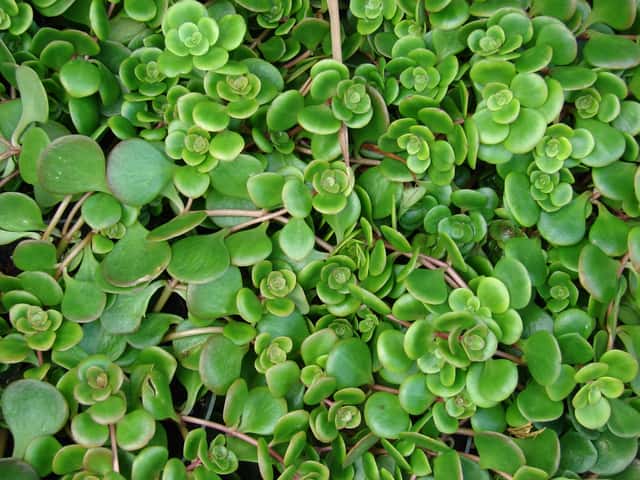
Chinese Stonecrop (Sedum tetractinum) is a easy-care plant from the Crassulaceae family. Sedum tetractinum is a low-growing, mat-forming succulent native to southeastern China, prized as a groundcover for its round, fleshy blue-green leaves that blush coppery-pink in strong sun. Small star-shaped white to pale pink flowers appear in summer above the dense foliage mat.
Chinese Stonecrop grows up to 8cm, spread of 30cm, watering every 14 days. It is suitable for indoor environments and safe for pets.
Unlike many tropical plants, Chinese Stonecrop tolerates watering mistakes. Best for beginners. Unlike many popular species, Chinese Stonecrop is safe to keep around pets. Without adequate drainage, root rot can develop within 28 days.
How to Care for Chinese Stonecrop?
TLDR: Chinese Stonecrop needs Direct sun, watering every 14 days, and temperatures between 15-30°C with 40-70% humidity.
How Often Should You Water Chinese Stonecrop?
Water deeply only when the soil is completely dry, roughly every two weeks; reduce watering further in winter.
How Much Light Does Chinese Stonecrop Need?
Give it full sun to light partial shade -- at least a few hours of direct sun daily brings out the best leaf color.
What Is the Best Soil for Chinese Stonecrop?
Plant in a very well-draining mix; add extra perlite, pumice, or coarse sand to prevent waterlogging.
What Pot Should You Use for Chinese Stonecrop?
Shallow, wide terracotta or unglazed pots with drainage holes suit its spreading, mat-forming habit.
Care Schedule
Repot
Every 365 days
What Is Chinese Stonecrop and Where Does It Come From?
Sedum tetractinum is a low-growing, mat-forming succulent native to southeastern China, prized as a groundcover for its round, fleshy blue-green leaves that blush coppery-pink in strong sun. Small star-shaped white to pale pink flowers appear in summer above the dense foliage mat.
How to Propagate Chinese Stonecrop?
Leaf Cutting
Use only leaves that detach cleanly with no torn tissue for the highest success rate.
- 1 Gently twist off a healthy, plump leaf from the stem.
- 2 Let the leaf callus over for 1-2 days in a dry, shaded spot.
- 3 Lay the leaf on top of well-draining succulent soil, cut end lightly touching the surface.
- 4 Mist lightly every few days until tiny roots and a new rosette appear.
Materials needed:
Division
Division is the fastest way to fill in bare patches of a groundcover planting.
- 1 Lift a section of the spreading mat with roots attached.
- 2 Separate into smaller clumps by gently pulling apart the rooted stems.
- 3 Replant each clump directly into well-draining soil.
- 4 Water lightly to settle the soil and resume normal care once established.
Materials needed:
How Big Does Chinese Stonecrop Grow?
TLDR: Chinese Stonecrop can reach up to 8cm tall with Medium growth rate.
Max height
8cm
Spread
30cm
Growth rate
Medium
Foliage
Evergreen
Warning: Toxic Plant
This plant can be toxic if ingested. Keep out of reach of:
Plant Uses
Ornamental
Great for decoration
Ground Cover
Soil coverage
Edible
Can be consumed
Culinary Uses
- Young shoots and leaves are sometimes eaten raw or lightly cooked before flowering, though caution is advised as some references note mild toxicity if ingested in quantity.
Is your plant showing symptoms?
Click on the symptom to discover possible causes:
What Diseases Commonly Affect Chinese Stonecrop?
TLDR: Chinese Stonecrop is susceptible to 10 known diseases. Monitor regularly for early detection.
Southern Blight
Southern blight is a devastating soilborne fungal disease caused by Athelia rolfsii (formerly Sclerotium rolfsii), affecting over 500 plant species including vegetables, ornamentals, and fruit crops. The fungus survives in soil through resting structures called sclerotia that resemble mustard seeds and can remain viable for years.
Slugs and Snails
Slugs and snails are mollusks that feed on plant tissue, causing irregular holes in leaves and damage to young seedlings. They are most active at night and in moist conditions, leaving characteristic silvery slime trails. These pests can quickly devastate gardens, especially during wet seasons.
Root Rot
Root rot is a serious fungal disease that affects the root system of plants, causing them to decay and die. It is primarily caused by overwatering, poor drainage, or soil-borne fungi such as Pythium, Phytophthora, Rhizoctonia, and Fusarium. The disease thrives in waterlogged conditions where roots are deprived of oxygen, making them susceptible to fungal infection.
Powdery Mildew
Powdery mildew is a common fungal disease caused by various fungi species including Erysiphe, Podosphaera, Oïdium, and Leveillula. It affects over 10,000 plant species worldwide. The disease thrives in warm, dry climates with high humidity and appears as a distinctive white powdery coating on plant surfaces.
Meaning & Symbolism
Represents resilience and quiet endurance, often associated with the ability to thrive in poor, harsh conditions.
Fun Facts
Its rounded leaves turn a striking coppery-pink under strong sunlight, giving rise to the popular cultivar name Coral Reef.
Native to the mountains of southeastern China, it has long been used there as a low, spreading groundcover.
Individual leaves can grow entirely new plants -- a trait shared by many members of the Crassulaceae family.
Frequently asked questions
How often should I water Sedum tetractinum?
Does Chinese Stonecrop need full sun?
Is Sedum tetractinum toxic to pets?
How do I propagate Sedum tetractinum?
Compare with similar plants
| Attribute | Difficulty | Light | Watering | Pet Safe |
|---|---|---|---|---|
| Field Maple | Easy | Bright indirect | 14d | ✓ |
| Silver Birch | Easy | Direct sun | 14d | ✓ |
| Common Blanketflower | Easy | Direct sun | 10d | ✓ |
| Cushion Bush | Easy | Direct sun | 14d | ✓ |





