Asteraceae
How to Care for Florist's Cineraria (Pericallis × hybrida)
Pericallis × hybrida
Keep soil consistently moist but well-drained. Place in bright indirect light away from direct sun. Prefers cool temperatures of 50–70°F (10–21°C) and moderate humidity of 45–65%. Fertilize every 14 days and rotate the pot every 30 days for even growth.
Every 3 days
Partial shade
10° - 21°C
45% - 65%
Categories
What is Florist's Cineraria?
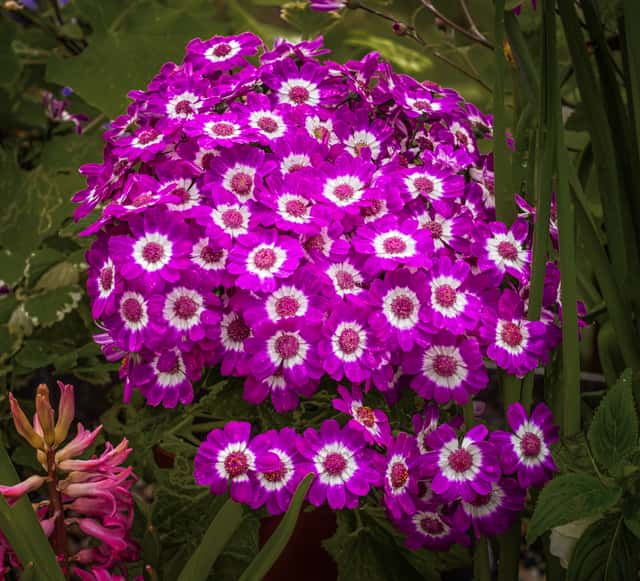
Florist's Cineraria (Pericallis × hybrida) is a medium-care plant from the Asteraceae family. Florist's Cineraria (Pericallis × hybrida) is a popular cool-season annual celebrated for its spectacular daisy-like flowers in vivid shades of blue, purple, pink, red, and white, often with striking bicolor patterns. Native to the Canary Islands, it is widely grown as a potted plant and bedding ann...
Florist's Cineraria grows up to 60cm, spread of 60cm, watering every 3 days, 10°C – 21°C, 45–65% humidity. It is suitable for indoor environments and safe for pets.
Unlike many popular species, Florist's Cineraria is safe to keep around pets. Without adequate drainage, root rot can develop within 7 days.
How to Care for Florist's Cineraria?
TLDR: Florist's Cineraria needs Partial shade, watering every 3 days, and temperatures between 10-21°C with 45-65% humidity.
How Often Should You Water Florist's Cineraria?
Water every 2–4 days when the top inch of soil feels dry. Never let the pot sit in standing water — soggy soil causes root rot rapidly in this species.
How Much Light Does Florist's Cineraria Need?
Provide bright, indirect light — a north or east-facing window is ideal. Avoid harsh afternoon sun, which scorches the delicate foliage within minutes.
What Is the Best Soil for Florist's Cineraria?
Use a well-draining, organically rich potting mix with pH 5.5–6.5. A quality all-purpose potting soil amended with perlite ensures proper drainage.
What Pot Should You Use for Florist's Cineraria?
Ceramic or terracotta pot with drainage holes. Avoid dark plastic pots that retain excess heat and raise soil temperature.
Care Schedule
Fertilize
Every 14 days
Misting
Every 3 days
Rotate
Every 30 days
Repot
Every 365 days
What Is Florist's Cineraria and Where Does It Come From?
Florist's Cineraria (Pericallis × hybrida) is a popular cool-season annual celebrated for its spectacular daisy-like flowers in vivid shades of blue, purple, pink, red, and white, often with striking bicolor patterns. Native to the Canary Islands, it is widely grown as a potted plant and bedding annual during winter and early spring. It belongs to the Asteraceae family and is a hybrid of several Pericallis species, formerly classified as Senecio cruentus or Cineraria.
How to Propagate Florist's Cineraria?
Seed
How Big Does Florist's Cineraria Grow?
TLDR: Florist's Cineraria can reach up to 60cm tall with Medium growth rate.
Max height
60cm
Spread
60cm
Growth rate
Medium
Foliage
Deciduous
Plant Uses
Ornamental
Great for decoration
Is your plant showing symptoms?
Click on the symptom to discover possible causes:
What Diseases Commonly Affect Florist's Cineraria?
TLDR: Florist's Cineraria is susceptible to 11 known diseases. Monitor regularly for early detection.
Powdery Mildew
Powdery mildew is a common fungal disease caused by various fungi species including Erysiphe, Podosphaera, Oïdium, and Leveillula. It affects over 10,000 plant species worldwide. The disease thrives in warm, dry climates with high humidity and appears as a distinctive white powdery coating on plant surfaces.
Gray Mold (Botrytis Blight)
Gray mold, caused by the fungus Botrytis cinerea, is a widespread necrotrophic pathogen affecting over 1,400 plant species. It thrives in cool, humid conditions and attacks weakened or aging plant tissues, causing soft rot and characteristic gray fuzzy growth.
Gray Mold (Botrytis Blight)
Gray mold, caused by the fungus Botrytis cinerea, is one of the most common fungal diseases in plants. It affects over 200 plant species, including ornamentals, vegetables, fruits, and houseplants. The disease thrives in cool, humid conditions with poor air circulation, causing grayish spots and soft rot on infected tissues.
Root Rot
Root rot is a serious fungal disease that affects the root system of plants, causing them to decay and die. It is primarily caused by overwatering, poor drainage, or soil-borne fungi such as Pythium, Phytophthora, Rhizoctonia, and Fusarium. The disease thrives in waterlogged conditions where roots are deprived of oxygen, making them susceptible to fungal infection.
Meaning & Symbolism
Symbol of cheerfulness, vivacity, and renewal; associated with spring celebrations and the joy of color returning after winter.
Fun Facts
Florist's Cineraria originates from the Canary Islands and Madeira, where it grows naturally in mountain forests.
The name "cineraria" comes from the Latin cinerarius, referring to the ash-gray color of some ancestral species' leaves.
True blue flowers are extremely rare in the plant kingdom — Cineraria is one of the few species that achieves genuine blue tones.
In the Victorian language of flowers, cineraria symbolized "always delightful," making it a popular gift plant.
The species was reclassified from Senecio to Pericallis in the 1980s following molecular phylogenetic studies.
Frequently asked questions
How often should I water Florist's Cineraria?
Is Florist's Cineraria toxic to cats or dogs?
How long does Florist's Cineraria bloom?
Can I grow Cineraria outdoors?
Compare with similar plants
| Attribute | Difficulty | Light | Watering | Pet Safe |
|---|---|---|---|---|
| Azalea | Medium | Partial shade | 3d | ⚠️ |
| Wild Lettuce | Medium | Direct sun | 7d | ⚠️ |
| Cape Primrose | Medium | Partial shade | 7d | ✓ |
| Honey Locust | Medium | Direct sun | 14d | ✓ |