Cupressaceae
Nootka Cypress: Medicinal Uses & Care Tips
Callitropsis nootkatensis
Give this conifer a spot with full sun to light shade, deep but infrequent watering, and acidic to neutral well-drained soil. It tolerates cold very well but dislikes heat, drought, and soggy roots — consistency and good drainage matter more than fuss.
Every 10 days
Bright indirect
-34° - 29°C
50% - 80%
Categories
What is Nootka Cypress?
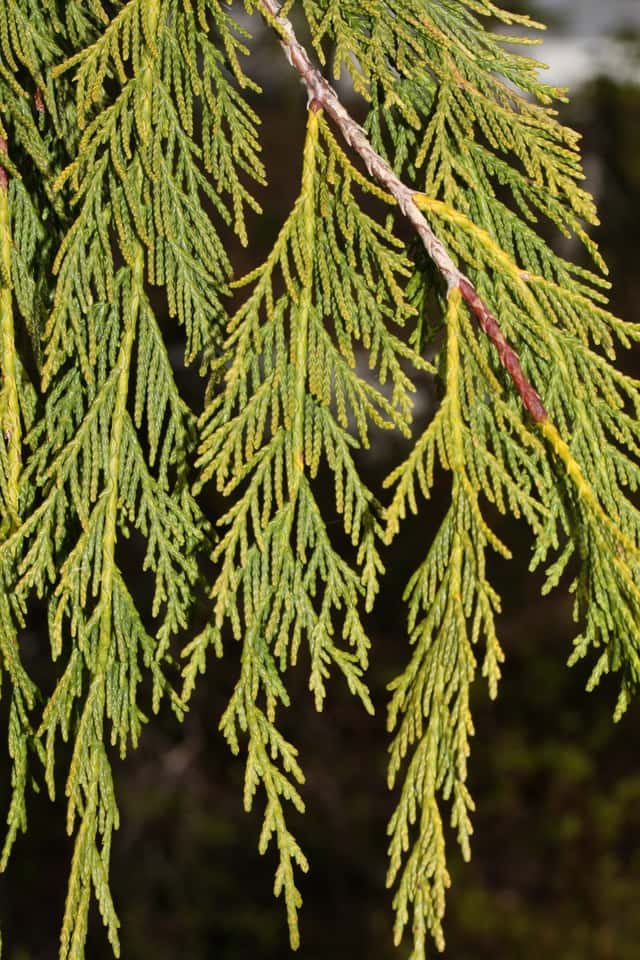
Nootka Cypress (Callitropsis nootkatensis) is a medium-care plant from the Cupressaceae family. Nootka Cypress is a slow-to-medium growing evergreen conifer native to the cool, wet coastal forests of the Pacific Northwest, from Alaska down to northern California. It has a graceful, often weeping habit with drooping branchlets of gray-green, scale-like foliage, and matures over decades into a t...
Nootka Cypress grows up to 40.0m, spread of 1000cm, watering every 10 days, -34°C – 29°C, 50–80% humidity. It is not suitable for indoor environments and safe for pets.
Unlike many popular species, Nootka Cypress is safe to keep around pets.
How to Care for Nootka Cypress?
TLDR: Nootka Cypress needs Bright indirect, watering every 10 days, and temperatures between -34-29°C with 50-80% humidity.
How Often Should You Water Nootka Cypress?
Water deeply and let the top layer of soil dry slightly between waterings; young trees need weekly water during the growing season, while established trees only need supplemental water in prolonged dry spells. Never let it sit in waterlogged soil.
How Much Light Does Nootka Cypress Need?
Provide full sun for the best form and color; in hot summer climates, afternoon shade helps prevent scorch. It tolerates partial shade, especially while young.
What Is the Best Soil for Nootka Cypress?
Use a well-draining, humus-rich soil that stays evenly moist — sandy loam or amended clay both work as long as water doesn't pool around the roots. Slightly acidic to neutral pH is ideal.
What Pot Should You Use for Nootka Cypress?
Not typically container-grown long term; if potted while young, use a large, deep, well-draining container with drainage holes and repot every few years before transplanting into the ground.
Care Schedule
Fertilize
Every 365 days
What Is Nootka Cypress and Where Does It Come From?
Nootka Cypress is a slow-to-medium growing evergreen conifer native to the cool, wet coastal forests of the Pacific Northwest, from Alaska down to northern California. It has a graceful, often weeping habit with drooping branchlets of gray-green, scale-like foliage, and matures over decades into a tall, narrow tree prized for its durable, aromatic wood. In gardens it is grown as a specimen or hedging conifer rather than a houseplant, doing best in cool, humid climates with consistently moist but well-drained soil.
How to Propagate Nootka Cypress?
Seed
- Cold-stratify seeds for several months before sowing to break dormancy
- Germination is slow and uneven, often taking up to 18 months
- 1 Stratify
Mix seeds with damp sand and refrigerate for 60-90 days.
- 2 Sow
Sow in spring in a well-draining seed mix, barely covering the seed.
- 3 Wait
Keep consistently moist and be patient; germination can take up to a year and a half.
Materials needed:
Cutting
- Take semi-hardwood cuttings in late summer or autumn
- Use rooting hormone to improve very low natural success rate
- 1 Take cutting
Cut a 10-15cm semi-hardwood shoot in late summer/autumn.
- 2 Treat and plant
Dip cut end in rooting hormone and insert into a moist, well-draining medium.
- 3 Wait for roots
Keep humid and warm; rooting is slow and often unsuccessful.
Materials needed:
How Big Does Nootka Cypress Grow?
TLDR: Nootka Cypress can reach up to 40.0m tall with Medium growth rate.
Max height
40.0m
Spread
10.0m
Growth rate
Medium
Foliage
Evergreen
Plant Uses
Ornamental
Great for decoration
Medicinal
Medicinal properties
Medicinal Uses
- Traditionally used in sweat-bath steam for rheumatism; crushed-leaf poultices and bark infusions applied to sores and wounds by Indigenous Pacific Northwest peoples
Is your plant showing symptoms?
Click on the symptom to discover possible causes:
What Diseases Commonly Affect Nootka Cypress?
TLDR: Nootka Cypress is susceptible to 8 known diseases. Monitor regularly for early detection.
Spider Mites
Spider mites are tiny arachnids (less than 1/20 inch long) related to spiders and ticks that feed on plant sap. They thrive in hot, dry conditions and can cause significant damage to ornamental and vegetable plants. During severe infestations, crop losses can reach 14% or higher as these pests disrupt vital plant processes including photosynthesis, carbon dioxide absorption, and transpiration.
Aphids
Aphids are small, soft-bodied, pear-shaped insects (1/16 to 1/8 inch long) that feed by sucking nutrient-rich sap from plants. They reproduce rapidly and can quickly weaken plants, causing distorted growth and transmitting plant viruses. Aphids come in various colors including green, black, red, yellow, brown, and gray. They secrete honeydew, a sticky substance that attracts ants and encourages sooty mold growth.
Scale Insects
Scale insects are small sap-sucking pests that appear as brown, shell-like bumps on plant stems and leaves. There are over 25 species, divided into armored (hard) and unarmored (soft) scales. They feed by piercing plant tissue and extracting sap, which weakens the plant and can lead to yellowing, stunted growth, and even death if left untreated. They also excrete honeydew, which attracts ants and promotes sooty mold growth.
Phytophthora
The Phytophthora genus consists of soil-borne oomycetes (water molds) that act as plant pathogens, primarily affecting trees and woody plants. It typically spreads through the root system, leading to systemic decline and eventual plant collapse.
Meaning & Symbolism
In Pacific Northwest Indigenous cultures the fragrant, rot-resistant wood and pliable inner bark were used for ceremonial masks, regalia and woven blankets, making the tree a symbol of resilience, protection and skilled craftsmanship.
Compare with similar plants
| Attribute | Difficulty | Light | Watering | Pet Safe |
|---|---|---|---|---|
| Dark Fieldcap | Medium | Low light | 2d | ⚠️ |
| Azalea | Medium | Partial shade | 3d | ⚠️ |
| Bougainvillea | Medium | Direct sun | 7d | ⚠️ |
| Wild Lettuce | Medium | Direct sun | 7d | ⚠️ |



