Araceae
Dumb Cane: Air Purifying Plant
Dieffenbachia seguine
Easy-care plant that prefers bright indirect light and high humidity (60-90%). Water when the top inch of soil is dry. Avoid temperatures below 8°C and cold drafts. Keep away from children and pets due to high toxicity.
Every 5 days
Partial shade
8° - 25°C
60% - 90%
Categories
What is Dumb Cane?
Dumb Cane (Dieffenbachia seguine) is a easy-care plant from the Araceae family. Dieffenbachia seguine is a tropical plant from the Araceae family, native to the Caribbean and Central America. It is known for its large decorative dark green leaves with white or cream spots. It can reach up to 3 meters in height under optimal conditions. It is extremely toxic due to calcium oxala...
Dumb Cane grows up to 3.0m, spread of 90cm, watering every 5 days, 8°C – 25°C, 60–90% humidity. It is suitable for indoor environments and not safe for pets.
Unlike many tropical plants, Dumb Cane tolerates watering mistakes. Best for beginners. Without precautions, ingestion can cause irritation in pets. Keep out of reach of cats and dogs. Without adequate drainage, root rot can develop within 10 days.
How to Care for Dumb Cane?
TLDR: Dumb Cane needs Partial shade, watering every 5 days, and temperatures between 8-25°C with 60-90% humidity.
How Often Should You Water Dumb Cane?
Water moderately, allowing the top inch of soil to dry between waterings. Use room temperature water without lime. In summer water 2-3 times per week, in winter every 10 days. Overwatering causes root rot.
How Much Light Does Dumb Cane Need?
Place in bright indirect light. Avoid direct sunlight which burns the leaves. Adapts well to partial shade but needs good light to maintain leaf variegation.
What Is the Best Soil for Dumb Cane?
Use organic-rich substrate with good drainage. Ideal mix: 2/3 peat, 1/3 worm castings with perlite. Slightly acidic pH (5.5-6.5). Mulch with pine bark to retain moisture.
What Pot Should You Use for Dumb Cane?
Plastic or ceramic pot with drainage holes. Medium size that allows growth but not excessive to avoid waterlogging.
Care Schedule
Fertilize
Every 30 days
Misting
Every 3 days
Rotate
Every 14 days
Repot
Every 365 days
What Is Dumb Cane and Where Does It Come From?
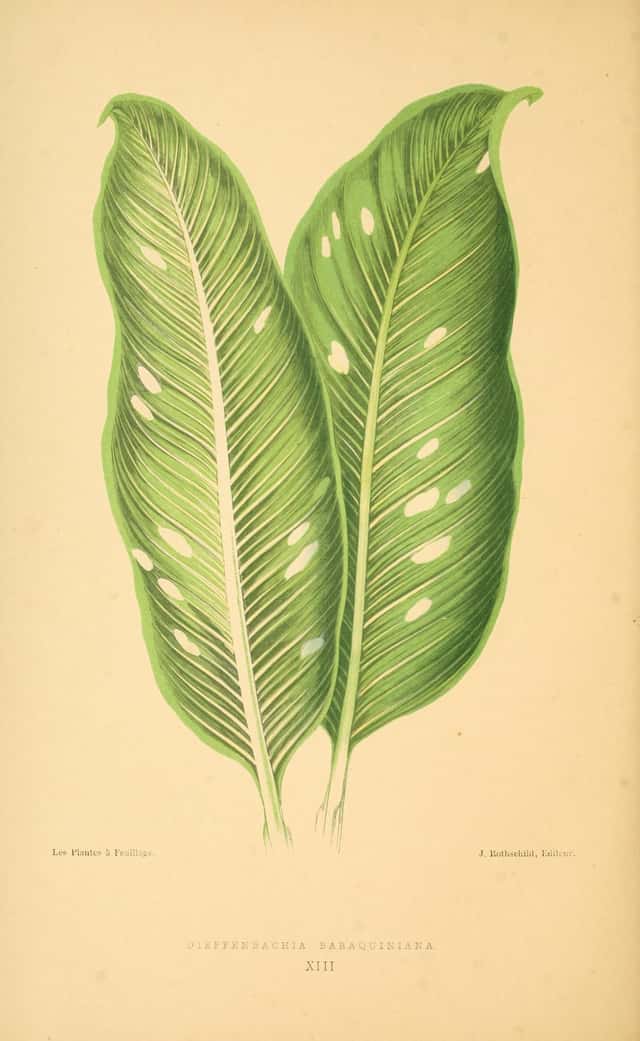
Dieffenbachia seguine is a tropical plant from the Araceae family, native to the Caribbean and Central America. It is known for its large decorative dark green leaves with white or cream spots. It can reach up to 3 meters in height under optimal conditions. It is extremely toxic due to calcium oxalate crystals in its sap, which can cause severe irritation and throat swelling if ingested.
How to Propagate Dumb Cane?
Stem cuttings
- Wear gloves due to sap toxicity
- Change water every 3 days if rooting in water
- 1 Cut a 5-10 cm stem with at least one node in spring
- 2 Remove lower leaves
- 3 Apply rooting powder to the cut base
- 4 Plant in moist substrate or place in water
- 5 Cover with plastic bag to maintain humidity
- 6 Keep at 25°C until roots develop
- 7 Transplant when roots are 5cm long
Materials needed:
How Big Does Dumb Cane Grow?
TLDR: Dumb Cane can reach up to 3.0m tall with Medium growth rate.
Max height
3.0m
Spread
90cm
Growth rate
Medium
Foliage
Evergreen
Warning: Toxic Plant
This plant can be toxic if ingested. Keep out of reach of:
Plant Uses
Ornamental
Great for decoration
Air Purifying
Improves air quality
Is your plant showing symptoms?
Click on the symptom to discover possible causes:
What Diseases Commonly Affect Dumb Cane?
TLDR: Dumb Cane is susceptible to 31 known diseases. Monitor regularly for early detection.
Powdery Mildew
Powdery mildew is a common fungal disease caused by various fungi species including Erysiphe, Podosphaera, Oïdium, and Leveillula. It affects over 10,000 plant species worldwide. The disease thrives in warm, dry climates with high humidity and appears as a distinctive white powdery coating on plant surfaces.
Root Rot
Root rot is a serious fungal disease that affects the root system of plants, causing them to decay and die. It is primarily caused by overwatering, poor drainage, or soil-borne fungi such as Pythium, Phytophthora, Rhizoctonia, and Fusarium. The disease thrives in waterlogged conditions where roots are deprived of oxygen, making them susceptible to fungal infection.
Anthracnose
Anthracnose is a fungal disease caused by fungi in the genus Colletotrichum that affects many plants, including vegetables, fruits, and trees. The disease thrives in cool, wet conditions, causing dark, sunken lesions on leaves, stems, flowers, and fruits.
Fusarium Wilt
Fusarium wilt is a serious fungal disease caused by the soil-borne fungus Fusarium oxysporum. The fungus invades roots and blocks the water-conducting vessels (xylem) of the plant, causing progressive wilting and eventual death. Host-specific forms of the pathogen exist that attack different plant species.
Meaning & Symbolism
Symbol of prosperity and home protection in Caribbean cultures. Believed to absorb negative energies from the environment.
Compare with similar plants
| Attribute | Difficulty | Light | Watering | Pet Safe |
|---|---|---|---|---|
| Field Maple | Easy | Bright indirect | 14d | ✓ |
| Silver Birch | Easy | Direct sun | 14d | ✓ |
| Cushion Bush | Easy | Direct sun | 14d | ✓ |
| Peruvian peppertree | Easy | Direct sun | 14d | ⚠️ |