Araceae
Common Duckweed (Lemna minor): Complete Growing Guide
Lemna minor
A free-floating aquatic plant that grows directly on water — no substrate needed. Prefers moderate to bright light, temperatures between 5–35°C, and pH 6.5–8.0. Grows extremely fast and may require periodic removal to prevent overcrowding.
Every 0 days
Partial shade
5° - 35°C
70% - 100%
Categories
What is Common Duckweed?
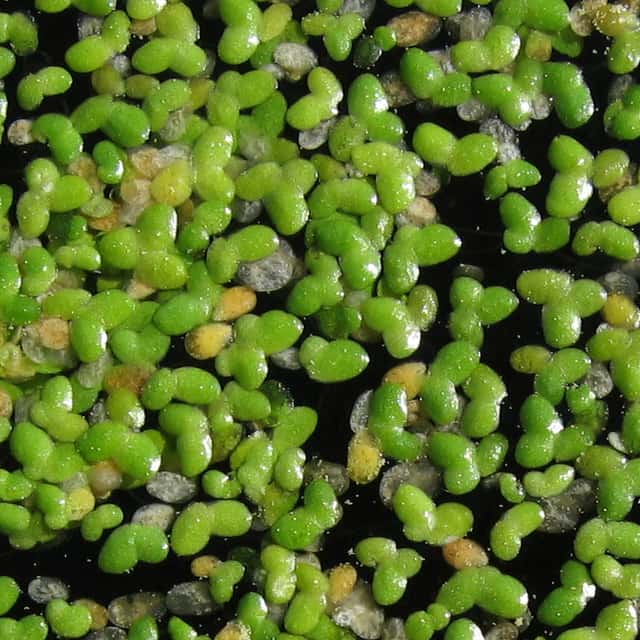
Common Duckweed (Lemna minor) is a easy-care plant from the Araceae family. Common Duckweed (Lemna minor) is one of the smallest flowering plants in the world. It floats freely on the surface of still or slow-moving freshwater bodies, forming dense green mats. Cosmopolitan in distribution, it is found in ponds, lakes, and aquariums worldwide.
Common Duckweed grows up to 1cm, spread of 90cm, 5°C – 35°C, 70–100% humidity. It is suitable for indoor environments and safe for pets.
Unlike many tropical plants, Common Duckweed tolerates watering mistakes. Best for beginners. Unlike many popular species, Common Duckweed is safe to keep around pets.
How to Care for Common Duckweed?
TLDR: Common Duckweed needs Partial shade, watering every 0 days, and temperatures between 5-35°C with 70-100% humidity.
How Often Should You Water Common Duckweed?
Common Duckweed lives on water — no conventional watering needed. Maintain stable water levels and good water quality (clean, low chlorine). In aquariums, weekly partial water changes are sufficient.
How Much Light Does Common Duckweed Need?
Prefers moderate to full light. Indoors, place near bright windows or use aquarium lighting for 12–16 hours daily. Avoid excessive shade, which slows growth significantly.
What Is the Best Soil for Common Duckweed?
No substrate required — grows floating on the water surface. For aquariums, maintain pH between 6.5 and 8.0 and appropriate temperature. Add liquid aquatic fertilizer monthly to promote healthy growth.
What Pot Should You Use for Common Duckweed?
Aquatic container, aquarium, or pond. Any container that holds clean water and allows light penetration. No conventional pot required.
Care Schedule
Fertilize
Every 30 days
What Is Common Duckweed and Where Does It Come From?
Common Duckweed (Lemna minor) is one of the smallest flowering plants in the world. It floats freely on the surface of still or slow-moving freshwater bodies, forming dense green mats. Cosmopolitan in distribution, it is found in ponds, lakes, and aquariums worldwide.
How to Propagate Common Duckweed?
Vegetative division
Common Duckweed reproduces on its own — just maintain proper light, temperature, and water quality. Remove excess regularly to prevent full surface coverage.
- 1 Scoop a portion of the floating colony with a fine net or spoon
- 2 Transfer to a new container with clean water at the right temperature
- 3 The plant will begin multiplying on its own within days
Materials needed:
How Big Does Common Duckweed Grow?
TLDR: Common Duckweed can reach up to 1cm tall with Fast growth rate.
Max height
1cm
Spread
90cm
Growth rate
Fast
Foliage
Deciduous
Plant Uses
Ornamental
Great for decoration
Edible
Can be consumed
Medicinal
Medicinal properties
Medicinal Uses
- Used in traditional Asian herbal medicine as an anti-inflammatory and diuretic
- Rich in protein and minerals, used in folk medicine practices
Culinary Uses
- Consumed as a vegetable in Southeast Asian countries
- High in protein — studied as a sustainable alternative food source
Is your plant showing symptoms?
Click on the symptom to discover possible causes:
What Diseases Commonly Affect Common Duckweed?
TLDR: Common Duckweed is susceptible to 2 known diseases. Monitor regularly for early detection.
Pythium Root Rot
Pythium root rot is a serious fungal disease caused by various Pythium species including P. aphanidermatum, P. ultimum, and P. irregulare. These water molds are present in practically all cultivated soils and attack plant roots under wet conditions, causing rapid wet rot that can extend into the stem. The disease is favored by poor drainage, overwatering, and specific temperatures depending on the species.
Aphids
Aphids are small, soft-bodied, pear-shaped insects (1/16 to 1/8 inch long) that feed by sucking nutrient-rich sap from plants. They reproduce rapidly and can quickly weaken plants, causing distorted growth and transmitting plant viruses. Aphids come in various colors including green, black, red, yellow, brown, and gray. They secrete honeydew, a sticky substance that attracts ants and encourages sooty mold growth.
Meaning & Symbolism
Peace, freedom, and lightness — a plant that drifts freely across the water, symbolizing tranquility and adaptability.
Fun Facts
One of the smallest flowering plants on Earth — each plant measures just 1 to 8 mm!
Can double its biomass in as little as 2–3 days under ideal conditions, making it one of the fastest-growing plants on the planet.
Studied as a sustainable plant-based protein source — contains up to 45% protein by dry weight.
Naturally filters water by absorbing excess nitrogen and phosphorus, helping prevent eutrophication.
Frequently asked questions
How do I grow Common Duckweed in an aquarium?
Is Common Duckweed safe for fish?
How do I control excessive growth?
Does it need fertilizer?
Compare with similar plants
| Attribute | Difficulty | Light | Watering | Pet Safe |
|---|---|---|---|---|
| Field Maple | Easy | Bright indirect | 14d | ✓ |
| Silver Birch | Easy | Direct sun | 14d | ✓ |
| Common Blanketflower | Easy | Direct sun | 10d | ✓ |
| Cushion Bush | Easy | Direct sun | 14d | ✓ |





