Crassulaceae
Sedum nussbaumerianum - Coppertone Stonecrop
Sedum nussbaumerianum
Easy-care succulent that thrives on neglect: bright direct sun, infrequent deep watering, and fast-draining soil. Tolerates heat and short cold snaps but is not frost-hardy.
Every 12 days
Direct sun
-1° - 35°C
30% - 50%
Categories
What is Coppertone Stonecrop?
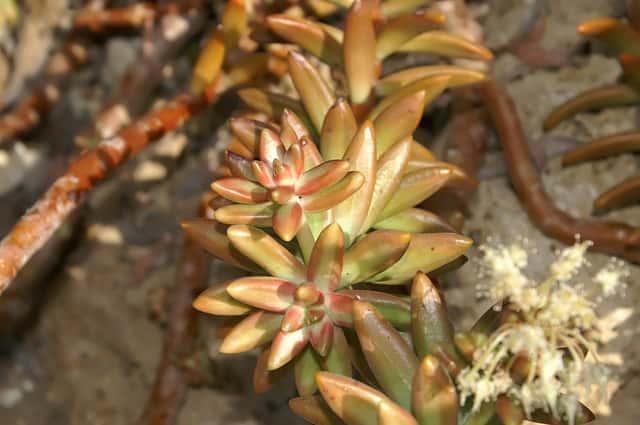
Coppertone Stonecrop (Sedum nussbaumerianum) is a easy-care plant from the Crassulaceae family. Sedum nussbaumerianum, commonly called Coppertone Stonecrop, is a trailing succulent in the Crassulaceae family native to the volcanic highlands of Veracruz, Mexico. Its fleshy, teardrop-shaped leaves form loose rosettes that shift from pale yellow-green to a vivid copper-orange under strong sun, gi...
Coppertone Stonecrop grows up to 20cm, spread of 90cm, watering every 12 days, -1°C – 35°C, 30–50% humidity. It is suitable for indoor environments and safe for pets.
Unlike many tropical plants, Coppertone Stonecrop tolerates watering mistakes. Best for beginners. Unlike many popular species, Coppertone Stonecrop is safe to keep around pets. Without adequate drainage, root rot can develop within 24 days.
How to Care for Coppertone Stonecrop?
TLDR: Coppertone Stonecrop needs Direct sun, watering every 12 days, and temperatures between -1-35°C with 30-50% humidity.
How Often Should You Water Coppertone Stonecrop?
Water deeply only when the soil is completely dry, roughly every 10-15 days in spring and summer and about once a month in fall and winter. Soft, translucent leaves are a sign of overwatering.
How Much Light Does Coppertone Stonecrop Need?
Give it at least 6 hours of bright, direct sunlight a day. Full sun brings out the coppery-orange color; in shade the leaves stay green and the rosettes stretch out (etiolate).
What Is the Best Soil for Coppertone Stonecrop?
Plant in a fast-draining cactus/succulent mix, ideally two parts mineral cactus soil to one part perlite or pumice. Avoid heavy, water-retentive potting soils.
What Pot Should You Use for Coppertone Stonecrop?
Unglazed terracotta pot with a drainage hole; the porous material helps excess moisture evaporate quickly.
What Is Coppertone Stonecrop and Where Does It Come From?
Sedum nussbaumerianum, commonly called Coppertone Stonecrop, is a trailing succulent in the Crassulaceae family native to the volcanic highlands of Veracruz, Mexico. Its fleshy, teardrop-shaped leaves form loose rosettes that shift from pale yellow-green to a vivid copper-orange under strong sun, giving the plant its common name. Left to spread, it cascades attractively over pot edges or spills across rock gardens as ground cover.
How to Propagate Coppertone Stonecrop?
Leaf propagation
Use only plump, undamaged leaves and keep the soil barely moist until the new rosette is established.
- 1 Gently twist a healthy leaf off the stem so the base comes away cleanly
- 2 Let the leaf callus over for 2-3 days in a dry, shaded spot
- 3 Lay the leaf on top of well-draining succulent soil without burying it
- 4 Mist lightly once roots and a tiny rosette appear at the base
Materials needed:
Stem cutting
Avoid watering until the cutting has callused, otherwise it may rot before rooting.
- 1 Cut a 5-8cm stem tip with a clean, sharp blade
- 2 Let the cut end callus for 2-3 days
- 3 Insert the callused end into moist, well-draining soil
- 4 Keep in bright indirect light until roots form, then move to full sun
Materials needed:
How Big Does Coppertone Stonecrop Grow?
TLDR: Coppertone Stonecrop can reach up to 20cm tall with Slow growth rate.
Max height
20cm
Spread
90cm
Growth rate
Slow
Foliage
Evergreen
Plant Uses
Ornamental
Great for decoration
Ground Cover
Soil coverage
Is your plant showing symptoms?
Click on the symptom to discover possible causes:
What Diseases Commonly Affect Coppertone Stonecrop?
TLDR: Coppertone Stonecrop is susceptible to 7 known diseases. Monitor regularly for early detection.
Root Rot
Root rot is a serious fungal disease that affects the root system of plants, causing them to decay and die. It is primarily caused by overwatering, poor drainage, or soil-borne fungi such as Pythium, Phytophthora, Rhizoctonia, and Fusarium. The disease thrives in waterlogged conditions where roots are deprived of oxygen, making them susceptible to fungal infection.
Overwatering
Overwatering occurs when plants receive too much water, depriving roots of oxygen and causing root rot. This environmental stress is one of the most common causes of houseplant death, as waterlogged soil prevents roots from breathing and functioning properly.
Mealybugs
Mealybugs are small, soft-bodied insects covered with a white, waxy, cottony material. They are common pests of houseplants and outdoor plants in mild climates. These sap-sucking insects feed on plant tissue, causing damage, stunted growth, and can lead to plant death if left untreated. They produce sticky honeydew which attracts sooty mold.
Sunburn (Sun Scorch)
Sunburn or sun scorch is an environmental condition that occurs when plants are exposed to intense, direct sunlight beyond their tolerance level. This causes the breakdown of chlorophyll in the leaves, resulting in bleached, dried, and damaged foliage. The damage can happen rapidly, sometimes within just a few hours of exposure.
Meaning & Symbolism
Like many stonecrops, it is often associated with resilience and adaptability, thriving in harsh, rocky conditions where little else survives.
Fun Facts
The species was first collected near a sulfur spring in Veracruz, Mexico, in 1906.
Its common name refers to the way the leaves develop a copper-orange "tan" in strong sun, much like the tanning lotion brand.
It is closely related to, and sometimes sold under the synonym, Sedum adolphii.
The trailing rosettes make it a popular choice for hanging baskets and cascading succulent arrangements.
Frequently asked questions
How often should I water Coppertone Stonecrop?
Why are my Sedum nussbaumerianum leaves turning green instead of copper?
Is Sedum nussbaumerianum toxic to cats and dogs?
What is the easiest way to propagate Coppertone Stonecrop?
Can Coppertone Stonecrop survive outdoors in winter?
Compare with similar plants
| Attribute | Difficulty | Light | Watering | Pet Safe |
|---|---|---|---|---|
| Field Maple | Easy | Bright indirect | 14d | ✓ |
| Silver Birch | Easy | Direct sun | 14d | ✓ |
| Common Blanketflower | Easy | Direct sun | 10d | ✓ |
| Cushion Bush | Easy | Direct sun | 14d | ✓ |





