Fabaceae
Red Clover: How to Grow and Care for Trifolium pratense
Trifolium pratense
Easy to grow and low maintenance. Prefers full sun and well-drained fertile soil. Water weekly and avoid waterlogging. No fertilizer needed due to nitrogen fixation. Deadhead or cut back after flowering to encourage a second flush.
Every 7 days
Direct sun
5° - 35°C
40% - 70%
Categories
What is Red Clover?
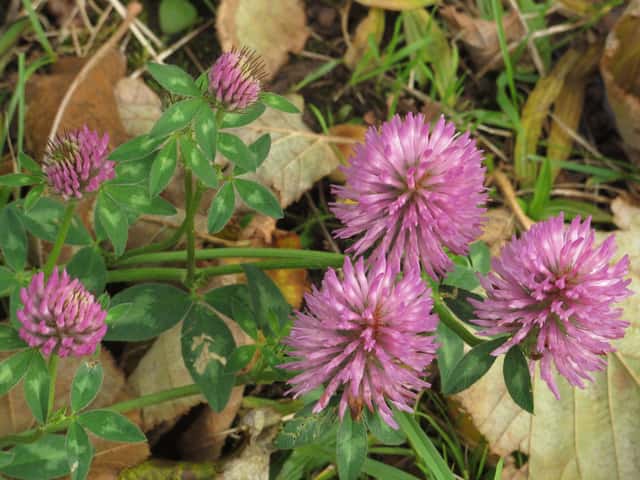
Red Clover (Trifolium pratense) is a easy-care plant from the Fabaceae family. Red clover (Trifolium pratense) is a short-lived herbaceous perennial native to Europe, Western Asia, and northwest Africa, now naturalized worldwide. It produces dense globe-shaped flower heads in shades of pink to reddish-purple and is widely cultivated as livestock fodder, green manure, and a med...
Red Clover grows up to 80cm, spread of 40cm, watering every 7 days, 5°C – 35°C, 40–70% humidity. It is not suitable for indoor environments and not safe for pets.
Unlike many tropical plants, Red Clover tolerates watering mistakes. Best for beginners. Without precautions, ingestion can cause irritation in pets. Keep out of reach of cats and dogs.
How to Care for Red Clover?
TLDR: Red Clover needs Direct sun, watering every 7 days, and temperatures between 5-35°C with 40-70% humidity.
How Often Should You Water Red Clover?
Water once a week, providing enough moisture to wet the top 6–8 inches of soil. Increase frequency during heat waves. Reduce in autumn and winter. Water in the morning to prevent fungal issues.
How Much Light Does Red Clover Need?
Red clover needs full sun for best flowering — at least 6 hours of direct sunlight daily. It tolerates partial shade but flower production will be reduced.
What Is the Best Soil for Red Clover?
Thrives in well-drained, fertile loamy soil with a pH of 6.0–7.5. Tolerates clay soils as long as drainage is adequate. Lime acidic soils to improve performance.
What Pot Should You Use for Red Clover?
Terracotta pot or any container with excellent drainage; best grown directly in garden beds or meadows.
What Is Red Clover and Where Does It Come From?
Red clover (Trifolium pratense) is a short-lived herbaceous perennial native to Europe, Western Asia, and northwest Africa, now naturalized worldwide. It produces dense globe-shaped flower heads in shades of pink to reddish-purple and is widely cultivated as livestock fodder, green manure, and a medicinal herb. It fixes atmospheric nitrogen through symbiotic root bacteria, naturally enriching the soil.
How to Propagate Red Clover?
Direct Sowing
Inoculate seeds with Rhizobium leguminosarum before sowing to maximize nitrogen fixation. Sow on overcast days or in early morning.
- 1 Lightly scarify seeds to improve germination rates
- 2 Sow directly in the final location in spring after the last frost
- 3 Cover lightly with 0.5 cm of soil and keep moist
- 4 Seedlings emerge in 7–14 days
- 5 Thin to 15–20 cm spacing once established
Materials needed:
Crown Division
Division is less common as direct sowing is faster and more reliable.
- 1 Divide established clumps in early spring
- 2 Replant divisions immediately with good moisture
- 3 Water regularly until established
Materials needed:
How Big Does Red Clover Grow?
TLDR: Red Clover can reach up to 80cm tall with Fast growth rate.
Max height
80cm
Spread
40cm
Growth rate
Fast
Foliage
Deciduous
Warning: Toxic Plant
This plant can be toxic if ingested. Keep out of reach of:
Plant Uses
Ornamental
Great for decoration
Medicinal
Medicinal properties
Edible
Can be consumed
Ground Cover
Soil coverage
Medicinal Uses
- Natural anti-inflammatory
- Relieves menopausal symptoms (isoflavones)
- Expectorant for coughs and bronchitis
- Used in calming herbal teas
Culinary Uses
- Edible flowers in salads
- Young leaves in soups and stir-fries
- Dried flowers for herbal tea
- Ground flowers as a flour supplement
Is your plant showing symptoms?
Click on the symptom to discover possible causes:
What Diseases Commonly Affect Red Clover?
TLDR: Red Clover is susceptible to 7 known diseases. Monitor regularly for early detection.
Root Rot
Root rot is a serious fungal disease that affects the root system of plants, causing them to decay and die. It is primarily caused by overwatering, poor drainage, or soil-borne fungi such as Pythium, Phytophthora, Rhizoctonia, and Fusarium. The disease thrives in waterlogged conditions where roots are deprived of oxygen, making them susceptible to fungal infection.
Rust
Rust is a common fungal disease caused by fungi in the order Pucciniales that affects a wide variety of plants. The disease gets its name from the characteristic orange, yellow, or reddish-brown pustules that appear on leaves, resembling metal rust. This obligate fungal parasite requires living plants to survive and can cause significant economic losses in agricultural crops.
Powdery Mildew
Powdery mildew is a common fungal disease caused by various fungi species including Erysiphe, Podosphaera, Oïdium, and Leveillula. It affects over 10,000 plant species worldwide. The disease thrives in warm, dry climates with high humidity and appears as a distinctive white powdery coating on plant surfaces.
Aphids
Aphids are small, soft-bodied, pear-shaped insects (1/16 to 1/8 inch long) that feed by sucking nutrient-rich sap from plants. They reproduce rapidly and can quickly weaken plants, causing distorted growth and transmitting plant viruses. Aphids come in various colors including green, black, red, yellow, brown, and gray. They secrete honeydew, a sticky substance that attracts ants and encourages sooty mold growth.
Meaning & Symbolism
Symbolizes prayer, hope, and romance. Vermont's state flower since 1894; formerly Denmark's national flower until 1987.
Fun Facts
Red clover has been Vermont's state flower since 1894 and was Denmark's national flower until 1987.
Its flowers are pollinated almost exclusively by bumblebees, making it vital to their survival.
It fixes up to 200 kg of nitrogen per hectare per year through symbiotic root bacteria — equivalent to commercial nitrogen fertilizer.
Red clover was one of the first plants studied for phytoestrogens in the 1940s, pioneering research into plant-based hormone therapies.
Frequently asked questions
How often should I water red clover?
Is red clover toxic to pets?
Can red clover be grown in pots?
When does red clover bloom?
What are the medicinal uses of red clover?
Compare with similar plants
| Attribute | Difficulty | Light | Watering | Pet Safe |
|---|---|---|---|---|
| Small Scabious | Easy | Direct sun | 7d | ✓ |
| Field Maple | Easy | Bright indirect | 14d | ✓ |
| Silver Birch | Easy | Direct sun | 14d | ✓ |
| Red valerian | Easy | Direct sun | 10d | ✓ |



