Arecaceae
Senegal Date Palm: Care and Cultivation
Phoenix reclinata
Grows in full sun to partial shade and is moderately drought tolerant once established. Prefers well-draining soil and moderate watering. Grows at a moderate rate, forming clumps with multiple trunks over time.
Every 7 days
Bright indirect
10° - 35°C
40% - 70%
Categories
What is Senegal Date Palm?
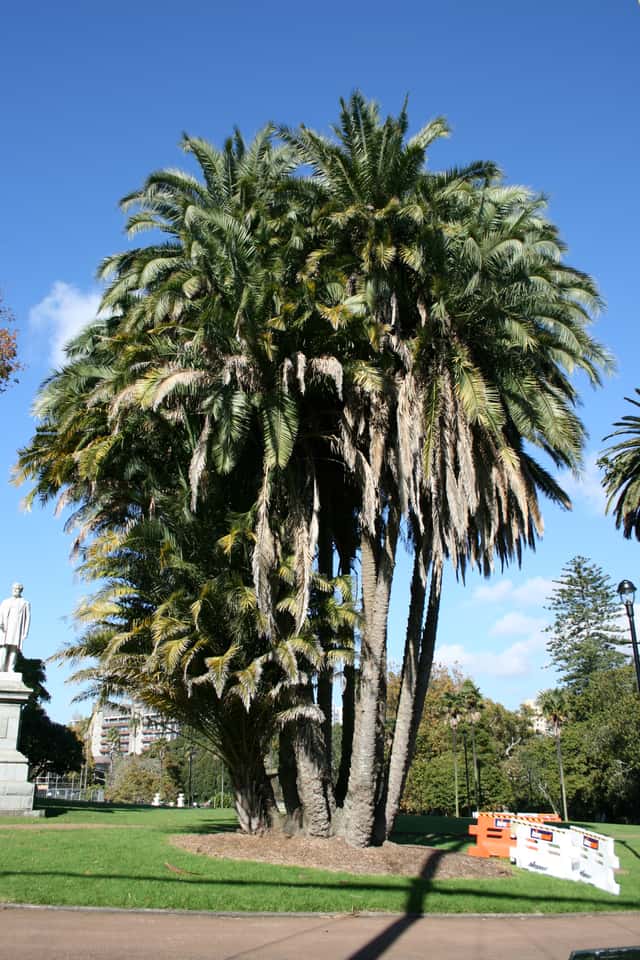
Senegal Date Palm (Phoenix reclinata) is a medium-care plant from the Arecaceae family. The Senegal date palm is a multi-stemmed palm native to tropical Africa, known for its arching, feathery fronds and spiny trunks. It is widely used in landscaping as an ornamental focal point in gardens and parks.
Senegal Date Palm grows up to 10.7m, spread of 610cm, watering every 7 days, 10°C – 35°C, 40–70% humidity. It is not suitable for indoor environments and safe for pets.
Unlike many popular species, Senegal Date Palm is safe to keep around pets.
How to Care for Senegal Date Palm?
TLDR: Senegal Date Palm needs Bright indirect, watering every 7 days, and temperatures between 10-35°C with 40-70% humidity.
How Often Should You Water Senegal Date Palm?
Water deeply and let the soil dry out partially between waterings; reduce frequency in winter.
How Much Light Does Senegal Date Palm Need?
Prefers full sun but tolerates partial shade, especially when young.
What Is the Best Soil for Senegal Date Palm?
Use well-draining soil; tolerant of sandy, clay, or organically rich soils as long as they are not waterlogged.
What Pot Should You Use for Senegal Date Palm?
A large, heavy ceramic or concrete pot with good drainage, suitable for large plants.
Care Schedule
Fertilize
Every 90 days
What Is Senegal Date Palm and Where Does It Come From?
The Senegal date palm is a multi-stemmed palm native to tropical Africa, known for its arching, feathery fronds and spiny trunks. It is widely used in landscaping as an ornamental focal point in gardens and parks.
How to Propagate Senegal Date Palm?
Seed germination
Germination can be slow and uneven; keeping temperatures above 25°C (77°F) speeds up the process.
- 1 Extract seeds from ripe fruit and clean off the pulp thoroughly
- 2 Soak seeds in warm water for 24-48 hours
- 3 Plant in well-draining substrate about 2 cm deep
- 4 Keep warm and moist until germination
Materials needed:
Basal offset division
Not all offsets have sufficient roots; success rate is lower than seed propagation.
- 1 Locate a basal offset (sucker) with its own roots
- 2 Carefully separate the offset from the main trunk using a sterilized tool
- 3 Replant immediately in well-draining substrate
- 4 Keep consistently moist until established
Materials needed:
How Big Does Senegal Date Palm Grow?
TLDR: Senegal Date Palm can reach up to 10.7m tall with Medium growth rate.
Max height
10.7m
Spread
6.1m
Growth rate
Medium
Foliage
Evergreen
Plant Uses
Ornamental
Great for decoration
Is your plant showing symptoms?
Click on the symptom to discover possible causes:
What Diseases Commonly Affect Senegal Date Palm?
TLDR: Senegal Date Palm is susceptible to 4 known diseases. Monitor regularly for early detection.
Scale Insects
Scale insects are small sap-sucking pests that appear as brown, shell-like bumps on plant stems and leaves. There are over 25 species, divided into armored (hard) and unarmored (soft) scales. They feed by piercing plant tissue and extracting sap, which weakens the plant and can lead to yellowing, stunted growth, and even death if left untreated. They also excrete honeydew, which attracts ants and promotes sooty mold growth.
Leaf Spot
Leaf spot is a common fungal disease caused by various pathogens including Alternaria, Ascochyta, Colletotrichum, Septoria, and Venturia. It primarily affects leaves, causing discolored spots that can lead to premature leaf drop if left untreated.
Thrips
Thrips are tiny cigar-shaped insects (1/25-inch long) that damage plants by sucking plant juices and scraping at fruits, flowers, and leaves. With over 6,000 species and rapid reproduction (lifecycle as short as 14 days), they can quickly infest plants and transmit viruses like tomato spotted wilt virus.
Fusarium Wilt
Fusarium wilt is a serious fungal disease caused by the soil-borne fungus Fusarium oxysporum. The fungus invades roots and blocks the water-conducting vessels (xylem) of the plant, causing progressive wilting and eventual death. Host-specific forms of the pathogen exist that attack different plant species.
Meaning & Symbolism
A symbol of resilience and abundance, associated with oases and life in arid African landscapes.
Fun Facts
Can form clumps with multiple trunks over the years
Its fruit (dates) are edible and used by local communities in Africa
It is tolerant of salt spray, making it a good choice for coastal landscaping
Frequently asked questions
Is the Senegal date palm toxic to pets?
How often should I water my Senegal date palm?
Can this palm be grown in a container?
Compare with similar plants
| Attribute | Difficulty | Light | Watering | Pet Safe |
|---|---|---|---|---|
| Dark Fieldcap | Medium | Low light | 2d | ⚠️ |
| Azalea | Medium | Partial shade | 3d | ⚠️ |
| Bougainvillea | Medium | Direct sun | 7d | ⚠️ |
| Wild Lettuce | Medium | Direct sun | 7d | ⚠️ |
Choose & Compare
Sources & References
- ENH-599/ST440: Phoenix reclinata: Senegal Date Palm - UF/IFAS Extension
- Senegal Date Palm (Phoenix reclinata) - Gardenia.net
- Senegal Date Palm (Phoenix reclinata) - U.S. Fish & Wildlife Service
- Phoenix reclinata (Senegal Date Palm) - Professional Gardening Tips
- How to Grow and Care for Senegal date palm - PictureThis



