Ranunculaceae
Love-in-a-mist: Fast Growing
Nigella damascena
An easy-care annual for full sun and well-drained soil, love-in-a-mist needs little water once established and self-sows readily.
Every 10 days
Bright indirect
10° - 26°C
40% - 70%
Categories
What is Love-in-a-mist?
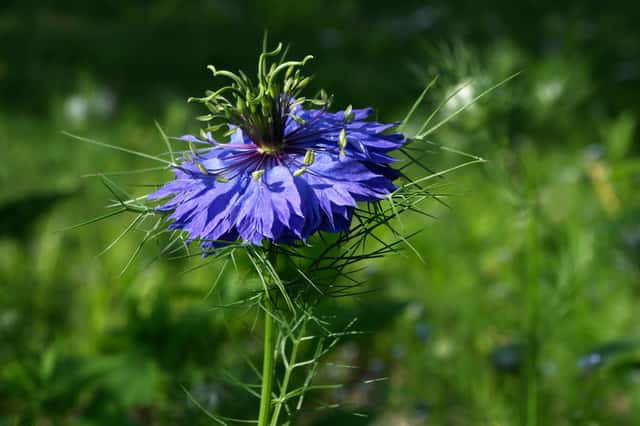
Love-in-a-mist (Nigella damascena) is a easy-care plant from the Ranunculaceae family. Love-in-a-mist is a beloved cottage-garden annual, its saucer-shaped blue, white, or pink flowers nestled in a haze of thread-fine, feathery foliage. Once pollinated, the blooms give way to striking inflated seed pods prized for dried arrangements. Easy to grow from seed, it self-sows readily and su...
Love-in-a-mist grows up to 60cm, spread of 30cm, watering every 10 days, 10°C – 26°C, 40–70% humidity. It is not suitable for indoor environments and not safe for pets.
Unlike many tropical plants, Love-in-a-mist tolerates watering mistakes. Best for beginners. Without precautions, ingestion can cause irritation in pets. Keep out of reach of cats and dogs.
How to Care for Love-in-a-mist?
TLDR: Love-in-a-mist needs Bright indirect, watering every 10 days, and temperatures between 10-26°C with 40-70% humidity.
How Often Should You Water Love-in-a-mist?
Water only during prolonged dry spells once established, as this plant copes well with drought and dislikes soggy soil.
How Much Light Does Love-in-a-mist Need?
Thrives in full sun for most of the day, tolerating partial shade in hotter climates though it will flower less prolifically.
What Is the Best Soil for Love-in-a-mist?
Prefers light, well-drained soil and tolerates poor, chalky, or sandy ground, but avoid waterlogging.
What Is Love-in-a-mist and Where Does It Come From?
Love-in-a-mist is a beloved cottage-garden annual, its saucer-shaped blue, white, or pink flowers nestled in a haze of thread-fine, feathery foliage. Once pollinated, the blooms give way to striking inflated seed pods prized for dried arrangements. Easy to grow from seed, it self-sows readily and suits informal borders, wildflower patches, and containers.
How to Propagate Love-in-a-mist?
Direct sowing
- Does not transplant well due to its long taproot
- Sow in situ where plants are to flower
- 1 Prepare the bed
Loosen soil and clear weeds in a sunny spot.
- 2 Sow seed
Scatter seeds about 1/8 inch (3mm) deep and cover lightly.
- 3 Water and wait
Keep soil lightly moist until germination, which takes 2-3 weeks.
Materials needed:
How Big Does Love-in-a-mist Grow?
TLDR: Love-in-a-mist can reach up to 60cm tall with Fast growth rate.
Max height
60cm
Spread
30cm
Growth rate
Fast
Foliage
Deciduous
Warning: Toxic Plant
This plant can be toxic if ingested. Keep out of reach of:
Plant Uses
Ornamental
Great for decoration
Is your plant showing symptoms?
Click on the symptom to discover possible causes:
What Diseases Commonly Affect Love-in-a-mist?
TLDR: Love-in-a-mist is susceptible to 2 known diseases. Monitor regularly for early detection.
Aphids
Aphids are small, soft-bodied, pear-shaped insects (1/16 to 1/8 inch long) that feed by sucking nutrient-rich sap from plants. They reproduce rapidly and can quickly weaken plants, causing distorted growth and transmitting plant viruses. Aphids come in various colors including green, black, red, yellow, brown, and gray. They secrete honeydew, a sticky substance that attracts ants and encourages sooty mold growth.
Powdery Mildew
Powdery mildew is a common fungal disease caused by various fungi species including Erysiphe, Podosphaera, Oïdium, and Leveillula. It affects over 10,000 plant species worldwide. The disease thrives in warm, dry climates with high humidity and appears as a distinctive white powdery coating on plant surfaces.
Meaning & Symbolism
In Victorian flower language, love-in-a-mist represents perplexity and the mystery of love hidden behind a veil of delicate foliage.
Compare with similar plants
| Attribute | Difficulty | Light | Watering | Pet Safe |
|---|---|---|---|---|
| Field Maple | Easy | Bright indirect | 14d | ✓ |
| Silver Birch | Easy | Direct sun | 14d | ✓ |
| Cushion Bush | Easy | Direct sun | 14d | ✓ |
| Peruvian peppertree | Easy | Direct sun | 14d | ⚠️ |





