Solanaceae
Bittersweet Nightshade (Solanum dulcamara): Care Guide
Solanum dulcamara
Grow in partial shade to full sun with consistently moist, well-draining loamy soil. Water weekly, fertilize every 30 days during the growing season, and prune lightly each spring. Provide a trellis or support structure. Keep away from children and pets at all times due to severe berry toxicity.
Every 7 days
Partial shade
-15° - 25°C
50% - 80%
Categories
What is Bittersweet Nightshade?
Bittersweet Nightshade (Solanum dulcamara) is a medium-care plant from the Solanaceae family. Bittersweet nightshade (Solanum dulcamara) is a semi-woody perennial climbing vine native to Europe, northern Africa, and Asia, belonging to the Solanaceae family. It produces charming star-shaped purple flowers with yellow stamens, followed by clusters of berries that ripen from green to orange to...
Bittersweet Nightshade grows up to 2.5m, spread of 200cm, watering every 7 days, -15°C – 25°C, 50–80% humidity. It is not suitable for indoor environments and not safe for pets.
Without precautions, ingestion can cause irritation in pets. Keep out of reach of cats and dogs.
How to Care for Bittersweet Nightshade?
TLDR: Bittersweet Nightshade needs Partial shade, watering every 7 days, and temperatures between -15-25°C with 50-80% humidity.
How Often Should You Water Bittersweet Nightshade?
Water deeply every 7 days, allowing the top inch of soil to dry slightly between waterings. Avoid waterlogging which causes root rot. During hot summers, check soil moisture more frequently and water when the top layer feels barely dry.
How Much Light Does Bittersweet Nightshade Need?
Thrives in partial shade to filtered sun — ideally 4–6 hours of indirect or dappled light daily. Tolerates full sun in cooler climates but may scorch in intense afternoon heat. Morning light is ideal.
What Is the Best Soil for Bittersweet Nightshade?
Prefers moist, loamy, well-draining soil rich in organic matter. pH range of 5.5–7.5. Avoid heavy clay (poor drainage) or pure sandy soils (dries too fast). Amend with compost for best results.
What Pot Should You Use for Bittersweet Nightshade?
Ceramic or terracotta pot with drainage holes if grown in containers. For garden use, plant directly in the ground with a trellis, fence, or wire support for climbing.
Care Schedule
Fertilize
Every 30 days
Repot
Every 730 days
What Is Bittersweet Nightshade and Where Does It Come From?
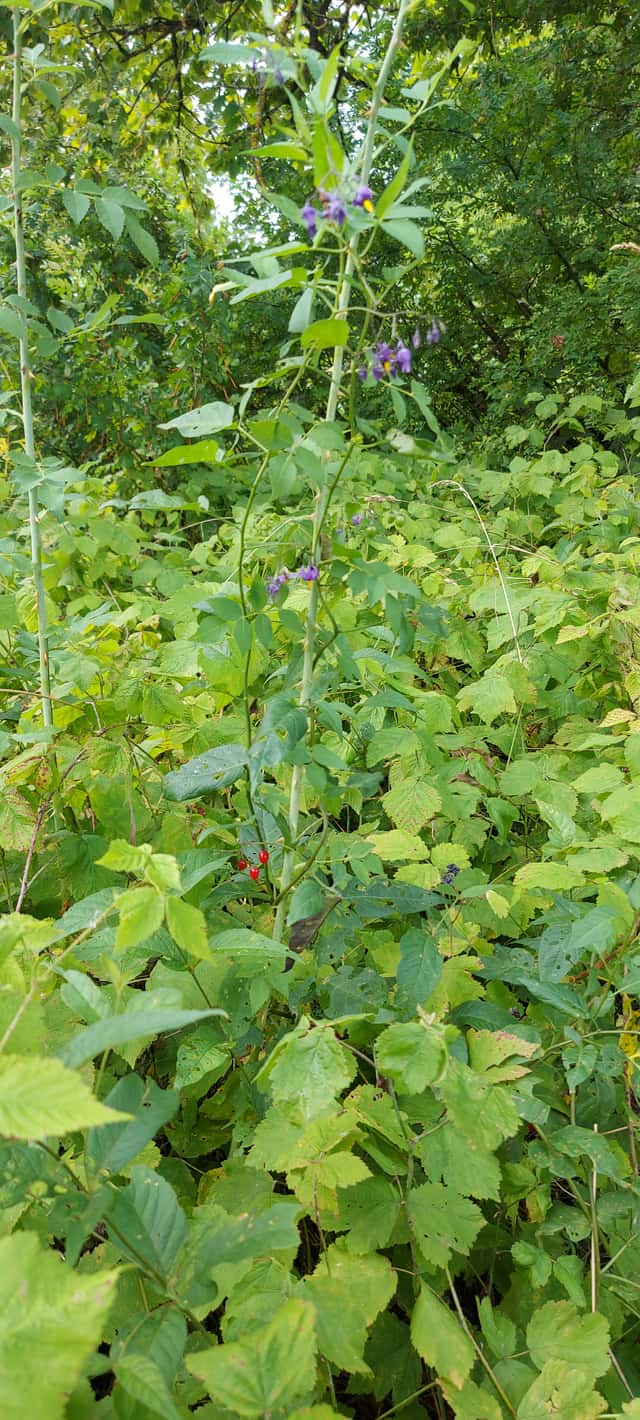
Bittersweet nightshade (Solanum dulcamara) is a semi-woody perennial climbing vine native to Europe, northern Africa, and Asia, belonging to the Solanaceae family. It produces charming star-shaped purple flowers with yellow stamens, followed by clusters of berries that ripen from green to orange to bright red. WARNING: All parts are SEVERELY TOXIC — containing solanine and other alkaloids that can cause serious poisoning in humans, cats, and dogs.
How to Propagate Bittersweet Nightshade?
Stem Cutting
Always wear gloves when handling due to toxicity. Keep the substrate moist but never waterlogged.
- 1 Cut a healthy semi-hardwood stem of 10-15 cm in late spring or early summer
- 2 Remove lower leaves, keeping 2-3 leaves at the tip
- 3 Dip the cut end in rooting hormone powder
- 4 Plant in moist, well-draining potting mix
- 5 Keep in a shaded, humid location until roots develop
Materials needed:
Seed Sowing
Cold stratification significantly improves germination rates. Always handle seeds with gloves.
- 1 Collect ripe seeds from red berries (use gloves)
- 2 Cold-stratify seeds for 4-6 weeks in the refrigerator
- 3 Sow in spring in trays with light potting mix
- 4 Cover lightly and keep moist at 18-22°C
- 5 Transplant seedlings when they reach 10 cm tall
Materials needed:
How Big Does Bittersweet Nightshade Grow?
TLDR: Bittersweet Nightshade can reach up to 2.5m tall with Medium growth rate.
Max height
2.5m
Spread
2.0m
Growth rate
Medium
Foliage
Deciduous
Warning: Toxic Plant
This plant can be toxic if ingested. Keep out of reach of:
Plant Uses
Ornamental
Great for decoration
Medicinal
Medicinal properties
Medicinal Uses
- Historically used externally for chronic eczema and skin conditions (approved by German Commission E for external use only). Internal use is dangerous — never consume without medical supervision.
Is your plant showing symptoms?
Click on the symptom to discover possible causes:
What Diseases Commonly Affect Bittersweet Nightshade?
TLDR: Bittersweet Nightshade is susceptible to 7 known diseases. Monitor regularly for early detection.
Aphids
Aphids are small, soft-bodied, pear-shaped insects (1/16 to 1/8 inch long) that feed by sucking nutrient-rich sap from plants. They reproduce rapidly and can quickly weaken plants, causing distorted growth and transmitting plant viruses. Aphids come in various colors including green, black, red, yellow, brown, and gray. They secrete honeydew, a sticky substance that attracts ants and encourages sooty mold growth.
Spider Mites
Spider mites are tiny arachnids (less than 1/20 inch long) related to spiders and ticks that feed on plant sap. They thrive in hot, dry conditions and can cause significant damage to ornamental and vegetable plants. During severe infestations, crop losses can reach 14% or higher as these pests disrupt vital plant processes including photosynthesis, carbon dioxide absorption, and transpiration.
Powdery Mildew
Powdery mildew is a common fungal disease caused by various fungi species including Erysiphe, Podosphaera, Oïdium, and Leveillula. It affects over 10,000 plant species worldwide. The disease thrives in warm, dry climates with high humidity and appears as a distinctive white powdery coating on plant surfaces.
Root Rot
Root rot is a serious fungal disease that affects the root system of plants, causing them to decay and die. It is primarily caused by overwatering, poor drainage, or soil-borne fungi such as Pythium, Phytophthora, Rhizoctonia, and Fusarium. The disease thrives in waterlogged conditions where roots are deprived of oxygen, making them susceptible to fungal infection.
Meaning & Symbolism
In medieval European folklore, bittersweet nightshade was hung over doorways to ward off witches and evil spirits. Its vivid red berries symbolize deceptive beauty — attractive on the outside, dangerous within.
Fun Facts
Bittersweet nightshade can climb up to 4 meters high with adequate support
Its berries change color from green to orange to bright red as they ripen — like a natural warning signal
Birds can safely eat the berries without being poisoned, as they are naturally resistant to solanine
It is a close relative of tomato, potato, and eggplant — all members of the Solanaceae family
Frequently asked questions
Is bittersweet nightshade toxic to cats and dogs?
How often should I water bittersweet nightshade?
Can bittersweet nightshade be grown indoors?
When does bittersweet nightshade bloom?
Is bittersweet nightshade the same as deadly nightshade?
Compare with similar plants
| Attribute | Difficulty | Light | Watering | Pet Safe |
|---|---|---|---|---|
| Azalea | Medium | Partial shade | 3d | ⚠️ |
| Wild Lettuce | Medium | Direct sun | 7d | ⚠️ |
| Cape Primrose | Medium | Partial shade | 7d | ✓ |
| Honey Locust | Medium | Direct sun | 14d | ✓ |