Rosaceae
Peach Tree — Prunus persica
Prunus persica
Plant in full sun (minimum 6–8 hours of direct sunlight daily). Water every 7 days, keeping the soil consistently moist but well-drained. Fertilize every 30 days during the growing season. Prune annually in late winter before bud break to encourage fruit production and maintain tree shape.
Every 7 days
Direct sun
-20° - 40°C
40% - 70%
Categories
What is Peach Tree?
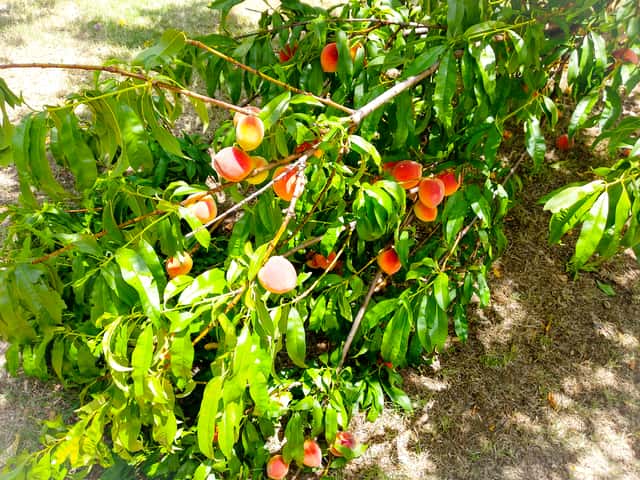
Peach Tree (Prunus persica) is a medium-care plant from the Rosaceae family. The peach tree (Prunus persica) is a deciduous fruit tree native to China, now cultivated worldwide in temperate regions. It produces sweet, juicy fruits with velvety skin and yellow or white flesh, and puts on a spectacular display of pink or white blossoms in early spring. One of the most popular...
Peach Tree grows up to 7.6m, spread of 762cm, watering every 7 days, -20°C – 40°C, 40–70% humidity. It is not suitable for indoor environments and not safe for pets.
Without precautions, ingestion can cause irritation in pets. Keep out of reach of cats and dogs.
How to Care for Peach Tree?
TLDR: Peach Tree needs Direct sun, watering every 7 days, and temperatures between -20-40°C with 40-70% humidity.
How Often Should You Water Peach Tree?
Water every 7 days under normal conditions. During fruit development, keep the soil consistently moist and increase watering during dry spells. Avoid waterlogging — roots are highly susceptible to root rot.
How Much Light Does Peach Tree Need?
Plant in a location that receives at least 6 to 8 hours of direct sunlight per day — full sun is essential for flowering and fruit quality.
What Is the Best Soil for Peach Tree?
Use well-drained loamy soil rich in organic matter. Ideal pH is 6.0–7.0. Avoid heavy clay or waterlogged soils, which promote root rot and gummosis.
What Pot Should You Use for Peach Tree?
Open ground planting is ideal. For containers, use a large pot (minimum 60 L) with excellent drainage. Dwarf cultivars are best suited for container culture.
Care Schedule
Fertilize
Every 30 days
What Is Peach Tree and Where Does It Come From?
The peach tree (Prunus persica) is a deciduous fruit tree native to China, now cultivated worldwide in temperate regions. It produces sweet, juicy fruits with velvety skin and yellow or white flesh, and puts on a spectacular display of pink or white blossoms in early spring. One of the most popular fruit trees for home orchards, it is valued for its delicious fruit, ornamental beauty, and relatively fast growth.
How to Propagate Peach Tree?
Grafting
Grafting is the preferred commercial method as it ensures true-to-type fruit and earlier production. Always sterilize your tools.
- 1 Select a vigorous rootstock such as peach seedling or almond
- 2 Cut scion wood with 2-3 healthy buds from a quality cultivar
- 3 Perform budding (T-bud) or cleft graft
- 4 Wrap with grafting tape and seal with grafting wax
- 5 Keep moist and lightly shaded until the graft takes
Materials needed:
Seed propagation
Seed-grown trees may not produce fruit identical to the parent plant. Certified cultivar grafts are preferred.
- 1 Remove the pit from a ripe peach and clean thoroughly
- 2 Stratify in moist sand in the refrigerator for 60–90 days
- 3 Plant the pit 5 cm deep in well-draining soil
- 4 Keep in a warm location with good light
- 5 Transplant the seedling when it reaches 30 cm tall
Materials needed:
How Big Does Peach Tree Grow?
TLDR: Peach Tree can reach up to 7.6m tall with Fast growth rate.
Max height
7.6m
Spread
7.6m
Growth rate
Fast
Foliage
Deciduous
Warning: Toxic Plant
This plant can be toxic if ingested. Keep out of reach of:
Plant Uses
Edible
Can be consumed
Ornamental
Great for decoration
Medicinal
Medicinal properties
Medicinal Uses
- Peach leaves and bark have traditional uses as diuretics and antioxidants
- Leaf tea is used in folk medicine to relieve bronchitis and dry cough
Culinary Uses
- Eaten fresh, or used in juices, jams, preserves, ice cream, pies, and pastries
- Widely used in both sweet and savory dishes worldwide
Is your plant showing symptoms?
Click on the symptom to discover possible causes:
What Diseases Commonly Affect Peach Tree?
TLDR: Peach Tree is susceptible to 12 known diseases. Monitor regularly for early detection.
Leaf Curl Virus
Leaf curl virus is a serious viral disease caused by begomoviruses, transmitted by whiteflies (Bemisia tabaci). It affects various plants including tomatoes, peppers, and ornamentals, causing significant yield losses and plant decline. Once infected, plants cannot be cured and management focuses on prevention and vector control.
Bacterial Leaf Spot
Bacterial leaf spot is a plant disease caused by bacteria in the Xanthomonas and Pseudomonas genera that affects various ornamental and edible plants. The bacteria infect leaves through wounds or natural openings, causing characteristic lesions that can lead to premature leaf drop and plant weakening.
Powdery Mildew
Powdery mildew is a common fungal disease caused by various fungi species including Erysiphe, Podosphaera, Oïdium, and Leveillula. It affects over 10,000 plant species worldwide. The disease thrives in warm, dry climates with high humidity and appears as a distinctive white powdery coating on plant surfaces.
Root Rot
Root rot is a serious fungal disease that affects the root system of plants, causing them to decay and die. It is primarily caused by overwatering, poor drainage, or soil-borne fungi such as Pythium, Phytophthora, Rhizoctonia, and Fusarium. The disease thrives in waterlogged conditions where roots are deprived of oxygen, making them susceptible to fungal infection.
Meaning & Symbolism
In Chinese tradition, the peach tree symbolizes immortality, longevity, and spiritual renewal. In Japan, peach blossoms herald the arrival of spring. In Western cultures, the peach is associated with warmth, abundance, and the sweetness of summer.
Fun Facts
Peach trees originated in China, where they have been cultivated for over 4,000 years
A mature peach tree can produce between 15 and 45 kg of fruit per season
The Latin name "persica" means from Persia — Romans mistakenly thought peaches came from Persia
Peaches are approximately 89% water and rich in vitamins A and C
Frequently asked questions
How often should I water my peach tree?
Are peach trees toxic to pets?
When do peach trees produce fruit?
Why are my peach leaves curling and turning red?
Can I grow a peach tree in a container?
Compare with similar plants
| Attribute | Difficulty | Light | Watering | Pet Safe |
|---|---|---|---|---|
| Dark Fieldcap | Medium | Low light | 2d | ⚠️ |
| Azalea | Medium | Partial shade | 3d | ⚠️ |
| Bougainvillea | Medium | Direct sun | 7d | ⚠️ |
| Wild Lettuce | Medium | Direct sun | 7d | ⚠️ |



