Thymelaeaceae
Eastern Leatherwood (Dirca palustris): Growing Guide
Dirca palustris
Low-maintenance native shrub for shaded, moist gardens. Thrives in part to full shade with consistently moist, organically rich soil. Very cold-hardy (zones 3a–9b). Avoid dry conditions. No serious pest or disease problems.
Every 4 days
Low light
-35° - 32°C
50% - 80%
Categories
What is Eastern Leatherwood?
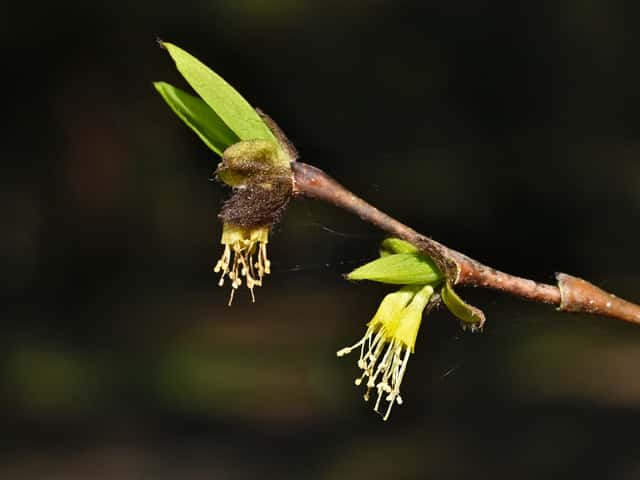
Eastern Leatherwood (Dirca palustris) is a medium-care plant from the Thymelaeaceae family. Dirca palustris, commonly known as Eastern Leatherwood, is a slow-growing native deciduous shrub of eastern North America. It reaches about 6 feet tall and wide, producing delicate pale yellow bell-shaped flowers in early spring before leaf emergence. Its bark is extraordinarily pliable and strong,...
Eastern Leatherwood grows up to 1.8m, spread of 180cm, watering every 4 days, -35°C – 32°C, 50–80% humidity. It is not suitable for indoor environments and not safe for pets.
Without precautions, ingestion can cause irritation in pets. Keep out of reach of cats and dogs.
How to Care for Eastern Leatherwood?
TLDR: Eastern Leatherwood needs Low light, watering every 4 days, and temperatures between -35-32°C with 50-80% humidity.
How Often Should You Water Eastern Leatherwood?
Water every 4 days to keep soil evenly moist. Do not allow the soil to dry out completely. Avoid prolonged waterlogging to prevent root rot.
How Much Light Does Eastern Leatherwood Need?
Prefers partial to full shade (up to 6 hours of direct sun maximum). Extremely shade-tolerant — ideal under tree canopies. Protect from intense afternoon sun.
What Is the Best Soil for Eastern Leatherwood?
Plant in organically rich, moist, well-draining loamy soil. Amend with compost or peat. Tolerates pH 5.5–7.5. Naturally found along streambanks and woodland edges.
What Pot Should You Use for Eastern Leatherwood?
Clay or terracotta pot with drainage holes for patio use in shaded spots; best planted directly in garden soil in moist, shaded locations.
What Is Eastern Leatherwood and Where Does It Come From?
Dirca palustris, commonly known as Eastern Leatherwood, is a slow-growing native deciduous shrub of eastern North America. It reaches about 6 feet tall and wide, producing delicate pale yellow bell-shaped flowers in early spring before leaf emergence. Its bark is extraordinarily pliable and strong, historically used by Native Americans for rope, baskets, and bowstrings.
How to Propagate Eastern Leatherwood?
Seed propagation
Fresh seed germinates best; dried seed requires 2-3 months cold stratification. Germination occurs in 1-6 months at 15°C.
- 1 Collect ripe seeds in summer
- 2 Remove fruit flesh immediately
- 3 Cold-stratify seeds for 2-3 months
- 4 Sow in moist medium in a cold frame
- 5 Transplant seedlings after germination
Materials needed:
Simple layering
Layering is the preferred method given the pliable bark. High success rate with minimal effort.
- 1 Select a young, flexible branch
- 2 Make a shallow wound on the underside
- 3 Bury the wounded section in moist soil leaving the tip exposed
- 4 Keep soil moist until rooting occurs
- 5 Sever from parent plant after 8-12 weeks
Materials needed:
How Big Does Eastern Leatherwood Grow?
TLDR: Eastern Leatherwood can reach up to 1.8m tall with Slow growth rate.
Max height
1.8m
Spread
1.8m
Growth rate
Slow
Foliage
Deciduous
Warning: Toxic Plant
This plant can be toxic if ingested. Keep out of reach of:
Plant Uses
Ornamental
Great for decoration
Medicinal
Medicinal properties
Medicinal Uses
- Used by Native Americans as a laxative and emetic
- Bark preparations used traditionally for toothache and respiratory ailments
Is your plant showing symptoms?
Click on the symptom to discover possible causes:
What Diseases Commonly Affect Eastern Leatherwood?
TLDR: Eastern Leatherwood is susceptible to 3 known diseases. Monitor regularly for early detection.
Scale Insects
Scale insects are small sap-sucking pests that appear as brown, shell-like bumps on plant stems and leaves. There are over 25 species, divided into armored (hard) and unarmored (soft) scales. They feed by piercing plant tissue and extracting sap, which weakens the plant and can lead to yellowing, stunted growth, and even death if left untreated. They also excrete honeydew, which attracts ants and promotes sooty mold growth.
Leafminers
Leafminers are the larvae of various insects including flies, moths, sawflies, and beetles that tunnel between leaf surfaces, creating distinctive serpentine trails or blotchy patches. While primarily cosmetic, severe infestations can weaken plants by reducing photosynthesis capacity and making them susceptible to secondary infections.
Root Rot
Root rot is a serious fungal disease that affects the root system of plants, causing them to decay and die. It is primarily caused by overwatering, poor drainage, or soil-borne fungi such as Pythium, Phytophthora, Rhizoctonia, and Fusarium. The disease thrives in waterlogged conditions where roots are deprived of oxygen, making them susceptible to fungal infection.
Fun Facts
The bark of Dirca palustris is so flexible and strong that Native Americans used it to make bowstrings, fishing lines, and baskets
Flowers emerge in late winter or early spring before any leaves appear, making it one of the earliest blooming native shrubs
It is one of only a few Thymelaeaceae family members native to North America
The red berries attract birds but are mildly toxic to humans and pets
Frequently asked questions
How often should I water Eastern Leatherwood?
Is Dirca palustris toxic to pets?
What light conditions does Eastern Leatherwood need?
Can I grow Eastern Leatherwood in a container?
How fast does Eastern Leatherwood grow?
Compare with similar plants
| Attribute | Difficulty | Light | Watering | Pet Safe |
|---|---|---|---|---|
| Dark Fieldcap | Medium | Low light | 2d | ⚠️ |
| Azalea | Medium | Partial shade | 3d | ⚠️ |
| Bougainvillea | Medium | Direct sun | 7d | ⚠️ |
| Wild Lettuce | Medium | Direct sun | 7d | ⚠️ |



