Elaeagnaceae
Ebbinge's Silverberry
Elaeagnus × submacrophylla
A tough, low-maintenance shrub that tolerates poor soils, drought, coastal winds, and exposed sites. Light pruning twice a year keeps it tidy. Excellent for hedging and wildlife gardens.
Every 10 days
Partial shade
-15° - 35°C
% - %
Categories
What is Ebbinge's Silverberry?
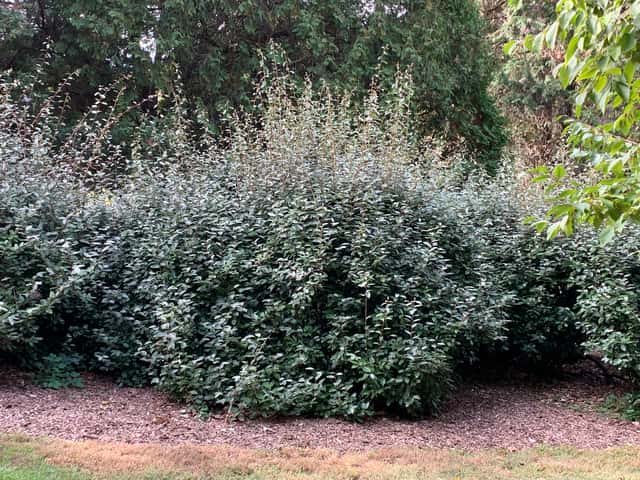
Ebbinge's Silverberry (Elaeagnus × submacrophylla) is a easy-care plant from the Elaeagnaceae family. Ebbinge's Silverberry (Elaeagnus × submacrophylla) is a fast-growing evergreen hybrid shrub, a cross between E. macrophylla and E. pungens. It is widely planted as a hedge or windbreak in temperate gardens, valued for its silvery-green foliage and sweetly fragrant autumn flowers.
Ebbinge's Silverberry grows up to 4.0m, spread of 400cm, watering every 10 days, -15°C – 35°C. It is not suitable for indoor environments and safe for pets.
Unlike many tropical plants, Ebbinge's Silverberry tolerates watering mistakes. Best for beginners. Unlike many popular species, Ebbinge's Silverberry is safe to keep around pets.
How to Care for Ebbinge's Silverberry?
TLDR: Ebbinge's Silverberry needs Partial shade, watering every 10 days, and temperatures between -15-35°C with 40-70% humidity.
How Often Should You Water Ebbinge's Silverberry?
Water every 7–14 days. Once established, highly drought tolerant; avoid waterlogged conditions.
How Much Light Does Ebbinge's Silverberry Need?
Thrives in full sun to full shade. Extremely adaptable to a wide range of light conditions.
What Is the Best Soil for Ebbinge's Silverberry?
Prefers well-draining soil. Tolerates sandy, clay, and chalky soils. pH 5.5–7.5.
What Is Ebbinge's Silverberry and Where Does It Come From?
Ebbinge's Silverberry (Elaeagnus × submacrophylla) is a fast-growing evergreen hybrid shrub, a cross between E. macrophylla and E. pungens. It is widely planted as a hedge or windbreak in temperate gardens, valued for its silvery-green foliage and sweetly fragrant autumn flowers.
How Big Does Ebbinge's Silverberry Grow?
TLDR: Ebbinge's Silverberry can reach up to 4.0m tall with Fast growth rate.
Max height
4.0m
Spread
4.0m
Growth rate
Fast
Foliage
Evergreen
Plant Uses
Ornamental
Great for decoration
Edible
Can be consumed
Culinary Uses
- Edible drupe fruits, eaten raw or cooked; used in jams and jellies
Is your plant showing symptoms?
Click on the symptom to discover possible causes:
What Diseases Commonly Affect Ebbinge's Silverberry?
TLDR: Ebbinge's Silverberry is susceptible to 5 known diseases. Monitor regularly for early detection.
Leaf Spot
Leaf spot is a common fungal disease caused by various pathogens including Alternaria, Ascochyta, Colletotrichum, Septoria, and Venturia. It primarily affects leaves, causing discolored spots that can lead to premature leaf drop if left untreated.
Root Rot
Root rot is a serious fungal disease that affects the root system of plants, causing them to decay and die. It is primarily caused by overwatering, poor drainage, or soil-borne fungi such as Pythium, Phytophthora, Rhizoctonia, and Fusarium. The disease thrives in waterlogged conditions where roots are deprived of oxygen, making them susceptible to fungal infection.
Canker
Canker is a disease caused by various fungi and bacteria that create necrotic, sunken areas on bark of branches, stems, and trunks. Pathogens enter through wounds and natural openings, especially when plants are stressed. Canker can gradually weaken or kill branches by disrupting water and nutrient flow.
Scale Insects
Scale insects are small sap-sucking pests that appear as brown, shell-like bumps on plant stems and leaves. There are over 25 species, divided into armored (hard) and unarmored (soft) scales. They feed by piercing plant tissue and extracting sap, which weakens the plant and can lead to yellowing, stunted growth, and even death if left untreated. They also excrete honeydew, which attracts ants and promotes sooty mold growth.
Fun Facts
Fixes atmospheric nitrogen through symbiosis with Frankia bacteria in root nodules
Produces small edible drupes with a sweet, astringent flavour
One of the best shrubs for coastal and exposed sites due to its salt and wind tolerance
Compare with similar plants
| Attribute | Difficulty | Light | Watering | Pet Safe |
|---|---|---|---|---|
| Field Maple | Easy | Bright indirect | 14d | ✓ |
| Silver Birch | Easy | Direct sun | 14d | ✓ |
| Cushion Bush | Easy | Direct sun | 14d | ✓ |
| Peruvian peppertree | Easy | Direct sun | 14d | ⚠️ |
Choose & Compare
Sources & References
- PFAF Plant Database - Elaeagnus x ebbingei
- RHS - Elaeagnus × submacrophylla
- NC State Extension - Elaeagnus x submacrophylla
- Useful Temperate Plants - Elaeagnus × ebbingei
- Texas Plant Disease Handbook - Elaeagnus
- Missouri Botanical Garden - Elaeagnus × ebbingei
- Promesse de Fleurs PT - Elaeagnus ebbingei