Araceae
Alocasia longiloba: Complete Dragon Scale Care Guide
Alocasia longiloba
Medium difficulty. Provide bright indirect light (2,000–10,000 lux), water every 7 days allowing the top layer of soil to dry slightly between waterings, and maintain humidity between 60–80%. Ideal temperature range is 15–30 °C. Use a well-draining, airy aroid mix. Highly toxic to pets and humans — keep out of reach.
Every 7 days
Partial shade
15° - 30°C
60% - 80%
Categories
What is Dragon Scale Alocasia?
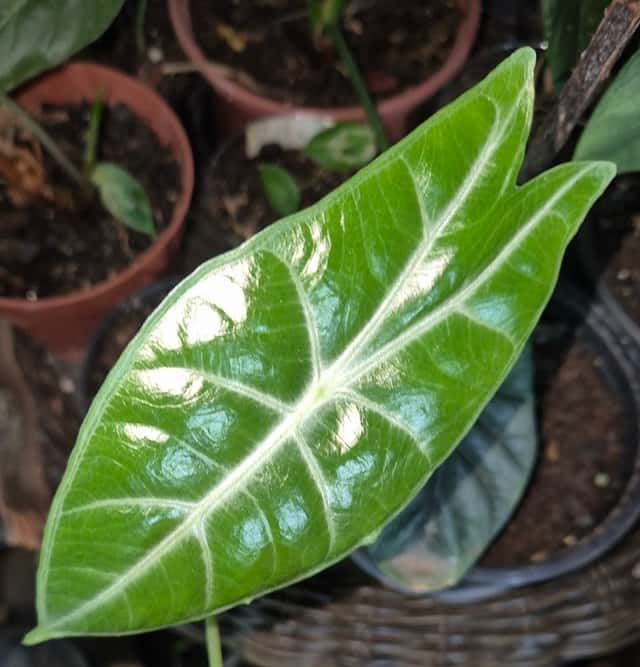
Dragon Scale Alocasia (Alocasia longiloba) is a medium-care plant from the Araceae family. Alocasia longiloba is a striking tropical plant native to the humid rainforests of Southeast Asia — Borneo, Malaysia, and Thailand. It is best known for its dramatic arrow- or heart-shaped leaves adorned with silvery-green venation that stands out boldly against a deep green background, giving it th...
Dragon Scale Alocasia grows up to 1.0m, spread of 100cm, watering every 7 days, 15°C – 30°C, 60–80% humidity. It is suitable for indoor environments and not safe for pets.
Without precautions, ingestion can cause irritation in pets. Keep out of reach of cats and dogs. Without adequate drainage, root rot can develop within 14 days.
How to Care for Dragon Scale Alocasia?
TLDR: Dragon Scale Alocasia needs Partial shade, watering every 7 days, and temperatures between 15-30°C with 60-80% humidity.
How Often Should You Water Dragon Scale Alocasia?
Water every 7 days, checking that the top third of the soil feels dry before watering again. Alocasia longiloba is highly water-sensitive and prone to root rot if left in soggy soil. Use filtered or room-temperature water that has sat for 24 hours to reduce chlorine. Reduce watering frequency in winter when growth slows.
How Much Light Does Dragon Scale Alocasia Need?
Thrives in bright indirect light, ideally between 2,000 and 10,000 lux. Avoid direct sunlight, which scorches the distinctive leaves, and deep shade, which causes slow growth and loss of the silvery venation pattern. Positioning about 1 metre from an east- or west-facing window is ideal.
What Is the Best Soil for Dragon Scale Alocasia?
Use a lightweight, well-draining, airy aroid mix: combine orchid bark, perlite, and coco coir in equal parts. The ideal soil pH is 5.5–6.5. Drainage holes are non-negotiable; never let the plant sit in standing water in a saucer.
What Pot Should You Use for Dragon Scale Alocasia?
Use terracotta or plastic pots with generous drainage holes. Terracotta is preferred as it allows the substrate to dry more evenly, reducing waterlogging risk. Choose a pot only 2–3 cm larger than the root ball.
Care Schedule
Fertilize
Every 14 days
Misting
Every 7 days
Rotate
Every 30 days
Repot
Every 365 days
What Is Dragon Scale Alocasia and Where Does It Come From?
Alocasia longiloba is a striking tropical plant native to the humid rainforests of Southeast Asia — Borneo, Malaysia, and Thailand. It is best known for its dramatic arrow- or heart-shaped leaves adorned with silvery-green venation that stands out boldly against a deep green background, giving it the popular name 'Dragon Scale Alocasia.' The texture of the leaf surface can appear almost reptilian, especially in the highly sought-after 'Dragon Scale' and 'Silver' cultivated forms. As a houseplant it typically reaches 60–120 cm tall, making it an elegant focal point in living rooms, offices, and indoor gardens. It belongs to the family Araceae and shares its genus with approximately 90 other fascinating species.
How to Propagate Dragon Scale Alocasia?
Rhizome Division
Divide in spring to take advantage of active growth. Wear gloves when handling — the sap can irritate skin.
- 1 Carefully remove the mother plant from its pot
- 2 Identify secondary rhizomes or offsets with at least one leaf
- 3 Gently separate by hand or cut with a sterilised knife
- 4 Allow cut surfaces to dry for 1-2 hours before planting
- 5 Plant each division in moist, well-draining aroid mix
- 6 Keep in a warm, humid spot out of direct sunlight
Materials needed:
Pup / Offset Separation
Pups with established roots have a much higher success rate. Do not separate rootless pups.
- 1 Wait until side pups are at least 5 cm tall
- 2 Remove the mother plant from its pot to expose roots
- 3 Detach pups that already have their own roots by hand or with a knife
- 4 Pot each pup individually in well-draining mix
- 5 Water lightly and place in bright indirect light
Materials needed:
Tuber Division
Larger, firm tubers have the best success rate. Avoid excessive moisture before shoots emerge to prevent rot.
- 1 Remove the plant from its pot and clean the tubers
- 2 Identify healthy tubers with visible growth buds
- 3 Cut with a sterilised knife leaving at least one bud per section
- 4 Treat cut surfaces with powdered fungicide or cinnamon
- 5 Plant in lightly moist, well-draining mix and partially cover
- 6 Keep above 20 °C to encourage sprouting
Materials needed:
How Big Does Dragon Scale Alocasia Grow?
TLDR: Dragon Scale Alocasia can reach up to 1.0m tall with Medium growth rate.
Max height
1.0m
Spread
1.0m
Growth rate
Medium
Foliage
Evergreen
Warning: Toxic Plant
This plant can be toxic if ingested. Keep out of reach of:
Plant Uses
Ornamental
Great for decoration
Is your plant showing symptoms?
Click on the symptom to discover possible causes:
What Diseases Commonly Affect Dragon Scale Alocasia?
TLDR: Dragon Scale Alocasia is susceptible to 16 known diseases. Monitor regularly for early detection.
Root Rot
Root rot is a serious fungal disease that affects the root system of plants, causing them to decay and die. It is primarily caused by overwatering, poor drainage, or soil-borne fungi such as Pythium, Phytophthora, Rhizoctonia, and Fusarium. The disease thrives in waterlogged conditions where roots are deprived of oxygen, making them susceptible to fungal infection.
Crown Rot
Crown rot is a serious fungal disease that attacks the crown (base) of the plant where the stem meets the soil. It is caused by various fungal pathogens including Phytophthora, Fusarium, and Rhizoctonia. The disease thrives in waterlogged conditions and can quickly spread to kill the entire plant if not addressed promptly.
Pythium Root Rot
Pythium root rot is a serious fungal disease caused by various Pythium species including P. aphanidermatum, P. ultimum, and P. irregulare. These water molds are present in practically all cultivated soils and attack plant roots under wet conditions, causing rapid wet rot that can extend into the stem. The disease is favored by poor drainage, overwatering, and specific temperatures depending on the species.
Phytophthora Root Rot
Disease caused by fungus-like organisms (oomycetes) that live in soil and can survive for years. It affects roots, stem, and crown of plants, being especially severe in waterlogged or poorly drained soils. It is the second most common cause of root rot in trees and shrubs.
Meaning & Symbolism
In Southeast Asian cultures, the large, imposing leaves of Alocasia are associated with protection, longevity, and a spiritual connection to the forest. The plant is often grown near homes as a talisman for prosperity and good fortune.
Fun Facts
The silvery venation pattern on each leaf is unique — no two leaves have identical markings, making every plant a one-of-a-kind specimen.
In its native Bornean rainforest habitat, Alocasia longiloba can grow leaves up to 60 cm long on plants exceeding 1.5 m in height.
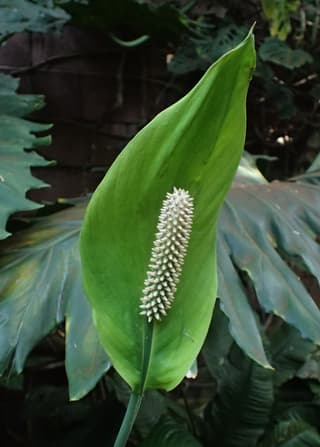
It produces a white-green spathe flower in spring and summer, similar in appearance to peace lily blooms, though flowers are rarely seen on indoor specimens.
The 'Dragon Scale' form's leaf texture is so distinctively textured that it is occasionally mistaken for a reptile scale pattern by first-time observers.
Frequently asked questions
How often should I water Alocasia longiloba?
Is Alocasia longiloba toxic to cats and dogs?
Why are the leaves of my Dragon Scale Alocasia turning yellow?
What humidity level does Alocasia longiloba need?
How do I propagate Alocasia longiloba?
Compare with similar plants
| Attribute | Difficulty | Light | Watering | Pet Safe |
|---|---|---|---|---|
| Azalea | Medium | Partial shade | 3d | ⚠️ |
| Wild Lettuce | Medium | Direct sun | 7d | ⚠️ |
| Cape Primrose | Medium | Partial shade | 7d | ✓ |
| Honey Locust | Medium | Direct sun | 14d | ✓ |