Urticaceae
Glaziou's Cecropia (Cecropia glaziovii): Complete Growing Guide
Cecropia glaziovii
A hardy and easy-to-grow tree requiring full sun and well-drained soil. Water moderately every 5 days, allowing soil to dry slightly between waterings. Fertilize with organic matter twice yearly. Best suited for reforestation projects, large gardens, or native-plant landscaping.
Every 5 days
Direct sun
15° - 30°C
60% - 85%
Categories
What is Glaziou's Cecropia?
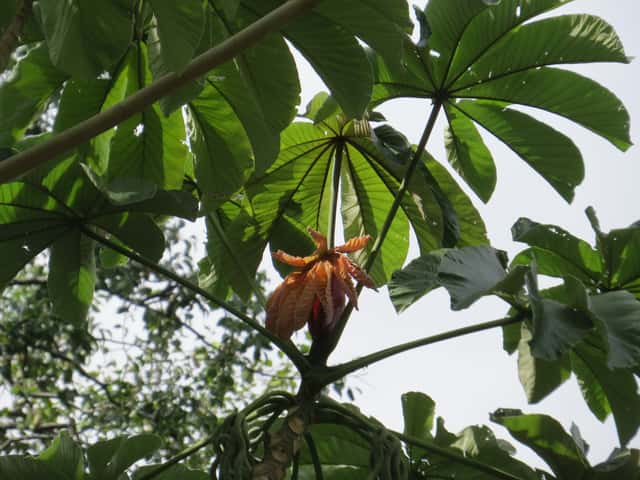
Glaziou's Cecropia (Cecropia glaziovii) is a easy-care plant from the Urticaceae family. Cecropia glaziovii, commonly known as Glaziou's Cecropia or Red Embauba, is a fast-growing pioneer tree native to the Brazilian Atlantic Forest. It is characterized by large lobed leaves that are green on top and silvery-white below, and reddish new growth that gives it its Portuguese common name. I...
Glaziou's Cecropia grows up to 16.0m, spread of 600cm, watering every 5 days, 15°C – 30°C, 60–85% humidity. It is not suitable for indoor environments and safe for pets.
Unlike many tropical plants, Glaziou's Cecropia tolerates watering mistakes. Best for beginners. Unlike many popular species, Glaziou's Cecropia is safe to keep around pets.
How to Care for Glaziou's Cecropia?
TLDR: Glaziou's Cecropia needs Direct sun, watering every 5 days, and temperatures between 15-30°C with 60-85% humidity.
How Often Should You Water Glaziou's Cecropia?
Water every 5 days on average, allowing the top of the soil to dry between waterings. Avoid waterlogged conditions which can cause root rot. In hotter, drier climates, watering frequency may need to increase.
How Much Light Does Glaziou's Cecropia Need?
Requires full sun to thrive. In shaded conditions, the characteristic silver sheen of the leaves diminishes and growth is significantly reduced. Choose a location with at least 6 hours of direct sunlight daily.
What Is the Best Soil for Glaziou's Cecropia?
Prefers well-drained soil rich in organic matter. Tolerates a range of soil types as long as drainage is adequate. A mix of topsoil, sand, and organic compost works well.
What Pot Should You Use for Glaziou's Cecropia?
Not recommended for pots — this is a large tree best suited for open ground planting, large gardens, or forest restoration projects.
Care Schedule
Fertilize
Every 180 days
What Is Glaziou's Cecropia and Where Does It Come From?
Cecropia glaziovii, commonly known as Glaziou's Cecropia or Red Embauba, is a fast-growing pioneer tree native to the Brazilian Atlantic Forest. It is characterized by large lobed leaves that are green on top and silvery-white below, and reddish new growth that gives it its Portuguese common name. It can reach up to 16 meters in height within a decade, making it one of the fastest-growing trees in the Atlantic Forest.
How to Propagate Glaziou's Cecropia?
Seed Propagation
Seeds germinate best when fresh. Keep substrate moist but not waterlogged.
- 1 Lightly scarify seeds and soak in water for 12 hours
- 2 Sow in moist, well-drained substrate at 0.5 cm depth
- 3 Keep in a bright location at temperatures above 20°C
- 4 Transplant to final location when seedling reaches 30 cm
Materials needed:
Stem Cutting
Use clean, sharp tools. Maintain consistent moisture in the substrate during rooting.
- 1 Take 10-15 cm cuttings from semi-hardwood stems
- 2 Apply rooting hormone to the base
- 3 Plant in moist, well-drained substrate
- 4 Keep in a shaded location until rooting occurs
Materials needed:
How Big Does Glaziou's Cecropia Grow?
TLDR: Glaziou's Cecropia can reach up to 16.0m tall with Fast growth rate.
Max height
16.0m
Spread
6.0m
Growth rate
Fast
Foliage
Evergreen
Plant Uses
Ornamental
Great for decoration
Medicinal
Medicinal properties
Medicinal Uses
- Traditionally used in folk medicine as an anti-inflammatory and for rheumatism treatment
- Ants inhabiting the hollow trunk are used in traditional medicine as a natural remedy for rheumatism
Is your plant showing symptoms?
Click on the symptom to discover possible causes:
What Diseases Commonly Affect Glaziou's Cecropia?
TLDR: Glaziou's Cecropia is susceptible to 4 known diseases. Monitor regularly for early detection.
Root Rot
Root rot is a serious fungal disease that affects the root system of plants, causing them to decay and die. It is primarily caused by overwatering, poor drainage, or soil-borne fungi such as Pythium, Phytophthora, Rhizoctonia, and Fusarium. The disease thrives in waterlogged conditions where roots are deprived of oxygen, making them susceptible to fungal infection.
Leaf Spot
Leaf spot is a common fungal disease caused by various pathogens including Alternaria, Ascochyta, Colletotrichum, Septoria, and Venturia. It primarily affects leaves, causing discolored spots that can lead to premature leaf drop if left untreated.
Scale Insects
Scale insects are small sap-sucking pests that appear as brown, shell-like bumps on plant stems and leaves. There are over 25 species, divided into armored (hard) and unarmored (soft) scales. They feed by piercing plant tissue and extracting sap, which weakens the plant and can lead to yellowing, stunted growth, and even death if left untreated. They also excrete honeydew, which attracts ants and promotes sooty mold growth.
Aphids
Aphids are small, soft-bodied, pear-shaped insects (1/16 to 1/8 inch long) that feed by sucking nutrient-rich sap from plants. They reproduce rapidly and can quickly weaken plants, causing distorted growth and transmitting plant viruses. Aphids come in various colors including green, black, red, yellow, brown, and gray. They secrete honeydew, a sticky substance that attracts ants and encourages sooty mold growth.
Meaning & Symbolism
A symbol of renewal and pioneering resilience in the Brazilian Atlantic Forest. Represents the regenerative power of native ecosystems and the natural recovery of degraded forests.
Fun Facts
Can reach 16 meters in height in under 10 years, making it one of the fastest-growing trees in the Atlantic Forest
Its hollow trunk is home to colonies of Azteca ants, which protect the tree from herbivores in exchange for shelter and food
Young leaves and stipules display a distinctive reddish coloration that gives the species its Portuguese common name
It is a favorite food source for three-toed sloths in the Brazilian Atlantic Forest
Frequently asked questions
Can Glaziou's Cecropia be grown in a pot?
How often should I water Glaziou's Cecropia?
Is Glaziou's Cecropia toxic to pets?
How fast does Glaziou's Cecropia grow?
Does Glaziou's Cecropia attract wildlife?
Compare with similar plants
| Attribute | Difficulty | Light | Watering | Pet Safe |
|---|---|---|---|---|
| Field Maple | Easy | Bright indirect | 14d | ✓ |
| Silver Birch | Easy | Direct sun | 14d | ✓ |
| Cushion Bush | Easy | Direct sun | 14d | ✓ |
| Peruvian peppertree | Easy | Direct sun | 14d | ⚠️ |





