Cupressaceae
Japanese Garden Juniper (Juniperus procumbens): Complete Care Guide
Juniperus procumbens
Japanese Garden Juniper is an easy-care, drought-tolerant evergreen best suited for outdoor growing in full sun. Water every 7 days or less once established, ensure excellent drainage to prevent root rot, and fertilize twice a year. Prune lightly in spring and late summer to maintain shape.
Every 7 days
Direct sun
-20° - 35°C
30% - 60%
Categories
What is Japanese Garden Juniper?
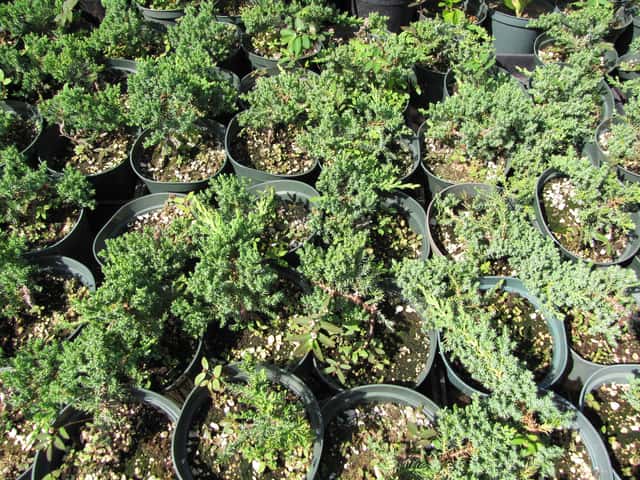
Japanese Garden Juniper (Juniperus procumbens) is a easy-care plant from the Cupressaceae family. Juniperus procumbens, commonly known as Japanese Garden Juniper, is a low-spreading evergreen conifer native to southern Japan. It forms a dense, cascading mat of blue-green needle-like foliage and is highly prized in bonsai cultivation, especially the compact 'Nana' cultivar. Ideal for ground cover...
Japanese Garden Juniper grows up to 50cm, spread of 300cm, watering every 7 days, -20°C – 35°C, 30–60% humidity. It is not suitable for indoor environments and not safe for pets.
Unlike many tropical plants, Japanese Garden Juniper tolerates watering mistakes. Best for beginners. Without precautions, ingestion can cause irritation in pets. Keep out of reach of cats and dogs.
How to Care for Japanese Garden Juniper?
TLDR: Japanese Garden Juniper needs Direct sun, watering every 7 days, and temperatures between -20-35°C with 30-60% humidity.
How Often Should You Water Japanese Garden Juniper?
Water deeply every 7 days for established plants. Newly planted specimens need twice-weekly watering for the first month. Always allow the soil surface to dry slightly between waterings. Avoid waterlogged soil — this juniper is highly susceptible to root rot.
How Much Light Does Japanese Garden Juniper Need?
Requires a minimum of 6 hours of direct sunlight daily. Position in full sun for best density and health. Insufficient light leads to sparse, leggy growth. Not suitable for indoor growing.
What Is the Best Soil for Japanese Garden Juniper?
Use well-draining soil with a sandy or gritty texture. A pH of 5.5–7.5 is ideal. Avoid heavy clay or compacted soils that retain moisture. Amend with perlite or coarse grit to improve drainage.
What Pot Should You Use for Japanese Garden Juniper?
Unglazed terracotta or ceramic bonsai pots with large drainage holes. For landscape use, no container is needed. For bonsai: shallow oval or rectangular pots complement the spreading habit.
Care Schedule
Fertilize
Every 180 days
Repot
Every 730 days
What Is Japanese Garden Juniper and Where Does It Come From?
Juniperus procumbens, commonly known as Japanese Garden Juniper, is a low-spreading evergreen conifer native to southern Japan. It forms a dense, cascading mat of blue-green needle-like foliage and is highly prized in bonsai cultivation, especially the compact 'Nana' cultivar. Ideal for ground cover, rock gardens, and slope stabilization, it thrives in full sun with excellent drainage.
How to Propagate Japanese Garden Juniper?
Stem Cutting
Take cuttings in late spring to early summer for best results. Avoid misting the foliage excessively. Rooting can take 6–10 weeks.
- 1 Select a healthy semi-hardwood stem tip 10–15 cm long
- 2 Remove lower needles leaving only the top 2–3 cm of foliage
- 3 Dip the cut end in rooting hormone powder
- 4 Insert into a well-draining gritty mix of perlite and sand
- 5 Keep moist and place in bright indirect light until rooted
Materials needed:
Seed Propagation
Seed propagation is slow and unreliable. Stem cuttings are strongly preferred for this species.
- 1 Collect ripe seed cones in autumn
- 2 Cold-stratify seeds for 3 months in a moist medium in the refrigerator
- 3 Sow in well-draining seed compost in spring
- 4 Keep in a bright, cool location and maintain consistent moisture
Materials needed:
How Big Does Japanese Garden Juniper Grow?
TLDR: Japanese Garden Juniper can reach up to 50cm tall with Slow growth rate.
Max height
50cm
Spread
3.0m
Growth rate
Slow
Foliage
Evergreen
Warning: Toxic Plant
This plant can be toxic if ingested. Keep out of reach of:
Plant Uses
Ornamental
Great for decoration
Ground Cover
Soil coverage
Is your plant showing symptoms?
Click on the symptom to discover possible causes:
What Diseases Commonly Affect Japanese Garden Juniper?
TLDR: Japanese Garden Juniper is susceptible to 7 known diseases. Monitor regularly for early detection.
Root Rot
Root rot is a serious fungal disease that affects the root system of plants, causing them to decay and die. It is primarily caused by overwatering, poor drainage, or soil-borne fungi such as Pythium, Phytophthora, Rhizoctonia, and Fusarium. The disease thrives in waterlogged conditions where roots are deprived of oxygen, making them susceptible to fungal infection.
Phytophthora Root Rot
Disease caused by fungus-like organisms (oomycetes) that live in soil and can survive for years. It affects roots, stem, and crown of plants, being especially severe in waterlogged or poorly drained soils. It is the second most common cause of root rot in trees and shrubs.
Spider Mites
Spider mites are tiny arachnids (less than 1/20 inch long) related to spiders and ticks that feed on plant sap. They thrive in hot, dry conditions and can cause significant damage to ornamental and vegetable plants. During severe infestations, crop losses can reach 14% or higher as these pests disrupt vital plant processes including photosynthesis, carbon dioxide absorption, and transpiration.
Scale Insects
Scale insects are small sap-sucking pests that appear as brown, shell-like bumps on plant stems and leaves. There are over 25 species, divided into armored (hard) and unarmored (soft) scales. They feed by piercing plant tissue and extracting sap, which weakens the plant and can lead to yellowing, stunted growth, and even death if left untreated. They also excrete honeydew, which attracts ants and promotes sooty mold growth.
Meaning & Symbolism
A cornerstone of Japanese bonsai tradition, this juniper symbolizes longevity, perseverance, and the quiet beauty of endurance. Its aged, windswept forms are considered living sculptures representing patience and the passage of time.
Fun Facts
The 'Nana' cultivar of Juniperus procumbens is the most widely used juniper for bonsai outside of Japan.
Despite its small stature (under 50 cm tall), this juniper can spread up to 3 meters wide over decades.
Juniperus procumbens is native to the coastal mountains and rocky slopes of southern Japan, including the Bonin Islands.
This plant is so slow-growing it can take over a decade to reach its full spread — making mature specimens genuinely irreplaceable.
Frequently asked questions
How often should I water Japanese Garden Juniper?
Can Japanese Garden Juniper grow indoors?
Is Japanese Garden Juniper toxic to pets?
Why is my Japanese Garden Juniper turning brown?
Is Japanese Garden Juniper good for bonsai?
Compare with similar plants
| Attribute | Difficulty | Light | Watering | Pet Safe |
|---|---|---|---|---|
| Field Maple | Easy | Bright indirect | 14d | ✓ |
| Silver Birch | Easy | Direct sun | 14d | ✓ |
| Cushion Bush | Easy | Direct sun | 14d | ✓ |
| Peruvian peppertree | Easy | Direct sun | 14d | ⚠️ |





