Ranunculaceae
Clematis vitalba: Traveller's Joy Care Guide
Clematis vitalba
Easy to grow and highly tolerant of poor soils; needs sturdy support to climb and benefits from an annual hard prune in late winter to control its vigorous spread.
Every 7 days
Bright indirect
10° - 25°C
40% - 70%
Categories
What is Traveller's Joy?
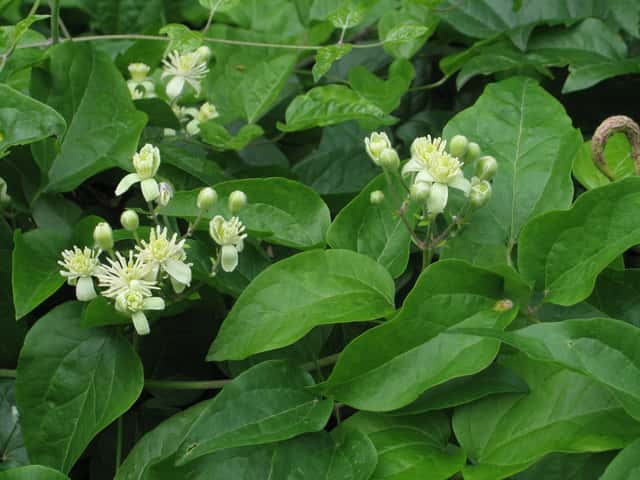
Traveller's Joy (Clematis vitalba) is a easy-care plant from the Ranunculaceae family. Traveller's Joy (Clematis vitalba) is a vigorous, fast-growing deciduous climbing vine in the buttercup family (Ranunculaceae), native to Europe and western Asia. It scrambles over hedgerows, trees and fences using twisting leaf stalks, producing clusters of small, fragrant greenish-white flowers in...
Traveller's Joy grows up to 15.0m, spread of 1500cm, watering every 7 days, 10°C – 25°C, 40–70% humidity. It is not suitable for indoor environments and not safe for pets.
Unlike many tropical plants, Traveller's Joy tolerates watering mistakes. Best for beginners. Without precautions, ingestion can cause irritation in pets. Keep out of reach of cats and dogs.
How to Care for Traveller's Joy?
TLDR: Traveller's Joy needs Bright indirect, watering every 7 days, and temperatures between 10-25°C with 40-70% humidity.
How Often Should You Water Traveller's Joy?
Water regularly while establishing, especially in the first year; once established it tolerates short dry spells but prefers consistently moist, well-drained soil.
How Much Light Does Traveller's Joy Need?
Thrives in full sun to part shade; flowers and seed heads are best with at least a few hours of direct sun daily, though roots prefer cool, shaded soil.
What Is the Best Soil for Traveller's Joy?
Adapts to sandy, loamy or clay soils as long as drainage is good; add grit to heavy clay to prevent waterlogging around the roots.
What Pot Should You Use for Traveller's Joy?
Best planted directly in the ground beside a fence, wall or trellis; if grown in a container, use a large, deep pot with excellent drainage and a sturdy support structure.
What Is Traveller's Joy and Where Does It Come From?
Traveller's Joy (Clematis vitalba) is a vigorous, fast-growing deciduous climbing vine in the buttercup family (Ranunculaceae), native to Europe and western Asia. It scrambles over hedgerows, trees and fences using twisting leaf stalks, producing clusters of small, fragrant greenish-white flowers in summer followed by fluffy, silvery seed heads that persist through winter, giving the plant its other common name, Old Man's Beard.
How to Propagate Traveller's Joy?
Seed sowing
Fresh seed germinates far more reliably than stored seed; stratification over winter improves results.
- 1 Collect ripe fluffy seed heads in autumn
- 2 Sow seeds fresh in free-draining seed compost
- 3 Keep in a cold frame or sheltered spot over winter
- 4 Transplant seedlings once large enough to handle
Materials needed:
Softwood stem cutting
Use a single-node cutting rather than a tip cutting for better success with clematis.
- 1 Take a softwood cutting with one leaf node in late spring
- 2 Trim just below the node and remove lower leaves
- 3 Dip cut end in rooting hormone
- 4 Insert into moist, gritty compost and keep humid until rooted
Materials needed:
Layering
Layering is the most reliable method since the new plant is supported by the parent until rooted.
- 1 Choose a low, flexible stem still attached to the parent plant
- 2 Bury a section of the stem in soil, leaving the tip exposed
- 3 Pin it down and keep the buried section moist
- 4 Sever from the parent plant once roots form
Materials needed:
How Big Does Traveller's Joy Grow?
TLDR: Traveller's Joy can reach up to 15.0m tall with Fast growth rate.
Max height
15.0m
Spread
15.0m
Growth rate
Fast
Foliage
Deciduous
Warning: Toxic Plant
This plant can be toxic if ingested. Keep out of reach of:
Plant Uses
Ornamental
Great for decoration
Is your plant showing symptoms?
Click on the symptom to discover possible causes:
What Diseases Commonly Affect Traveller's Joy?
TLDR: Traveller's Joy is susceptible to 4 known diseases. Monitor regularly for early detection.
Aphids
Aphids are small, soft-bodied, pear-shaped insects (1/16 to 1/8 inch long) that feed by sucking nutrient-rich sap from plants. They reproduce rapidly and can quickly weaken plants, causing distorted growth and transmitting plant viruses. Aphids come in various colors including green, black, red, yellow, brown, and gray. They secrete honeydew, a sticky substance that attracts ants and encourages sooty mold growth.
Mealybugs
Mealybugs are small, soft-bodied insects covered with a white, waxy, cottony material. They are common pests of houseplants and outdoor plants in mild climates. These sap-sucking insects feed on plant tissue, causing damage, stunted growth, and can lead to plant death if left untreated. They produce sticky honeydew which attracts sooty mold.
Powdery Mildew
Powdery mildew is a common fungal disease caused by various fungi species including Erysiphe, Podosphaera, Oïdium, and Leveillula. It affects over 10,000 plant species worldwide. The disease thrives in warm, dry climates with high humidity and appears as a distinctive white powdery coating on plant surfaces.
Stem Necrosis
Stem necrosis is a condition characterized by the death of plant tissues on the stem, leading to browning, blackening, and eventual decay. It can weaken the plant, hinder nutrient and water transport, and in severe cases, lead to plant death. This condition can be caused by various pathogens, environmental stresses, or physical damage.
Meaning & Symbolism
Known as Traveller's Joy, symbolizing journeys, wayfaring and protection for travelers; the fluffy silvery seed heads (Old Man's Beard) evoke wisdom and the passage of time in folklore.
Fun Facts
Its fluffy winter seed heads give it the folk name Old Man's Beard.
A single plant can climb over 15-30 metres into trees and hedgerows.
The sap contains protoanemonin, historically used by beggars to irritate skin and provoke sympathy.
It is considered an invasive weed in parts of New Zealand and North America.
Frequently asked questions
Is Clematis vitalba toxic to pets?
How fast does Traveller's Joy grow?
Why is it called Old Man's Beard?
Does Traveller's Joy need full sun?
Compare with similar plants
| Attribute | Difficulty | Light | Watering | Pet Safe |
|---|---|---|---|---|
| Field Maple | Easy | Bright indirect | 14d | ✓ |
| Silver Birch | Easy | Direct sun | 14d | ✓ |
| Cushion Bush | Easy | Direct sun | 14d | ✓ |
| Peruvian peppertree | Easy | Direct sun | 14d | ⚠️ |





