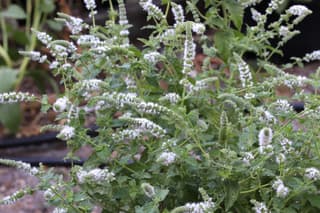
Caprifoliaceae
Keeled-fruited Cornsalad (Valeriana carinata)
Valeriana carinata
An easy cool-season annual that thrives outdoors in full sun. Sow seeds successively from early spring to late summer for a continuous harvest. Water regularly but avoid waterlogging. Prefers a fertile, well-drained loamy soil. Minimal care needed beyond consistent moisture and pest monitoring.
Every 7 days
Bright indirect
-5° - 22°C
40% - 70%
Categories
What is Keeled-fruited Cornsalad?
Keeled-fruited Cornsalad (Valeriana carinata) is a easy-care plant from the Caprifoliaceae family. Valeriana carinata, commonly known as Keeled-fruited Cornsalad, is a small hardy annual native to Europe and the Mediterranean region. Often confused with Valerianella locusta (common corn salad or mâche), it produces tender rosettes of mild-flavoured leaves that are harvested as a salad green. The...
Keeled-fruited Cornsalad grows up to 30cm, spread of 20cm, watering every 7 days, -5°C – 22°C, 40–70% humidity. It is not suitable for indoor environments and safe for pets.
Unlike many tropical plants, Keeled-fruited Cornsalad tolerates watering mistakes. Best for beginners. Unlike many popular species, Keeled-fruited Cornsalad is safe to keep around pets.
How to Care for Keeled-fruited Cornsalad?
TLDR: Keeled-fruited Cornsalad needs Bright indirect, watering every 7 days, and temperatures between -5-22°C with 40-70% humidity.
How Often Should You Water Keeled-fruited Cornsalad?
Water every 7 days, keeping the soil consistently moist but never waterlogged. Reduce frequency during cool, wet weather to prevent root rot and damping off.
How Much Light Does Keeled-fruited Cornsalad Need?
Requires full sun for best growth. Tolerates partial shade in hot climates, though full sun exposure produces the most vigorous rosettes and the richest-flavoured leaves.
What Is the Best Soil for Keeled-fruited Cornsalad?
Prefers a fairly rich, light loamy soil with a pH of 6.0–7.5. Amend with compost before sowing to improve fertility. Good drainage is essential to prevent root diseases.
What Pot Should You Use for Keeled-fruited Cornsalad?
As an outdoor edible annual, no pot is needed. If grown in containers, use a wide, shallow pot or window box with drainage holes and good-quality vegetable compost.
What Is Keeled-fruited Cornsalad and Where Does It Come From?
Valeriana carinata, commonly known as Keeled-fruited Cornsalad, is a small hardy annual native to Europe and the Mediterranean region. Often confused with Valerianella locusta (common corn salad or mâche), it produces tender rosettes of mild-flavoured leaves that are harvested as a salad green. The plant blooms in spring with tiny pale pink, white, or bluish flowers. Its distinctive keeled fruits help distinguish it from related species.
How to Propagate Keeled-fruited Cornsalad?
Seed sowing
A late summer sowing can provide fresh leaves through winter in mild climates. No pre-treatment needed as seeds germinate readily in cool conditions.
- 1 Sow seeds directly in the ground from early spring to late summer.
- 2 Sow in rows or broadcast lightly and cover with a thin layer of soil.
- 3 Keep the soil consistently moist until germination occurs.
- 4 Thin seedlings to 5–10 cm apart for best rosette development.
- 5 Make successive sowings every 2–3 weeks for continuous harvest.
Materials needed:
How Big Does Keeled-fruited Cornsalad Grow?
TLDR: Keeled-fruited Cornsalad can reach up to 30cm tall with Fast growth rate.
Max height
30cm
Spread
20cm
Growth rate
Fast
Foliage
Deciduous
Plant Uses
Edible
Can be consumed
Culinary Uses
- Young leaves eaten raw in salads, similar to mâche (lamb's lettuce)
- Mild, slightly nutty flavour; best harvested young before flowering
- Can be used as a substitute for Valerianella locusta in mixed green salads
Is your plant showing symptoms?
Click on the symptom to discover possible causes:
What Diseases Commonly Affect Keeled-fruited Cornsalad?
TLDR: Keeled-fruited Cornsalad is susceptible to 6 known diseases. Monitor regularly for early detection.
Aphids
Aphids are small, soft-bodied, pear-shaped insects (1/16 to 1/8 inch long) that feed by sucking nutrient-rich sap from plants. They reproduce rapidly and can quickly weaken plants, causing distorted growth and transmitting plant viruses. Aphids come in various colors including green, black, red, yellow, brown, and gray. They secrete honeydew, a sticky substance that attracts ants and encourages sooty mold growth.
Downy Mildew
Downy mildew is a fungal-like disease caused by oomycetes (water molds) that thrives in cool, wet conditions. It affects a wide range of plants, causing yellowing leaves with fuzzy white-gray growth underneath, leading to defoliation and reduced yields if left untreated.
Root Rot
Root rot is a serious fungal disease that affects the root system of plants, causing them to decay and die. It is primarily caused by overwatering, poor drainage, or soil-borne fungi such as Pythium, Phytophthora, Rhizoctonia, and Fusarium. The disease thrives in waterlogged conditions where roots are deprived of oxygen, making them susceptible to fungal infection.
Damping Off
Damping off is a soil-borne fungal disease that affects seeds and young seedlings, causing rotting of stem and root tissues at and below the soil line. It is caused by several fungi including Pythium, Rhizoctonia, Fusarium, and Phytophthora. The disease thrives in cold, wet conditions with poor air circulation.
Meaning & Symbolism
A symbol of simplicity and wild nourishment, this humble edible plant has fed people across European fields and roadsides for centuries.
Fun Facts
Keeled-fruited Cornsalad is often mistaken for Valerianella locusta (mâche), but can be identified by its distinctively keeled, squarish fruits.
This small annual has been foraged from European fields and roadsides since ancient times.
It flowers from April to June, producing clusters of tiny pale pink or bluish blooms on branching stems.
As a cool-season crop, it can overwinter and provide fresh salad leaves even in mild frost conditions.
Frequently asked questions
Is Keeled-fruited Cornsalad edible?
How often should I water Valeriana carinata?
Is Valeriana carinata the same as Valerianella carinata?
When does Keeled-fruited Cornsalad flower?
How do I grow Valeriana carinata from seed?
Compare with similar plants
| Attribute | Difficulty | Light | Watering | Pet Safe |
|---|---|---|---|---|
| Field Maple | Easy | Bright indirect | 14d | ✓ |
| Silver Birch | Easy | Direct sun | 14d | ✓ |
| Cushion Bush | Easy | Direct sun | 14d | ✓ |
| Peruvian peppertree | Easy | Direct sun | 14d | ⚠️ |