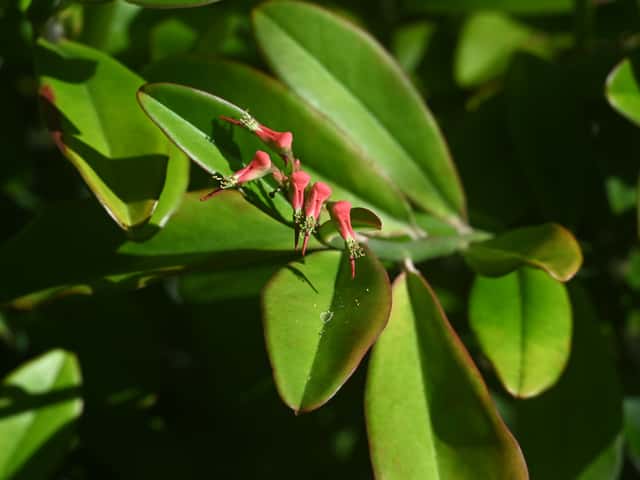
Euphorbiaceae
Devil's Backbone (Euphorbia tithymaloides): Complete Care Guide
Euphorbia tithymaloides
Low-maintenance and resilient. Prefers full sun to partial shade, well-draining soil, and infrequent watering. Drought-tolerant; never allow roots to sit in water. Avoid wetting foliage to prevent fungal issues.
Every 14 days
Bright indirect
15° - 32°C
40% - 70%
Categories
What is Devil's Backbone?
Devil's Backbone (Euphorbia tithymaloides) is a easy-care plant from the Euphorbiaceae family. Devil's Backbone (Euphorbia tithymaloides) is a succulent shrub native to Tropical Americas, prized for its striking zigzag stems and colorful foliage. Easy to grow and drought-tolerant, it thrives in bright light with minimal watering. Its milky white latex sap is toxic and irritating to skin — alw...
Devil's Backbone grows up to 3.0m, spread of 60cm, watering every 14 days, 15°C – 32°C, 40–70% humidity. It is suitable for indoor environments and not safe for pets.
Unlike many tropical plants, Devil's Backbone tolerates watering mistakes. Best for beginners. Without precautions, ingestion can cause irritation in pets. Keep out of reach of cats and dogs. Without adequate drainage, root rot can develop within 28 days.
How to Care for Devil's Backbone?
TLDR: Devil's Backbone needs Bright indirect, watering every 14 days, and temperatures between 15-32°C with 40-70% humidity.
How Often Should You Water Devil's Backbone?
Water only when the soil is completely dry 3–4 cm deep. During active growth (spring/summer), water every 10–14 days; reduce to once monthly in winter. Always use pots with drainage holes.
How Much Light Does Devil's Backbone Need?
Thrives in full sun (6+ hours of direct sunlight daily). Indoors, place near a south- or west-facing window. Avoid intense midday sun that may scorch the foliage.
What Is the Best Soil for Devil's Backbone?
Use a fast-draining succulent or cactus potting mix amended with perlite or coarse sand. Ideal pH 6.0–8.0. Avoid dense, moisture-retaining soils.
What Pot Should You Use for Devil's Backbone?
Use terracotta or unglazed ceramic pots for better drainage and evaporation. Ensure the pot has drainage holes. A moderately sized pot works best — Devil's Backbone does not need large root space.
Care Schedule
Fertilize
Every 42 days
Repot
Every 730 days
What Is Devil's Backbone and Where Does It Come From?
Devil's Backbone (Euphorbia tithymaloides) is a succulent shrub native to Tropical Americas, prized for its striking zigzag stems and colorful foliage. Easy to grow and drought-tolerant, it thrives in bright light with minimal watering. Its milky white latex sap is toxic and irritating to skin — always handle with gloves.
How to Propagate Devil's Backbone?
Stem Cutting
Wear gloves when handling stems to avoid contact with the toxic milky latex. Stem cuttings are most successful in spring when the plant is actively growing.
- 1 Cut a healthy stem 10-15 cm long using clean, sharp scissors
- 2 Allow the cut end to callus for 2-3 days in open air
- 3 Plant in moist succulent mix or a perlite-soil blend
- 4 Place in a bright, warm spot away from intense direct sun
- 5 Wait 2-4 weeks for rooting before resuming normal watering
Materials needed:
How Big Does Devil's Backbone Grow?
TLDR: Devil's Backbone can reach up to 3.0m tall with Medium growth rate.
Max height
3.0m
Spread
60cm
Growth rate
Medium
Foliage
Evergreen
Warning: Toxic Plant
This plant can be toxic if ingested. Keep out of reach of:
Plant Uses
Ornamental
Great for decoration
Medicinal
Medicinal properties
Medicinal Uses
- Folkloric external use of latex for wart removal (only with medical guidance)
- Traditional use in some American cultures for skin inflammations
Is your plant showing symptoms?
Click on the symptom to discover possible causes:
What Diseases Commonly Affect Devil's Backbone?
TLDR: Devil's Backbone is susceptible to 6 known diseases. Monitor regularly for early detection.
Root Rot
Root rot is a serious fungal disease that affects the root system of plants, causing them to decay and die. It is primarily caused by overwatering, poor drainage, or soil-borne fungi such as Pythium, Phytophthora, Rhizoctonia, and Fusarium. The disease thrives in waterlogged conditions where roots are deprived of oxygen, making them susceptible to fungal infection.
Overwatering
Overwatering occurs when plants receive too much water, depriving roots of oxygen and causing root rot. This environmental stress is one of the most common causes of houseplant death, as waterlogged soil prevents roots from breathing and functioning properly.
Mealybugs
Mealybugs are small, soft-bodied insects covered with a white, waxy, cottony material. They are common pests of houseplants and outdoor plants in mild climates. These sap-sucking insects feed on plant tissue, causing damage, stunted growth, and can lead to plant death if left untreated. They produce sticky honeydew which attracts sooty mold.
Spider Mites
Spider mites are tiny arachnids (less than 1/20 inch long) related to spiders and ticks that feed on plant sap. They thrive in hot, dry conditions and can cause significant damage to ornamental and vegetable plants. During severe infestations, crop losses can reach 14% or higher as these pests disrupt vital plant processes including photosynthesis, carbon dioxide absorption, and transpiration.
Meaning & Symbolism
In folk traditions across the Americas, Devil's Backbone is associated with protection and resilience. Its peculiar zigzag stem and red slipper-like bracts have earned it mystical connotations in various cultures.
Fun Facts
The zigzag stem is an evolutionary adaptation to maximize sunlight capture from multiple angles.
Euphorbia tithymaloides was previously classified under the genus Pedilanthus before being reclassified into Euphorbia.
The red slipper-shaped bracts attract hummingbirds, making it a key pollinator plant in tropical gardens.
Its toxic milky latex has been used in folk medicine across the Americas for centuries, despite being dangerous if ingested.
Frequently asked questions
How often should I water Devil's Backbone?
Is Devil's Backbone toxic to cats and dogs?
Can Devil's Backbone grow indoors?
How do I propagate Devil's Backbone?
How often should I fertilize Devil's Backbone?
Compare with similar plants
| Attribute | Difficulty | Light | Watering | Pet Safe |
|---|---|---|---|---|
| Field Maple | Easy | Bright indirect | 14d | ✓ |
| Silver Birch | Easy | Direct sun | 14d | ✓ |
| Cushion Bush | Easy | Direct sun | 14d | ✓ |
| Peruvian peppertree | Easy | Direct sun | 14d | ⚠️ |





