Rosaceae
Dotted Hawthorn: Edible Plant
Crataegus punctata
Dotted Hawthorn is an extremely hardy species, suitable for beginners. It requires full sun and well-drained soil. Once established, it tolerates drought and urban conditions. Prune once a year in late winter or early spring. It fruits abundantly without special fertilization, but a single application of slow-release fertilizer in spring is beneficial for young plants.
Every 10 days
Bright indirect
-29° - 35°C
30% - 70%
Categories
What is Dotted Hawthorn?
Dotted Hawthorn (Crataegus punctata) is a easy-care plant from the Rosaceae family. Dotted Hawthorn (Crataegus punctata) is a deciduous tree in the Rosaceae family, native to eastern North America. It grows up to 9 meters tall with a dense, rounded crown and characteristic thorns up to 7 cm long. In late spring, it develops white flowers in dense clusters, and in autumn, it is abun...
Dotted Hawthorn grows up to 9.0m, spread of 1000cm, watering every 10 days, -29°C – 35°C, 30–70% humidity. It is not suitable for indoor environments and safe for pets.
Unlike many tropical plants, Dotted Hawthorn tolerates watering mistakes. Best for beginners. Unlike many popular species, Dotted Hawthorn is safe to keep around pets.
How to Care for Dotted Hawthorn?
TLDR: Dotted Hawthorn needs Bright indirect, watering every 10 days, and temperatures between -29-35°C with 30-70% humidity.
How Often Should You Water Dotted Hawthorn?
Water generously immediately after planting and regularly for the first year. Mature trees are drought-tolerant and should only be watered during prolonged dry spells (every 10–14 days). Avoid overwatering as hawthorn does not like stagnant water.
How Much Light Does Dotted Hawthorn Need?
Plant in a full sun position (min. 6 hours of direct sun per day). In partial shade, the tree survives but flowers and fruits less effectively. Avoid locations with dense shade.
What Is the Best Soil for Dotted Hawthorn?
Hawthorn is adaptable—it thrives in loamy, clay, and sandy soils, as well as on limestone substrates. The optimal pH is between 6.0 and 8.0. Good drainage is key; stagnant water can cause root rot.
Care Schedule
Fertilize
Every 365 days
What Is Dotted Hawthorn and Where Does It Come From?
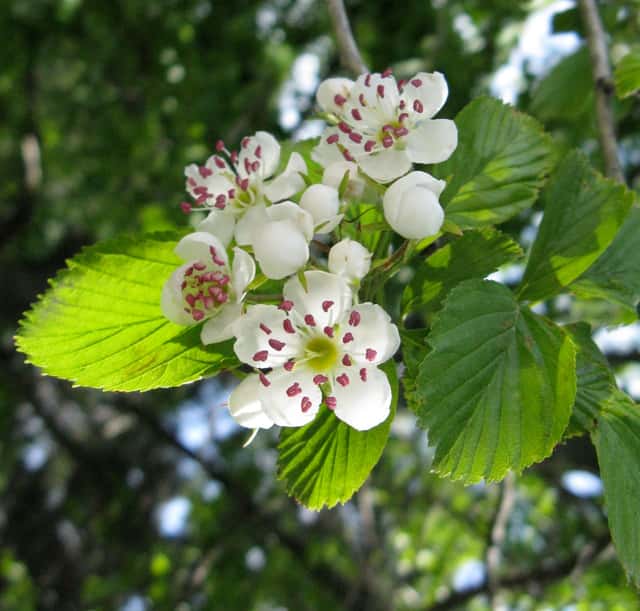
Dotted Hawthorn (Crataegus punctata) is a deciduous tree in the Rosaceae family, native to eastern North America. It grows up to 9 meters tall with a dense, rounded crown and characteristic thorns up to 7 cm long. In late spring, it develops white flowers in dense clusters, and in autumn, it is abundant with red fruits (pomes) with white dots, for which the species is named. It is particularly valuable for wildlife—the fruits attract migratory birds.
How to Propagate Dotted Hawthorn?
Seeds
- 1 Collect ripe fruits in autumn.
- 2 Extract seeds and soak them for 3 months at 15 °C (warm stratification).
- 3 Move to 4 °C for another 3 months (cold stratification).
- 4 Sow in pots with a mixture of peat and sand in spring.
- 5 Transplant to a permanent location when the plant grows 15–20 cm.
Grafting
- 1 Use a wild rootstock from the Crataegus genus.
- 2 Graft using the splice method in February–March.
- 3 Grafted plants bear fruit earlier than seedlings.
How Big Does Dotted Hawthorn Grow?
TLDR: Dotted Hawthorn can reach up to 9.0m tall with Medium growth rate.
Max height
9.0m
Spread
10.0m
Growth rate
Medium
Foliage
Deciduous
Plant Uses
Ornamental
Great for decoration
Edible
Can be consumed
Medicinal
Medicinal properties
Medicinal Uses
- Fruits and flowers are traditionally used as a cardiotonic agent—helping with heart weakness and high blood pressure.
- Prepared as a tea or tincture for long-term use; clinical research confirms its hypotensive effect.
- A decoction of shoots and bark was used in folk medicine to stop excessive menstrual bleeding.
Culinary Uses
- Ripe fruits (pomes) are eaten fresh or processed into jams, jellies, and compotes.
- The fruit has a texture similar to an apple, about 2.5 cm in diameter; the taste is mild and sweet.
- Seeds should not be eaten as they contain cyanogenic compounds.
Is your plant showing symptoms?
Click on the symptom to discover possible causes:
What Diseases Commonly Affect Dotted Hawthorn?
TLDR: Dotted Hawthorn is susceptible to 7 known diseases. Monitor regularly for early detection.
Fire Blight
Fire blight is a highly destructive and contagious bacterial disease caused by Erwinia amylovora. It primarily affects plants in the Rosaceae family, including apple, pear, quince trees, and various ornamental plants. The disease can destroy an entire orchard in a single growing season under ideal conditions, with the bacterium moving approximately 11 inches per week in new growth.
Rust
Rust is a common fungal disease caused by fungi in the order Pucciniales that affects a wide variety of plants. The disease gets its name from the characteristic orange, yellow, or reddish-brown pustules that appear on leaves, resembling metal rust. This obligate fungal parasite requires living plants to survive and can cause significant economic losses in agricultural crops.
Powdery Mildew
Powdery mildew is a common fungal disease caused by various fungi species including Erysiphe, Podosphaera, Oïdium, and Leveillula. It affects over 10,000 plant species worldwide. The disease thrives in warm, dry climates with high humidity and appears as a distinctive white powdery coating on plant surfaces.
Leaf Spot
Leaf spot is a common fungal disease caused by various pathogens including Alternaria, Ascochyta, Colletotrichum, Septoria, and Venturia. It primarily affects leaves, causing discolored spots that can lead to premature leaf drop if left untreated.
Compare with similar plants
| Attribute | Difficulty | Light | Watering | Pet Safe |
|---|---|---|---|---|
| Field Maple | Easy | Bright indirect | 14d | ✓ |
| Silver Birch | Easy | Direct sun | 14d | ✓ |
| Cushion Bush | Easy | Direct sun | 14d | ✓ |
| Peruvian peppertree | Easy | Direct sun | 14d | ⚠️ |





