Asparagaceae
Star-of-Bethlehem (Ornithogalum umbellatum): Complete Care Guide
Ornithogalum umbellatum
Very low-maintenance and hardy plant. Requires full sun to partial shade, moderate watering during the growing season, and drought conditions in summer (dormancy). Tolerates severe frosts (USDA zone 4). Avoid waterlogged soil — the main risk is bulb rot. TOXIC to pets and humans.
Every 7 days
Bright indirect
-15° - 30°C
40% - 70%
Categories
What is Star-of-Bethlehem?
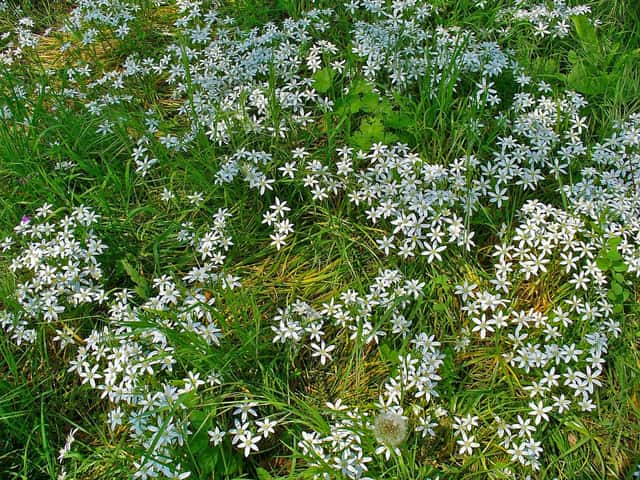
Star-of-Bethlehem (Ornithogalum umbellatum) is a easy-care plant from the Asparagaceae family. Star-of-Bethlehem (Ornithogalum umbellatum) is a small bulbous perennial native to Europe, the Mediterranean, and southwestern Asia. It produces star-shaped white flowers with green stripes on the outer petals, blooming in spring in umbel-shaped clusters. The plant goes dormant in summer after flowe...
Star-of-Bethlehem grows up to 30cm, spread of 20cm, watering every 7 days, -15°C – 30°C, 40–70% humidity. It is not suitable for indoor environments and not safe for pets.
Unlike many tropical plants, Star-of-Bethlehem tolerates watering mistakes. Best for beginners. Without precautions, ingestion can cause irritation in pets. Keep out of reach of cats and dogs.
How to Care for Star-of-Bethlehem?
TLDR: Star-of-Bethlehem needs Bright indirect, watering every 7 days, and temperatures between -15-30°C with 40-70% humidity.
How Often Should You Water Star-of-Bethlehem?
Water once a week during spring (active growth). Gradually reduce after flowering and stop completely in summer when the plant enters dormancy. Never let the soil become waterlogged — excess moisture is the primary cause of bulb rot.
How Much Light Does Star-of-Bethlehem Need?
Prefers full sun with at least 6 hours of direct sunlight per day. Tolerates partial shade but flowering will be less abundant. More sun equals more spectacular spring blooms.
What Is the Best Soil for Star-of-Bethlehem?
Plant bulbs in well-draining, sandy to loamy soil with a pH between 6.0 and 7.5. Avoid clay or poorly draining soils. Add coarse sand or perlite to improve drainage if needed.
What Pot Should You Use for Star-of-Bethlehem?
Terracotta pot with drainage holes if grown in containers. Prefers open garden beds.
Care Schedule
Fertilize
Every 30 days
Repot
Every 730 days
What Is Star-of-Bethlehem and Where Does It Come From?
Star-of-Bethlehem (Ornithogalum umbellatum) is a small bulbous perennial native to Europe, the Mediterranean, and southwestern Asia. It produces star-shaped white flowers with green stripes on the outer petals, blooming in spring in umbel-shaped clusters. The plant goes dormant in summer after flowering. WARNING: All parts, especially the bulbs, are highly toxic to humans, cats, and dogs due to cardiac glycosides.
How to Propagate Star-of-Bethlehem?
Bulb offset division
Always wear gloves when handling bulbs as they are toxic. Bulblets will flower after 1-2 years. Plant in groups of 10-15 for best ornamental effect.
- 1 Dig up bulbs after summer dormancy (August-September)
- 2 Carefully separate the offsets (daughter bulblets) from the main bulb
- 3 Replant bulblets 5-8 cm deep and 10 cm apart
- 4 Water lightly after planting and wait for shoots in autumn/winter
Materials needed:
Seed propagation
Seed propagation is slow — bulbs take 2-3 years to reach flowering size. Always prefer bulb offset division for faster results.
- 1 Collect ripe seeds after fruiting (June-July)
- 2 Sow in sandy, well-draining substrate
- 3 Keep in a cool location and await germination in autumn/winter
- 4 Transplant seedlings after the second year
Materials needed:
How Big Does Star-of-Bethlehem Grow?
TLDR: Star-of-Bethlehem can reach up to 30cm tall with Slow growth rate.
Max height
30cm
Spread
20cm
Growth rate
Slow
Foliage
Deciduous
Warning: Toxic Plant
This plant can be toxic if ingested. Keep out of reach of:
Plant Uses
Ornamental
Great for decoration
Is your plant showing symptoms?
Click on the symptom to discover possible causes:
What Diseases Commonly Affect Star-of-Bethlehem?
TLDR: Star-of-Bethlehem is susceptible to 6 known diseases. Monitor regularly for early detection.
Root Rot
Root rot is a serious fungal disease that affects the root system of plants, causing them to decay and die. It is primarily caused by overwatering, poor drainage, or soil-borne fungi such as Pythium, Phytophthora, Rhizoctonia, and Fusarium. The disease thrives in waterlogged conditions where roots are deprived of oxygen, making them susceptible to fungal infection.
Overwatering
Overwatering occurs when plants receive too much water, depriving roots of oxygen and causing root rot. This environmental stress is one of the most common causes of houseplant death, as waterlogged soil prevents roots from breathing and functioning properly.
Aphids
Aphids are small, soft-bodied, pear-shaped insects (1/16 to 1/8 inch long) that feed by sucking nutrient-rich sap from plants. They reproduce rapidly and can quickly weaken plants, causing distorted growth and transmitting plant viruses. Aphids come in various colors including green, black, red, yellow, brown, and gray. They secrete honeydew, a sticky substance that attracts ants and encourages sooty mold growth.
Slugs and Snails
Slugs and snails are mollusks that feed on plant tissue, causing irregular holes in leaves and damage to young seedlings. They are most active at night and in moist conditions, leaving characteristic silvery slime trails. These pests can quickly devastate gardens, especially during wet seasons.
Meaning & Symbolism
Symbolizes purity, innocence, hope, and spiritual rebirth. Associated with Easter and renewal in European Christian tradition.
Fun Facts
The flowers of Star-of-Bethlehem only open in direct sunlight and close at night — a mechanism to protect pollen from dew and excessive moisture.
A single mother plant can produce dozens of offsets over the years, forming dense natural colonies in meadows and gardens.
The plant is considered invasive in parts of North America, yet is a protected wildflower in parts of Europe.
Its cardiac glycosides were historically studied for medicinal potential, though the plant is now strictly considered ornamental and toxic.
Frequently asked questions
Is Star-of-Bethlehem toxic to pets?
How often should I water Star-of-Bethlehem?
Can Star-of-Bethlehem be grown in pots?
When does Star-of-Bethlehem flower?
How do I propagate Star-of-Bethlehem?
Compare with similar plants
| Attribute | Difficulty | Light | Watering | Pet Safe |
|---|---|---|---|---|
| Field Maple | Easy | Bright indirect | 14d | ✓ |
| Silver Birch | Easy | Direct sun | 14d | ✓ |
| Cushion Bush | Easy | Direct sun | 14d | ✓ |
| Peruvian peppertree | Easy | Direct sun | 14d | ⚠️ |





