Begoniaceae
Eyelash Begonia: Perfect Plant for Beginners
Begonia bowerae
Give the eyelash begonia bright, indirect light, water when the top inch of soil dries out, and keep humidity moderate to high. It thrives in well-draining, slightly acidic potting mix and rewards consistent care with dense, textured foliage year-round.
Every 7 days
Partial shade
18° - 24°C
50% - 70%
Categories
What is Eyelash Begonia?
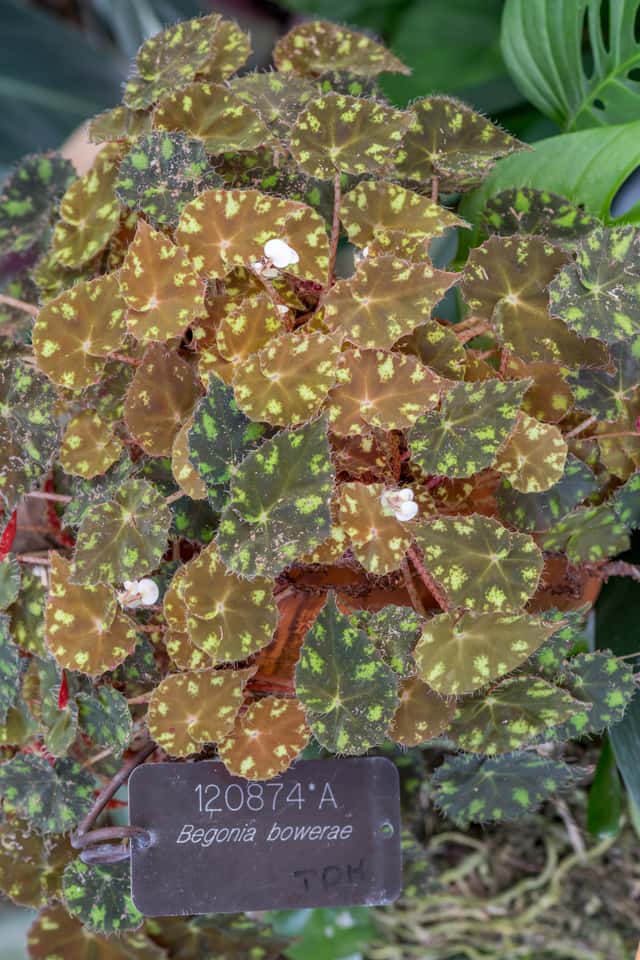
Eyelash Begonia (Begonia bowerae) is a easy-care plant from the Begoniaceae family. Begonia bowerae, commonly known as the eyelash begonia, is a compact rhizomatous begonia native to Mexico prized for its asymmetrical, wing-shaped leaves edged with tiny white hairs that resemble eyelashes. Deep green foliage is often patterned with chocolate-brown bands, and clusters of small white...
Eyelash Begonia grows up to 25cm, spread of 30cm, watering every 7 days, 18°C – 24°C, 50–70% humidity. It is suitable for indoor environments and not safe for pets.
Unlike many tropical plants, Eyelash Begonia tolerates watering mistakes. Best for beginners. Without precautions, ingestion can cause irritation in pets. Keep out of reach of cats and dogs. Without adequate drainage, root rot can develop within 14 days.
How to Care for Eyelash Begonia?
TLDR: Eyelash Begonia needs Partial shade, watering every 7 days, and temperatures between 18-24°C with 50-70% humidity.
How Often Should You Water Eyelash Begonia?
Water thoroughly when the top 2-3 cm of soil feels dry, letting excess drain freely; avoid letting the rhizome sit in soggy soil, which quickly causes rot.
How Much Light Does Eyelash Begonia Need?
Place in bright, indirect light such as a few feet from an east- or north-facing window; direct sun scorches the delicate, hairy leaves.
What Is the Best Soil for Eyelash Begonia?
Use a light, well-draining mix of peat or coco coir, perlite, and a little loam, with a pH between 6.0 and 7.5.
What Pot Should You Use for Eyelash Begonia?
A shallow, wide terracotta or ceramic pot with ample drainage holes suits its spreading rhizome and shallow root system best.
Care Schedule
Fertilize
Every 30 days
Rotate
Every 14 days
Repot
Every 365 days
What Is Eyelash Begonia and Where Does It Come From?
Begonia bowerae, commonly known as the eyelash begonia, is a compact rhizomatous begonia native to Mexico prized for its asymmetrical, wing-shaped leaves edged with tiny white hairs that resemble eyelashes. Deep green foliage is often patterned with chocolate-brown bands, and clusters of small white to pale pink flowers appear above the leaves in winter and spring. It grows low and spreading from a fleshy rhizome, making it a favorite for terrariums, hanging baskets, and shelf displays.
How to Propagate Eyelash Begonia?
Leaf cutting
Use a clean, sharp blade and rooting hormone to speed callusing; maintain high humidity with a plastic cover to encourage new plantlets at the leaf veins.
- 1 Select a healthy, mature leaf with a short stem
- 2 Cut the leaf and let the cut end callous for a few hours
- 3 Insert the stem into moist, well-draining potting mix or lay the leaf flat with veins slit and pinned to the soil
- 4 Keep the soil lightly moist and in bright, indirect light until new plantlets emerge
Materials needed:
Rhizome division
Use a sterilized blade to prevent disease spread and avoid overwatering newly divided sections until roots establish.
- 1 Remove the plant from its pot and gently expose the rhizome
- 2 Cut the rhizome into sections, each with at least one growth point and some roots
- 3 Let cut surfaces callous for a day
- 4 Plant each section in fresh, well-draining mix and water lightly
Materials needed:
How Big Does Eyelash Begonia Grow?
TLDR: Eyelash Begonia can reach up to 25cm tall with Medium growth rate.
Max height
25cm
Spread
30cm
Growth rate
Medium
Foliage
Evergreen
Warning: Toxic Plant
This plant can be toxic if ingested. Keep out of reach of:
Plant Uses
Ornamental
Great for decoration
Is your plant showing symptoms?
Click on the symptom to discover possible causes:
What Diseases Commonly Affect Eyelash Begonia?
TLDR: Eyelash Begonia is susceptible to 12 known diseases. Monitor regularly for early detection.
Root Rot
Root rot is a serious fungal disease that affects the root system of plants, causing them to decay and die. It is primarily caused by overwatering, poor drainage, or soil-borne fungi such as Pythium, Phytophthora, Rhizoctonia, and Fusarium. The disease thrives in waterlogged conditions where roots are deprived of oxygen, making them susceptible to fungal infection.
Powdery Mildew
Powdery mildew is a common fungal disease caused by various fungi species including Erysiphe, Podosphaera, Oïdium, and Leveillula. It affects over 10,000 plant species worldwide. The disease thrives in warm, dry climates with high humidity and appears as a distinctive white powdery coating on plant surfaces.
Downy Mildew
Downy mildew is a fungal-like disease caused by oomycetes (water molds) that thrives in cool, wet conditions. It affects a wide range of plants, causing yellowing leaves with fuzzy white-gray growth underneath, leading to defoliation and reduced yields if left untreated.
Gray Mold (Botrytis Blight)
Gray mold, caused by the fungus Botrytis cinerea, is a widespread necrotrophic pathogen affecting over 1,400 plant species. It thrives in cool, humid conditions and attacks weakened or aging plant tissues, causing soft rot and characteristic gray fuzzy growth.
Meaning & Symbolism
Represents individuality, uniqueness, and cautious affection; often gifted as a token of thoughtfulness and gratitude for someone's distinctive character.
Compare with similar plants
| Attribute | Difficulty | Light | Watering | Pet Safe |
|---|---|---|---|---|
| Field Maple | Easy | Bright indirect | 14d | ✓ |
| Silver Birch | Easy | Direct sun | 14d | ✓ |
| Common Blanketflower | Easy | Direct sun | 10d | ✓ |
| Cushion Bush | Easy | Direct sun | 14d | ✓ |





