Lamiaceae
Henbit Dead-nettle: Edible Plant
Lamium amplexicaule
Henbit is an easygoing, fast-growing annual that needs little care. Give it full sun to partial shade, water only when the topsoil dries out, and plant it in loose, well-draining soil. It self-seeds readily, so deadhead spent flowers if you want to limit its spread.
Every 7 days
Bright indirect
-10° - 32°C
30% - 70%
Categories
What is Henbit Dead-nettle?
Henbit Dead-nettle (Lamium amplexicaule) is a easy-care plant from the Lamiaceae family. Lamium amplexicaule, commonly known as henbit dead-nettle, is a low-growing winter annual in the mint family (Lamiaceae), native to Europe and Asia and now naturalized across North America. It forms mats of scalloped, rounded leaves that clasp the stem, topped by small tubular pink-purple flowers in...
Henbit Dead-nettle grows up to 30cm, spread of 30cm, watering every 7 days, -10°C – 32°C, 30–70% humidity. It is not suitable for indoor environments and safe for pets.
Unlike many tropical plants, Henbit Dead-nettle tolerates watering mistakes. Best for beginners. Unlike many popular species, Henbit Dead-nettle is safe to keep around pets.
How to Care for Henbit Dead-nettle?
TLDR: Henbit Dead-nettle needs Bright indirect, watering every 7 days, and temperatures between -10-32°C with 30-70% humidity.
How Often Should You Water Henbit Dead-nettle?
Water moderately and let the soil dry out slightly between waterings; henbit is prone to root rot in soggy, waterlogged soil.
How Much Light Does Henbit Dead-nettle Need?
Provide full sun to partial shade; henbit does not grow well in deep shade.
What Is the Best Soil for Henbit Dead-nettle?
Plant in loose, fertile, well-draining loamy soil with a mildly acidic to neutral pH; it also tolerates sandy or clay soils as long as drainage is adequate.
What Pot Should You Use for Henbit Dead-nettle?
A shallow, wide terracotta or unglazed clay pot with generous drainage holes suits henbit best, mimicking the loose, well-drained soil it favors in the wild.
What Is Henbit Dead-nettle and Where Does It Come From?
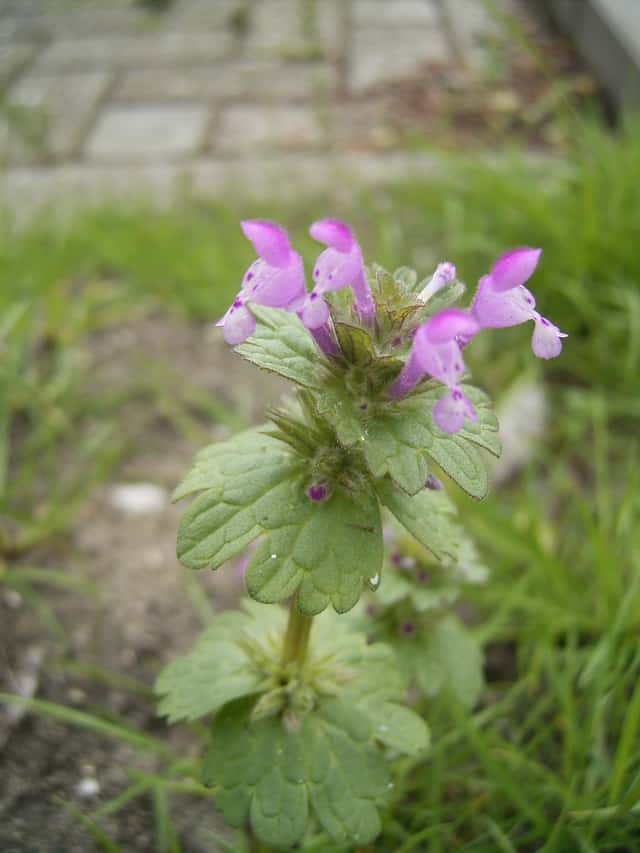
Lamium amplexicaule, commonly known as henbit dead-nettle, is a low-growing winter annual in the mint family (Lamiaceae), native to Europe and Asia and now naturalized across North America. It forms mats of scalloped, rounded leaves that clasp the stem, topped by small tubular pink-purple flowers in early spring. Despite its nettle-like appearance, henbit has no stinging hairs and is completely harmless to touch. It thrives in disturbed soils, garden beds, and lawns, often being one of the first plants to flower in late winter.
How to Propagate Henbit Dead-nettle?
Seed sowing
Henbit self-seeds prolifically, so once established it typically returns on its own each season without replanting.
- 1 Collect ripe seeds from spent flower heads or purchase wildflower seed
- 2 Scatter seeds over loose, well-draining soil in fall or early spring
- 3 Press seeds lightly into the soil surface, do not bury deeply
- 4 Keep soil lightly moist until seedlings emerge
Materials needed:
How Big Does Henbit Dead-nettle Grow?
TLDR: Henbit Dead-nettle can reach up to 30cm tall with Fast growth rate.
Max height
30cm
Spread
30cm
Growth rate
Fast
Foliage
Deciduous
Plant Uses
Edible
Can be consumed
Medicinal
Medicinal properties
Medicinal Uses
- Traditionally used in folk herbalism as a mild anti-inflammatory and diaphoretic tea
- Used topically in poultices for minor cuts and bruises
Culinary Uses
- Young leaves and shoots eaten raw in salads
- Cooked as a mild leafy green similar to spinach
- Used in foraged spring soups
Is your plant showing symptoms?
Click on the symptom to discover possible causes:
What Diseases Commonly Affect Henbit Dead-nettle?
TLDR: Henbit Dead-nettle is susceptible to 3 known diseases. Monitor regularly for early detection.
Root Rot
Root rot is a serious fungal disease that affects the root system of plants, causing them to decay and die. It is primarily caused by overwatering, poor drainage, or soil-borne fungi such as Pythium, Phytophthora, Rhizoctonia, and Fusarium. The disease thrives in waterlogged conditions where roots are deprived of oxygen, making them susceptible to fungal infection.
Spider Mites
Spider mites are tiny arachnids (less than 1/20 inch long) related to spiders and ticks that feed on plant sap. They thrive in hot, dry conditions and can cause significant damage to ornamental and vegetable plants. During severe infestations, crop losses can reach 14% or higher as these pests disrupt vital plant processes including photosynthesis, carbon dioxide absorption, and transpiration.
Mosaic Virus
Mosaic virus is a group of plant viruses that cause mottled, patchy patterns on leaves and can affect a wide variety of plants. The virus creates characteristic yellow, white, and green mosaic patterns, often accompanied by stunted growth and deformed plant parts. This highly contagious disease spreads rapidly through insect vectors and contaminated tools.
Meaning & Symbolism
Because it is often the first flower to bloom after winter, henbit is sometimes seen as a small symbol of resilience and the return of spring.
Compare with similar plants
| Attribute | Difficulty | Light | Watering | Pet Safe |
|---|---|---|---|---|
| Field Maple | Easy | Bright indirect | 14d | ✓ |
| Silver Birch | Easy | Direct sun | 14d | ✓ |
| Cushion Bush | Easy | Direct sun | 14d | ✓ |
| Peruvian peppertree | Easy | Direct sun | 14d | ⚠️ |