Onagraceae
Farewell to Spring: The Cheerful Wildflower of Western North America
Clarkia amoena
Easy to grow annual for outdoor gardens. Prefers full sun, well-drained soil, and moderate watering. Drought-tolerant once established. Direct sow seeds in spring. Great for wildflower meadows, borders, and cut flower arrangements.
Every 7 days
Bright indirect
5° - 25°C
40% - 70%
Categories
What is Farewell to Spring?
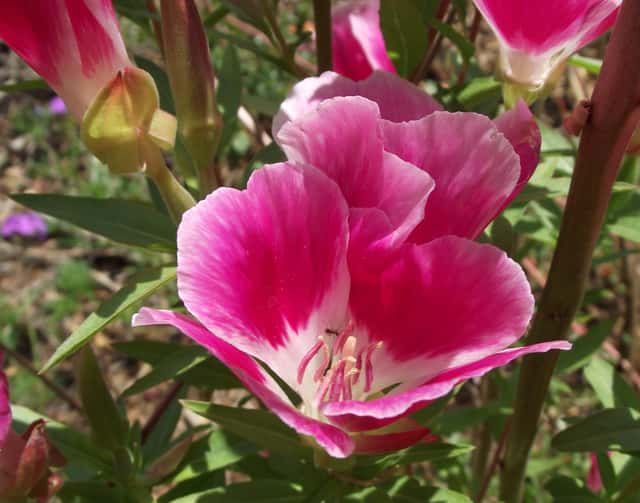
Farewell to Spring (Clarkia amoena) is a easy-care plant from the Onagraceae family. Clarkia amoena, commonly known as Farewell to Spring or Godetia, is a charming annual wildflower native to the coastal hills and mountains of western North America. It produces showy pink, lavender, purple, and white flowers in late spring to early summer, attracting pollinators including bees, butt...
Farewell to Spring grows up to 90cm, spread of 45cm, watering every 7 days, 5°C – 25°C, 40–70% humidity. It is not suitable for indoor environments and safe for pets.
Unlike many tropical plants, Farewell to Spring tolerates watering mistakes. Best for beginners. Unlike many popular species, Farewell to Spring is safe to keep around pets.
How to Care for Farewell to Spring?
TLDR: Farewell to Spring needs Bright indirect, watering every 7 days, and temperatures between 5-25°C with 40-70% humidity.
How Often Should You Water Farewell to Spring?
Water every 7 days or when the top inch of soil feels dry. Avoid overwatering as the plant is drought-tolerant. Reduce watering after flowering begins to avoid root rot.
How Much Light Does Farewell to Spring Need?
Requires full sun — at least 6 hours of direct sunlight daily. Tolerates light shade but produces the best blooms in bright, direct sun.
What Is the Best Soil for Farewell to Spring?
Prefers well-draining, slightly sandy or loamy soil. pH between 6.0 and 7.5. Avoid heavy clay or waterlogged soils, which can cause stem rot. Thrives in nutrient-poor soils similar to its native habitat.
What Pot Should You Use for Farewell to Spring?
Terracotta or ceramic pots with drainage holes. Medium to large containers work best for healthy root development.
Care Schedule
Fertilize
Every 30 days
What Is Farewell to Spring and Where Does It Come From?
Clarkia amoena, commonly known as Farewell to Spring or Godetia, is a charming annual wildflower native to the coastal hills and mountains of western North America. It produces showy pink, lavender, purple, and white flowers in late spring to early summer, attracting pollinators including bees, butterflies, and hummingbirds. It thrives in full sun with well-draining soil and is relatively drought-tolerant once established.
How to Propagate Farewell to Spring?
Direct sowing
For early blooms, sow in fall in mild climates. Do not transplant — direct sowing is preferred as plants dislike root disturbance. Crowding seedlings promotes better flowering.
- 1 Sow seeds directly in the garden after the last frost date
- 2 Lightly press seeds into soil — do not cover deeply as they need light to germinate
- 3 Keep soil moist until germination occurs in 7-14 days
- 4 Thin seedlings sparingly — overcrowding encourages blooming
Materials needed:
How Big Does Farewell to Spring Grow?
TLDR: Farewell to Spring can reach up to 90cm tall with Fast growth rate.
Max height
90cm
Spread
45cm
Growth rate
Fast
Foliage
Deciduous
Plant Uses
Ornamental
Great for decoration
Is your plant showing symptoms?
Click on the symptom to discover possible causes:
What Diseases Commonly Affect Farewell to Spring?
TLDR: Farewell to Spring is susceptible to 7 known diseases. Monitor regularly for early detection.
Powdery Mildew
Powdery mildew is a common fungal disease caused by various fungi species including Erysiphe, Podosphaera, Oïdium, and Leveillula. It affects over 10,000 plant species worldwide. The disease thrives in warm, dry climates with high humidity and appears as a distinctive white powdery coating on plant surfaces.
Gray Mold (Botrytis Blight)
Gray mold, caused by the fungus Botrytis cinerea, is one of the most common fungal diseases in plants. It affects over 200 plant species, including ornamentals, vegetables, fruits, and houseplants. The disease thrives in cool, humid conditions with poor air circulation, causing grayish spots and soft rot on infected tissues.
Verticillium Wilt
Verticillium wilt is a soil-borne fungal disease caused primarily by the fungi Verticillium dahliae and V. albo-atrum. These pathogens infect plant roots and grow within the vascular tissues, blocking water and nutrient transport, resulting in wilting and eventual plant death. The disease affects over 350 plant species including vegetables, fruits, ornamental flowers, and trees. The fungi can survive in soil for more than 10 years as resistant structures called microsclerotia.
Aphids
Aphids are small, soft-bodied, pear-shaped insects (1/16 to 1/8 inch long) that feed by sucking nutrient-rich sap from plants. They reproduce rapidly and can quickly weaken plants, causing distorted growth and transmitting plant viruses. Aphids come in various colors including green, black, red, yellow, brown, and gray. They secrete honeydew, a sticky substance that attracts ants and encourages sooty mold growth.
Meaning & Symbolism
Symbolizes farewell and new beginnings. The name "Farewell to Spring" reflects its late-spring blooming as the season transitions to summer. Named in honor of explorer William Clark of the Lewis and Clark Expedition.
Fun Facts
Native to coastal hills from British Columbia to the San Francisco Bay Area
Named in honor of William Clark of the famous Lewis and Clark Expedition
The genus name Clarkia honors explorer William Clark; the synonym Godetia honors Swiss botanist Charles Henri Godet
A magnet for pollinators — bees, butterflies, and hummingbirds all visit its flowers
Frequently asked questions
When should I plant Farewell to Spring?
Is Clarkia amoena toxic to pets?
How often should I water Godetia?
Why is my Farewell to Spring not blooming?
Compare with similar plants
| Attribute | Difficulty | Light | Watering | Pet Safe |
|---|---|---|---|---|
| Field Maple | Easy | Bright indirect | 14d | ✓ |
| Silver Birch | Easy | Direct sun | 14d | ✓ |
| Common Blanketflower | Easy | Direct sun | 10d | ✓ |
| Cushion Bush | Easy | Direct sun | 14d | ✓ |





