Myrtaceae
Pineapple Guava: The Hardy Fruiting Shrub from South America
Acca sellowiana
A hardy, low-maintenance shrub. Prefers full sun and well-drained soil, tolerates mild frost, and is drought-tolerant once established. Slow-growing but rewarding with fragrant fruit.
Every 7 days
Bright indirect
-10° - 28°C
50% - 80%
Categories
What is Pineapple Guava?
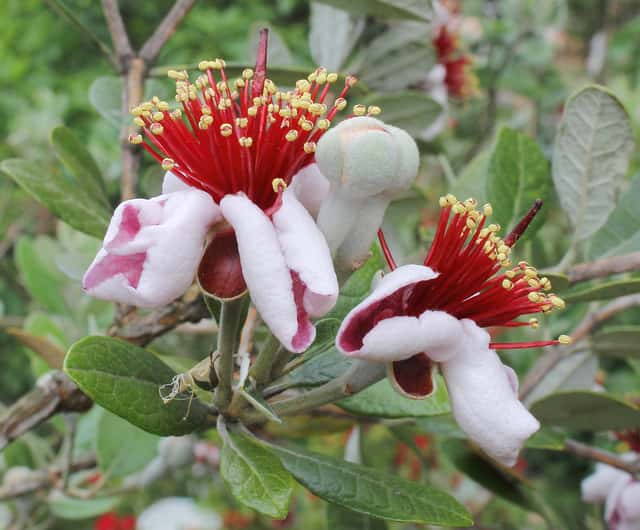
Pineapple Guava (Acca sellowiana) is a medium-care plant from the Myrtaceae family. Acca sellowiana, commonly known as pineapple guava or feijoa, is an evergreen shrub native to southern Brazil and Uruguay. Belonging to the Myrtaceae family, it produces aromatic fruits with a flavor reminiscent of pineapple, strawberry, and guava. Its ornamental flowers feature white petals with st...
Pineapple Guava grows up to 7.5m, spread of 400cm, watering every 7 days, -10°C – 28°C, 50–80% humidity. It is not suitable for indoor environments and safe for pets.
Unlike many popular species, Pineapple Guava is safe to keep around pets.
How to Care for Pineapple Guava?
TLDR: Pineapple Guava needs Bright indirect, watering every 7 days, and temperatures between -10-28°C with 50-80% humidity.
How Often Should You Water Pineapple Guava?
Water every 7 days during the growing season. Established plants are drought-tolerant but benefit from consistent moisture during flowering and fruit development. Avoid waterlogging.
How Much Light Does Pineapple Guava Need?
Plant in full sun for best fruit production. Tolerates partial shade but flowering and fruiting will be reduced. Aim for at least 6 hours of direct sunlight per day.
What Is the Best Soil for Pineapple Guava?
Prefers well-draining soil with a slightly acidic to neutral pH (5.5–7.0). Tolerates sandy or loamy soils as long as drainage is adequate. Avoid waterlogged or highly alkaline soils.
What Pot Should You Use for Pineapple Guava?
Large terracotta pot (40 cm+) with drainage hole. For garden planting, plant directly in the ground with good drainage.
Care Schedule
Fertilize
Every 60 days
Repot
Every 730 days
What Is Pineapple Guava and Where Does It Come From?
Acca sellowiana, commonly known as pineapple guava or feijoa, is an evergreen shrub native to southern Brazil and Uruguay. Belonging to the Myrtaceae family, it produces aromatic fruits with a flavor reminiscent of pineapple, strawberry, and guava. Its ornamental flowers feature white petals with striking red stamens — and are entirely edible.
How to Propagate Pineapple Guava?
Seed
Germination can be uneven — do not discard slow seeds. Sow multiples for best results.
- 1 Rinse seeds under running water to remove gel coating
- 2 Sow in moist, well-draining seed mix
- 3 Keep in a warm location (18-21°C) with indirect light
- 4 Transplant seedlings when they reach 10 cm tall
Materials needed:
Semi-hardwood Cutting
Rooting is slow but produces true-to-type plants. Rooting hormone significantly improves success rates.
- 1 Take 5-7 cm semi-hardwood cuttings with a heel
- 2 Dip base in rooting hormone
- 3 Plant in well-draining, moist substrate
- 4 Keep in a shaded, humid environment until rooted
Materials needed:
How Big Does Pineapple Guava Grow?
TLDR: Pineapple Guava can reach up to 7.5m tall with Slow growth rate.
Max height
7.5m
Spread
4.0m
Growth rate
Slow
Foliage
Evergreen
Plant Uses
Ornamental
Great for decoration
Edible
Can be consumed
Medicinal
Medicinal properties
Medicinal Uses
- Fruit has antimicrobial flavonoids
- Buds used as an astringent remedy for diarrhea
Culinary Uses
- Fruits eaten fresh or made into jams, ice cream, and juices
- Flower petals are sweet and crunchy — used in salads and cocktails
Is your plant showing symptoms?
Click on the symptom to discover possible causes:
What Diseases Commonly Affect Pineapple Guava?
TLDR: Pineapple Guava is susceptible to 6 known diseases. Monitor regularly for early detection.
Anthracnose
Anthracnose is a fungal disease caused by fungi in the genus Colletotrichum that affects many plants, including vegetables, fruits, and trees. The disease thrives in cool, wet conditions, causing dark, sunken lesions on leaves, stems, flowers, and fruits.
Powdery Mildew
Powdery mildew is a common fungal disease caused by various fungi species including Erysiphe, Podosphaera, Oïdium, and Leveillula. It affects over 10,000 plant species worldwide. The disease thrives in warm, dry climates with high humidity and appears as a distinctive white powdery coating on plant surfaces.
Leaf Spot
Leaf spot is a common fungal disease caused by various pathogens including Alternaria, Ascochyta, Colletotrichum, Septoria, and Venturia. It primarily affects leaves, causing discolored spots that can lead to premature leaf drop if left untreated.
Scale Insects
Scale insects are small sap-sucking pests that appear as brown, shell-like bumps on plant stems and leaves. There are over 25 species, divided into armored (hard) and unarmored (soft) scales. They feed by piercing plant tissue and extracting sap, which weakens the plant and can lead to yellowing, stunted growth, and even death if left untreated. They also excrete honeydew, which attracts ants and promotes sooty mold growth.
Meaning & Symbolism
The pineapple guava symbolizes abundance and resilience, reflecting the natural richness of South America's temperate regions.
Fun Facts
Native to southern Brazil and Uruguay, feijoa is now commercially grown in New Zealand and Russia
Its flowers are pollinated mainly by birds attracted to the fleshy, edible red petals
The fruit has a unique flavor combining pineapple, strawberry, and guava
A long-lived shrub that can produce fruit abundantly for decades with minimal care
Frequently asked questions
How often should I water pineapple guava?
Can pineapple guava grow in a container?
Are pineapple guava flowers edible?
How cold-hardy is pineapple guava?
Does pineapple guava need a pollinator?
Compare with similar plants
| Attribute | Difficulty | Light | Watering | Pet Safe |
|---|---|---|---|---|
| Dark Fieldcap | Medium | Low light | 2d | ⚠️ |
| Azalea | Medium | Partial shade | 3d | ⚠️ |
| Bougainvillea | Medium | Direct sun | 7d | ⚠️ |
| Wild Lettuce | Medium | Direct sun | 7d | ⚠️ |



